Calcutta University scholars travel to Sundarbans village to save language
The Hindu
University of Calcutta scholars visit Sundarbans village to save endangered Sadri language through translation and community engagement.
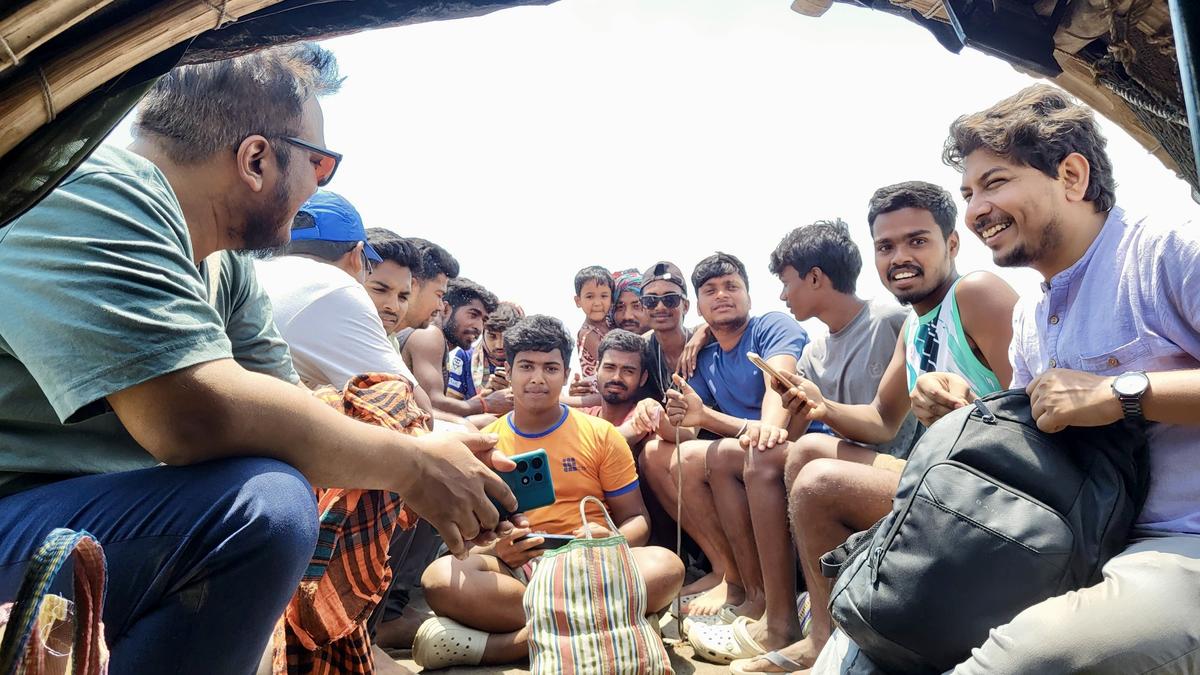
A group of scholars from the University of Calcutta recently visited a village in the Sundarbans in a bid to save a language that is on the verge of extinction. They went to a settlement called Kamarpara in Gosaba subdivision of South 24 Parganas to begin translation into the English of a novel written by a local in a tribal language called Sadri, and also to spend time with members of the Sadri community.
The novel — titled Baman Burir Char (‘Dwarf Old Lady’s Char’), with char meaning emerging riverine islands — has been authored by Dayalhari Sardar, who is an Assistant Professor of Bengali at nearby Bhangor Mahavidyalaya.
“I would say it is the author who is actually saving the language. But language and literature are not just about the scripts and words — they carry with them culture, tradition, politics, society, struggles and much more. So, by translating it into English and opening it up to a global audience, we’re essentially introducing the world to their world. It helps build an identity and also creates opportunities for pedagogy,” Shreya Datta, one of the four scholars who visited the village, said.
According to her, the idea behind spending a day with the community earlier this month was to understand the “geography of the literature” on which the Sadri novel is based.
Ayan Ghosh, another member of the team, said there were 741,528 Sadri speakers in West Bengal as per the 2011 linguistic census, a majority of them being concentrated in the northern part of Bengal, primarily among tea plantation workers — descendants of labourers brought by the British during the colonial period.
“In contrast, only a small number of Sadri speakers were brought to the Sundarbans region, primarily from present-day Chhattisgarh, to clear the dense forest and prepare the land for cultivation. The descendants of those labourers are the present-day Sadri-speaking community that we visited,” he said.
Sadri does not have a script; members of the community living in West Bengal write in the Bengali script and those belonging to Chhattisgarh use Devnagari.


Special prayers mark Eid-ul-Fitr celebrations in Madurai

India’s gem and jewellery industry continues to demonstrate remarkable resilience and a spirit of innovation, said Kirit Bhansali, chairman of the Gem and Jewellery Export Promotion Council (GJEPC), at the inauguration of the 4th edition of IIJS Bharat-Tritiya 2026 at Bengaluru International Exhibition Centre (BIEC) here on Saturday, March 21.

HYDGEN dispatches eight modular green hydrogen systems to Surat, enhancing on-site industrial hydrogen generation and operational efficiency.

Fight is between AIADMK and DMK, says Rajan Chellappa

Two habitual offenders arrested in Miyapur for wine shop burglary; police recover stolen cash and bike.

Tiruchi's Smart City projects face underutilisation despite completion, raising concerns about planning, execution, and revenue generation.

Election Observer Anubha Shrivatsava inspects polling booths in Western Ghats, ensuring smooth arrangements amid challenging conditions.

A.P. Minister announces ₹9.8 crore development of Barashaheed Dargah and ₹20 crore international school for minorities in Nellore.

Vice-President Radhakrishnan advocates for modern university syllabi to enhance employability and skill development in today's evolving job market.

A poignant protest at Palakkad Medical College highlights ongoing developmental challenges, initiated by a symbolic wreath-laying by a young girl.

A three-year-old girl was tragically killed by a truck while walking with her mother near Bengaluru.

Iran's President calls for U.S.-Israeli aggression cessation and urges BRICS to ensure regional peace and security.

Harish Rao accuses govt. of cancelling ₹1,070 cr. work sanctioned to Siddipet