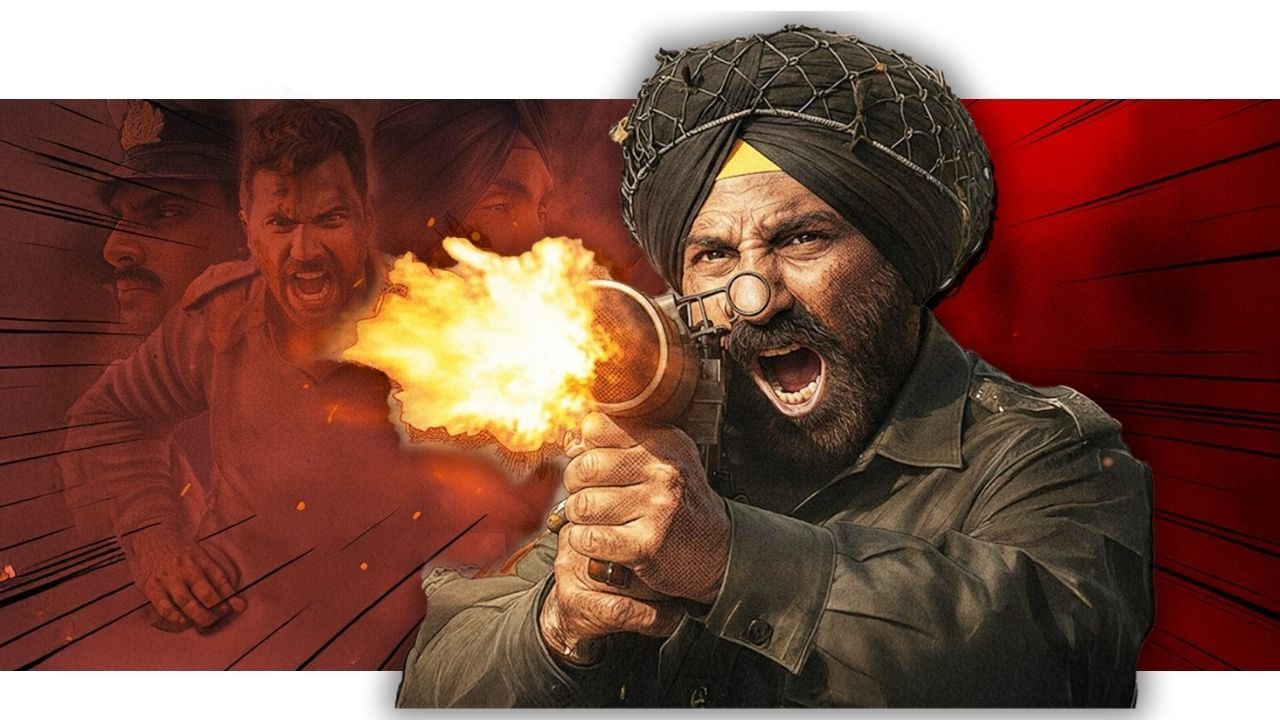
Border 2 beyond emotional weight: When familiar tropes fight the war
India Today
Border 2 delivers the emotional certainty that audiences expect from a war film. But when the dust settles, it raises a larger question about what Hindi war cinema chooses to explore and what it leaves untouched.
War films always arrive with an advantage that very few other genres enjoy. The emotion is already built in. The uniform, the flag, patriotism, the idea of sacrifice — these elements prepare the audience long before the first frame appears on the big screen. Which is why the real measure of such films is never whether they make viewers emotional, but whether that emotion is earned through filmmaking, or simply activated by what we already carry into the theatre.
With a handful of war films, the feeling is shaped by craft. Many more leave one asking where the emotion truly came from: the storytelling on screen, or an inner attachment to the subject itself. Border 2 belongs to the latter category. The emotional moments land, and that response will almost certainly reflect at the box office. What lingers instead is a quieter, more uncomfortable question on the walk out: beyond that emotional response, is the film offering anything meaningfully different?
Border 2 enters this space with enormous goodwill. It carries the legacy of JP Dutta’s Border, the emotional memory of a generation, and the promise of scale, history, and patriotism. Directed by Anurag Singh, the film widens its canvas to include the Army, Navy, and Air Force during the 1971 Indo–Pakistan War, positioning itself as both a continuation and an expansion. What follows is not a film that lacks feeling. If anything, it is almost entirely built on it.
At its best, Border 2 understands the emotional grammar of Hindi war cinema. The first half is patient and confident, taking time to establish relationships, backgrounds, and bonds between soldiers. Training days at the National Defence Academy, moments of youthful camaraderie, letters from home, hurried marriages, and conversations with family members work because they are staged without cynicism.
Anurag Singh’s strength has always been his ability to extract feeling from everyday situations, and that skill serves the film well here. Scenes involving soldiers receiving letters, one joyful and another devastating, land effectively. The idea that love, not firepower, sustains a soldier is repeated often, but rarely feels hollow.


Pawan Kalyan, Deputy Chief Minister of Andhra Pradesh, commented on the ongoing controversy surrounding the censorship of Jana Nayagan. He also talked about his film OG receiving an A certificate.

Sunil Grover's impeccable impersonation of Kader Khan on The Great Indian Kapil Show has earned him heartfelt praise from veteran actor Gajraj Rao, who praised him as the greatest behrupiya of our times.

The 2026 Oscars In Memoriam segment sparked disappointment among Indian cinema fans following the omission of legendary actor Dharmendra. Several Hollywood icons including Rob Reiner and Catherine O'Hara received tributes.

Priyanka Chopra and Nick Jonas swooned everyone with their appearance on the red carpet at the Academy Awards 2026. The two brought glamour and served major couple goals to the prestigious ceremony.

Lakshmipriya Devi's Boong became the first Manipuri film to earn over Rs 1 crore in India. The film was theatrically released on March 6.

As Priyanka Chopra gets ready to present at the Oscars 2026 again this year, we look at Indians who represented India at the Academy Awards.

Raashii Khanna raised concerns regarding the impact of the Iran-US conflict on cinema. She reflected on how films will not be the first priority if the situation doesn't de-escalate.

Varun Dhawan, Bhumi Pednekar, Ishaan Khatter and other celebrities showered praise on Sunil Grover's mimicry of late actor Kader Khan. Grover paid a special tribute to the legendary actor on The Great Indian Kapil Show Season 4.

The Oscars have always been a blend of glamour and unexpected drama, with moments ranging from shocking attacks to wardrobe malfunctions. Such incidents, including Will Smith's infamous slap and the Envelopegate blunder, continue to be fresh in audience memory even as they shape Oscar legacy.

Andhra Pradesh Chief Minister Chandrababu Naidu extended his blessings to newly-weds Allu Sirish and Nayanika Reddy during a visit to their family residence. Several pictures of the newly-weds greeting Reddy emerged online. Sirish's brother, Allu Arjun, has thanked the Andhra CM for his gesture.

David Dhawan defended Govinda over arriving late on set. He recalled his working experience with the actor and praised his work ethic.

The trailer of Ustaad Bhagat Singh starring Pawan Kalyan is finally out. The film is set to clash with Ranveer Singh's Dhurandhar: The Revenge at the box office.

During his recent Saturday Night Live appearance, Harry Styles used humor and direct engagement to address ongoing queerbaiting allegations. The singer proved his point by kissing Ben Marshall on stage.