Better to await UCC than strike down Shariat Act inheritance provisions, says SC
The Hindu
Supreme Court suggests deferring to Parliament on UCC instead of striking down Shariat Act's inheritance provisions for Muslims.
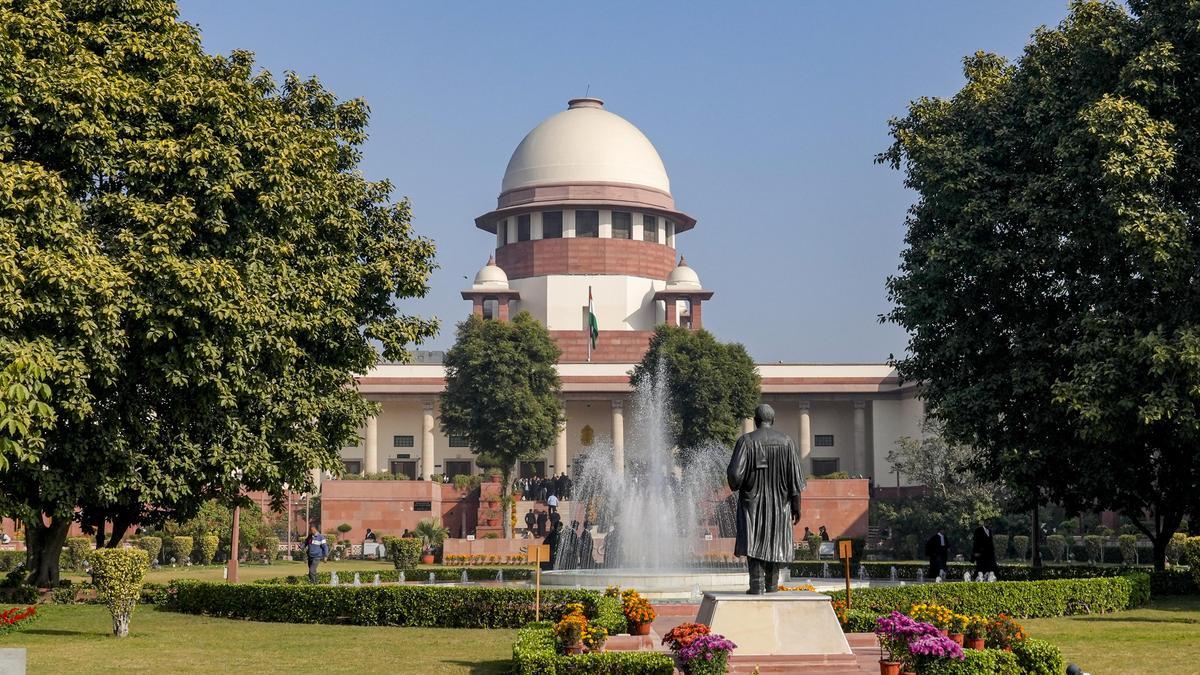
The Supreme Court of India on Tuesday (March 10, 2026) orally observed that it would be better to defer to Parliament’s wisdom to bring a Uniform Civil Code rather than judicially strike down the Shariat Application Act, 1937 on the ground of discrimination for giving Muslim women a smaller share of family inheritance compared with their male counterparts.
The 1937 law established Islamic law for inheritance among Indian Muslims, providing widows with children a one-eighth share, or a further reduced one-fourth share if they do not have children, and daughters half of a son’s share.
Appearing before a Bench comprising Chief Justice Surya Kant and Justices R. Mahadevan and Joymalya Bagchi, advocate Prashant Bhushan, appearing for petitioner Poulomi Pavini Shukla, challenged what he called “artificial discrimination” between Muslim women and men regarding their right to inheritance.
The Bench, however, posed a practical question of law, asking which law would govern Muslim inheritance if the Shariat Act were struck down.
Mr. Bhushan responded that the more secular Indian Succession Act could apply. He referred to the landmark judgment in Mary Roy vs State of Kerala, in which the petitioner, the mother of Booker Prize-winning author Arundhati Roy, successfully fought for equal inheritance rights for Syrian Christian women in the State, nullifying the discriminatory Travancore Christian Succession Act, 1916.
“Does the Indian Succession Act apply to Muslim women? Remember, when you strike an Act, you create a vacuum… In our over-anxiety for reforms, we may deprive them [Muslim women] of whatever they are getting now,” the Chief Justice said.


LPG shortages caused by the West Asia conflict threaten to shut down half of Mumbai's restaurants, impacting livelihoods significantly.

Mysuru hoteliers face a crisis as LPG supply disruptions threaten operations of 1,500 eateries, potentially forcing many to shut down.

Kremlin confirms Putin's mediation proposals for the Iran conflict remain available, emphasizing patience in negotiations and agreements.

Supreme Court suggests deferring to Parliament on UCC instead of striking down Shariat Act's inheritance provisions for Muslims.

T.N. CM Stalin unveils a statue at Marina Beach emphasizing education's significance and releases a book on Chennai's century-old trees.

Andhra Pradesh invites investors to develop theme parks and amusement projects, offering incentives through its new Tourism Policy 2024-29.

V.O.C. Port sets a national record by handling 147 windmill blades from a single vessel, enhancing renewable energy cargo capabilities.

Shorts News:Experts identify Tomahawk near Iranian school, Trump calls missile ‘very generic’

KPCC warns leaders against premature candidate declarations and coalition seat-sharing, emphasizing adherence to party screening processes.

Shorts News:Watch: How Pirappamankad became a hit on social media

Kerala High Court issues notices to actor Dileep as government challenges acquittal in 2017 actor rape case.

Judy Frater’s legacy: Building respect for Indian crafts as art and sustainable tradition

A mother and daughter died in an accident involving a truck near Perumbakkam while on their way to school.