Beneath the Brahmaputra: India's subterranean leap toward strategic dominance
India Today
India is set to build the world's longest rail-and-road tunnel beneath the Brahmaputra, linking Gohpur and Numaligarh. The project will overcome geographic barriers, enhance strategic mobility, boost trade, tourism, and regional development, and transform Arunachal Pradesh and Assam from remote frontiers into accessible, secure, and economically vibrant regions.
In 1991, posted in Dinjan, the Brahmaputra was not just a river—it was a daily test of patience and resilience. To cross from Dibrugarh and head toward Along, the ferry was the only lifeline. You remember the mornings: the mist rising from the water, the hum of diesel engines, and the chatter of soldiers, traders, and villagers all waiting together. Trucks loaded with supplies stood in line, their drivers smoking quietly, resigned to the rhythm of the river. The air carried the smell of wet earth and kerosene, while the ferry itself groaned under the weight of men and machines. Every crossing felt uncertain. Would the currents behave? Would the fragile vessel hold? Geography dictated the pace of duty, and the Brahmaputra decided when journeys began and when they stalled.
That experience captures the essence of the river—majestic yet merciless, nurturing yet obstructive. It gave Assam its fertile valleys but kept Arunachal Pradesh at arm’s length, reminding everyone that nature still commanded the frontier.
Fast forward to today, and the story is poised for transformation. Beneath those same restless waters, India is preparing to build the world’s longest combined rail-and-road tunnel under a river. Imagine the contrast: where once you stood on the ferry deck, scanning the horizon, future soldiers and traders will glide through a steel-and-concrete corridor, indifferent to floods or shifting currents. The tunnel is more than infrastructure—it is a rewriting of history, a declaration that India will no longer wait on geography’s terms.
With government approval secured and construction on the horizon, the urgency is unmistakable. The Brahmaputra, once a conqueror, is about to become a bridge to possibility. And for those who remember the ferry crossings of 1991, the tunnel will not just be a marvel of engineering—it will feel like vindication.
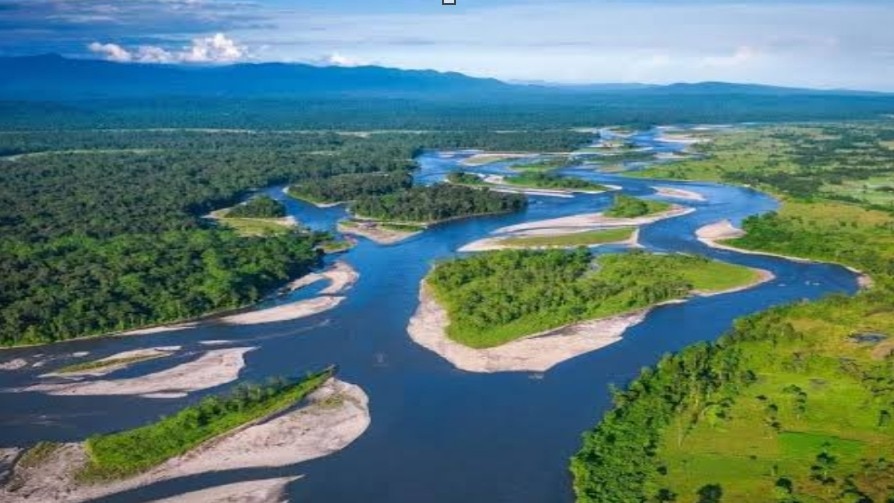
At the height of monsoon, the Brahmaputra becomes a restless giant. Its waters stretch wider than the eye can see—sometimes more than ten kilometres across—braiding into channels that shift course without warning. Sandbars rise overnight only to vanish by morning. Banks crumble, floodplains expand, and entire landscapes seem to rearrange themselves in a matter of hours. For those who live along its edge, this is not just hydrology—it is destiny. For planners and strategists, it is friction, a reminder that nature can still dictate the terms of movement and power.
For decades, crossing the Brahmaputra meant surrendering to its moods. A handful of bridges carried the burden, each vulnerable to congestion, weather, or worse—deliberate targeting in times of conflict. Every crossing became a choke point, every choke point a source of uncertainty. In India’s Northeast, distance was the oldest adversary, and the river ensured that distance remained undefeated.


A 23-year-old man in Panipat was murdered by three friends after he allegedly applied Holi colour to one accused's lover. The accused got him drunk, attacked him with a screwdriver and placed him alive on a railway track to make the killing look like an accident.

Responding to media queries, Ministry of External Affairs (MEA) spokesperson Randhir Jaiswal said the government "categorically rejects" the report and its characterisation of India. He said the commission has repeatedly presented a "distorted and selective picture" of the country.

The NDA won all five Rajya Sabha seats from Bihar after four Opposition MLAs skipped voting, dealing a setback to the Mahagathbandhan. The alliance also secured two seats in Odisha amid cross-voting by Opposition MLAs during the biennial polls.

A 46,000-tonne LPG shipment aboard Shivalik reached Gujarat's Mundra Port, carrying around 32 lakh domestic cylinders, as authorities rushed supplies to ease shortages triggered by disruptions in the Strait of Hormuz.

India depends on imports to meet its demand for urea, one of the most widely-used fertilisers in India.

India Today's OSINT team identified at least 22 Indian-flagged vessels operating in the Gulf region, including seven LPG carriers, seven oil tankers, four container ships, two bulk carriers, one tug and one dredger.

India on Monday said it has not held bilateral talks with the United States on deploying naval vessels to secure merchant shipping in the Strait of Hormuz. The clarification came after US President Donald Trump urged countries to send warships to keep the strategic waterway open amid tensions with Iran.

After attacking his wife, Nafees attempted suicide by inflicting injuries on himself with the same scissors. Neighbours intervened after hearing the commotion and stopped him from taking his own life.

The victim, identified as Naitik Kumar, allegedly rammed his speeding Bullet motorcycle into a scooter near Janeshwar Mishra Park in Lucknow, triggering a crash that left him dead and two others injured.

RJD MLA who skipped Bihar Rajya Sabha poll voting cites mother's illness

West Bengal Chief Minister Mamata Banerjee led a protest march in Kolkata against the alleged LPG shortage, accusing the PM Narendra Modi-led Centre of failing to ensure adequate supply.

Himayani Puri, daughter of Union Minister Hardeep Singh Puri, has moved the Delhi High Court over "false and malicious" reports linking her to convicted sex offender Jeffrey Epstein.

The family, a resident of Thyagaraju Street in Punganur town, had recently repaired the engine of their two-wheeler vehicle. A local mechanic advised the family to keep the engine running overnight to "set" the newly installed parts. However, this turned out to be fatal for the family.