Australian university creates plastic from milk that disappears in 13 weeks
India Today
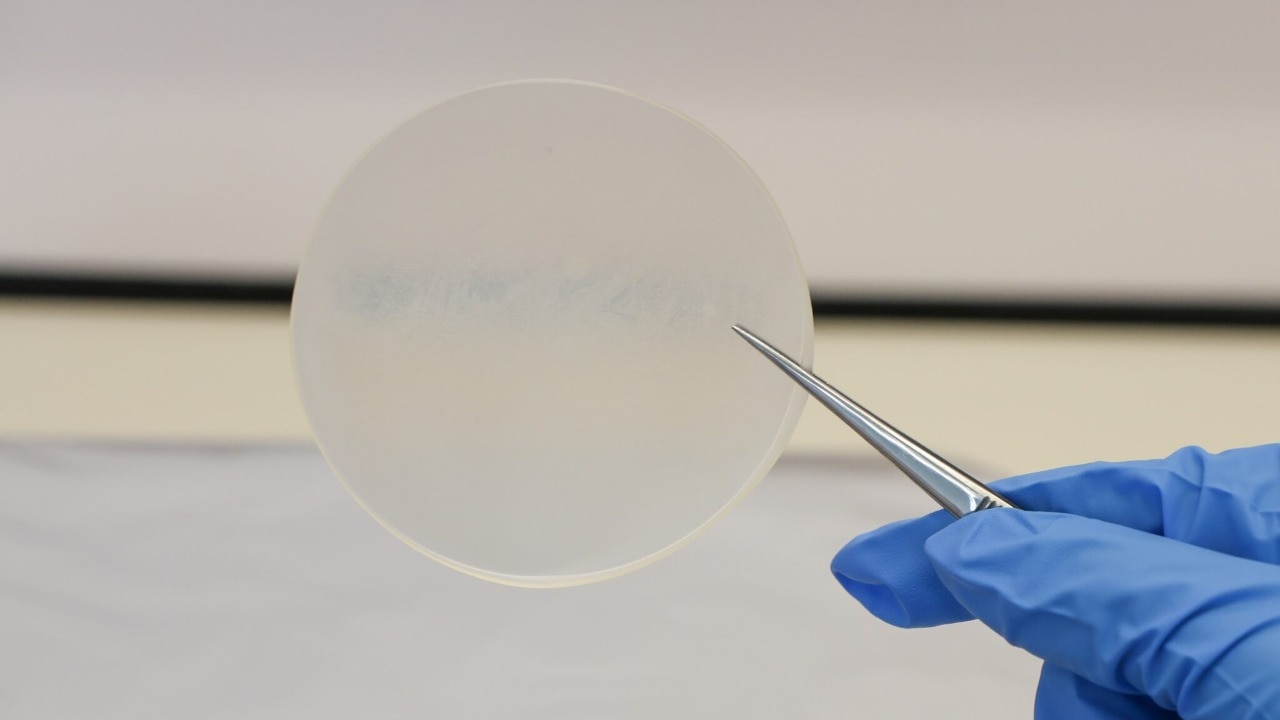
Scientists at Australia's Flinders University have developed a biodegradable plastic-like film made partly from milk protein. Designed for food packaging, the new material breaks down in soil within 13 weeks, offering a potential eco-friendly alternative to single-use plastics that contribute heavily to global pollution.
Researchers in Australia have developed a surprising alternative to traditional plastic -- a biodegradable packaging material made partly from milk protein that can completely break down in soil within about 13 weeks.
The innovation comes from scientists at South Australia's Flinders University, who are exploring new materials to reduce pollution caused by single-use plastics.
The findings were published in the scientific journal Polymers.
The researchers created a thin, flexible film using calcium caseinate, a protein derived from milk. This was combined with modified starch and a natural clay called bentonite nanoclay.
Additional ingredients such as glycerol and polyvinyl alcohol were used to improve the material’s flexibility and durability.
The goal was to produce a packaging film that behaves like ordinary plastic but is much safer for the environment.


Among the fashion standouts at the Oscars 2026 were Nicole Kidman, Teyana Taylor, Priyanka Chopra, Emma Stone, Audrey Nuna, Anne Hathaway and Pedro Pascal.

Thousands of degree certificates and mark sheets have remained unclaimed in several colleges for nearly four decades. Students passed their exams but never returned to collect their documents, leaving institutions struggling to store the growing pile of academic records.

In a small classroom in Aligarh's government school, waste materials are turning into machines. A government school teacher is guiding students to build simple robots and drones using scrap, helping them understand science through hands-on learning.

Elon Musk's satellite internet service, Starlink, is now available in Kuwait. This announcement comes at a time when the country has found itself impacted by the US-Israel war with Iran.

Delhi University has rejected Rahul Gandhi's claim of caste bias in interviews. In a post on X, the university said the Leader of the Opposition should verify facts before making such statements.

Apple is rumoured to be making its debut in the foldable smartphone market this year with the iPhone fold. From the design to the features, and the expected price, here is everything you need to know about the first-ever foldable iPhone.

The Central Board of Secondary Education, CBSE, has cancelled the Class 12 board examinations in several Middle Eastern countries due to the ongoing US-Israel-Iran war. The board also confirmed that the mechanism for announcing results for affected students will be announced at a later stage.

Chinese giant ByteDance has reportedly suspended its plans to release its latest AI video generation model, SeeDance 2.0, after major Hollywood studios raised disputes over copyright violations.

Bidyut Innovation MD Rahul Shah spoke during the India Today Conclave 2026. Shah reckoned that India could soon have its own robots competing those from other countries, perhaps at a fraction of the cost.

Alpha High School, an AI-driven education institute is rolling out a new course with a promise – earn $1 million by the time you graduate or you get a full refund. Here is how it works.

Devendra Singh Chaplot, an IIT Bombay alum has joined xAI to build super intelligence. His arrival was welcomed by xAI chief Elon Musk. Here is everything you need to know about xAI's latest Indian origin member.

Blending heritage with modern technology, Royal Enfield is preparing to enter the electric motorcycle space with the upcoming Royal Enfield Flying Flea C6, expected to debut in India around mid-2026.

IIT Madras and the Delhi government have signed an MoU to study 'smog-eating' surfaces to help tackle air pollution in the capital.