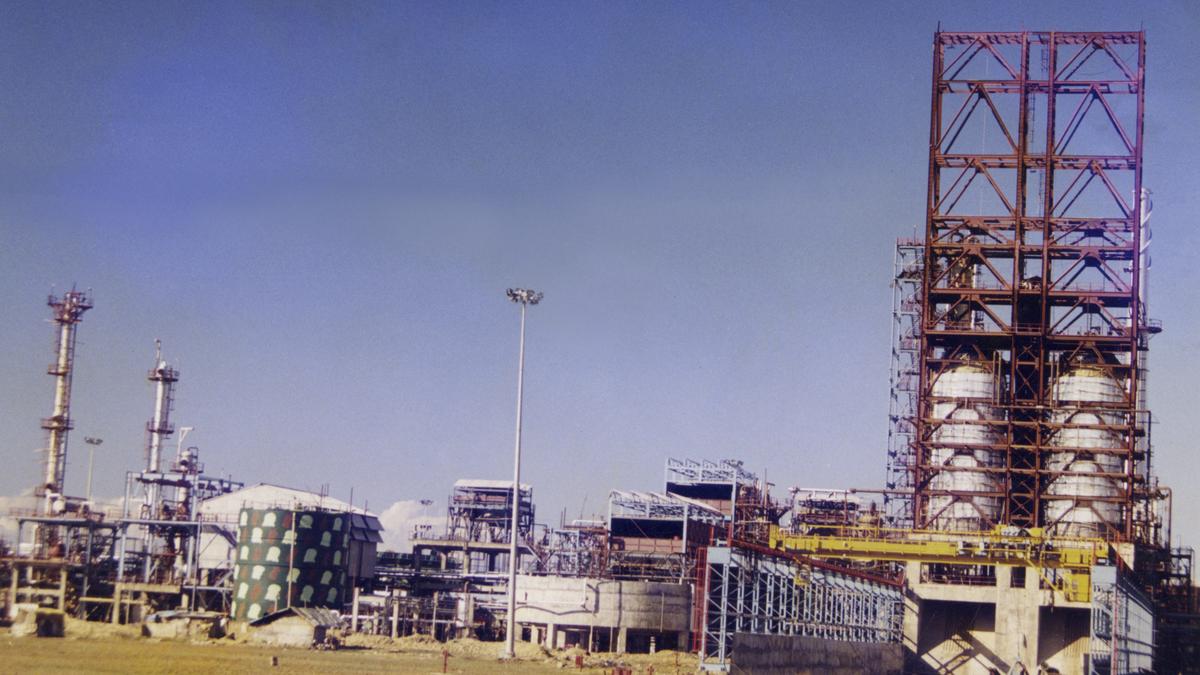
Assam refinery discharging effluents in Brahmaputra tributary: Green activist
The Hindu
Environmental activist raises concerns over hazardous effluent discharge from Assam refinery, threatening Brahmaputra River ecosystem.
GUWAHATI
A refinery in eastern Assam’s Golaghat district has been discharging hazardous effluents into a tributary of the Brahmaputra River, endangering its fragile aquatic ecosystem, an environmental activist said.
In a letter to the Member-Secretary of the Central Pollution Control Board (CPCB) on April 2, Golaghat town-based Apurba Ballav Goswami sought a probe into the effluent treatment practices of the Numaligarh Refinery Limited (NRL) and its compliance with the board’s updated pollution standards.
He appended a report by a private biosciences laboratory analysing a water sample reportedly collected from the NRL’s effluent treatment plant on March 11.
“The results reveal an exceedance of CPCB effluent discharge standards for petroleum oil refineries under the Environment (Protection) Rules, 1986, and subsequent guidelines, with severe implications for aquatic life and the long-term health of the Dhansiri River,” the letter read.
Mr. Goswami said the analysis highlighted violations such as 18.0 mg/litre of biochemical oxygen demand (BOD), 142.0 mg/litre of chemical oxygen demand (COD), and 11.5 mg/litre of oil and grease. The CPCB limits are 15 mg/litre, 125.0 mg/litre, and 10 mg/litre, respectively.
He said the readings signal a potential pattern of pollution that threatens the Dhansiri River’s biodiversity and the communities that depend on it.


Record sales of sheep and goats at Manapparai cattle shandy surge despite MCC cash restrictions ahead of Ramzan.

NCC cadets participated in a community development walkathon and awareness skit, organised by Ramaiah University and sponsored by 40 Karnataka Battalion.

Join a free webinar on March 20 exploring patient-centric, tech-enabled TB care ahead of World Tuberculosis Day.

Gold worth ₹2.5 crore seized in Nilgiris due to lack of documentation during transport to private jewellery stores.

Explore the inspiring journey of Geetha Kannan, a national-level Paralympic swimmer and junior cooperative auditor, overcoming challenges with resilience.

BJP's Dilip Ghosh claims Mamata Banerjee is trapped in Bhabanipur, facing tough election challenges from Suvendu Adhikari.

DMK MP R. Girirajan petitions Madras High Court for ED to investigate AIADMK leaders for money laundering linked to corruption cases.

V.D. Satheesan urges the Election Commission to remove LDF government hoardings, citing violations of the Model Code of Conduct.

Featuring Sanjay Dutt and Nora, the Kannada original version of the song, titled ‘Sarse Ninna Seraga Sarse’, was slammed for its “oscene” lyrics by fans and people from film fraternity on social media

Supreme Court questions West Bengal's claim that ED lacks rights to challenge obstruction during I-PAC raids by Chief Minister.

Madras High Court bans unauthorized Dhurandhar merchandise sales on major platforms and orders ISPs to block pirated content.

Ex-AAP councillor Tahir Hussain seeks one-month interim bail on medical grounds to undergo surgery related to a hernia.

BJP leader Dilip Ghosh aims to secure over 1 lakh votes, promising a victory margin greater than in 2016 elections.