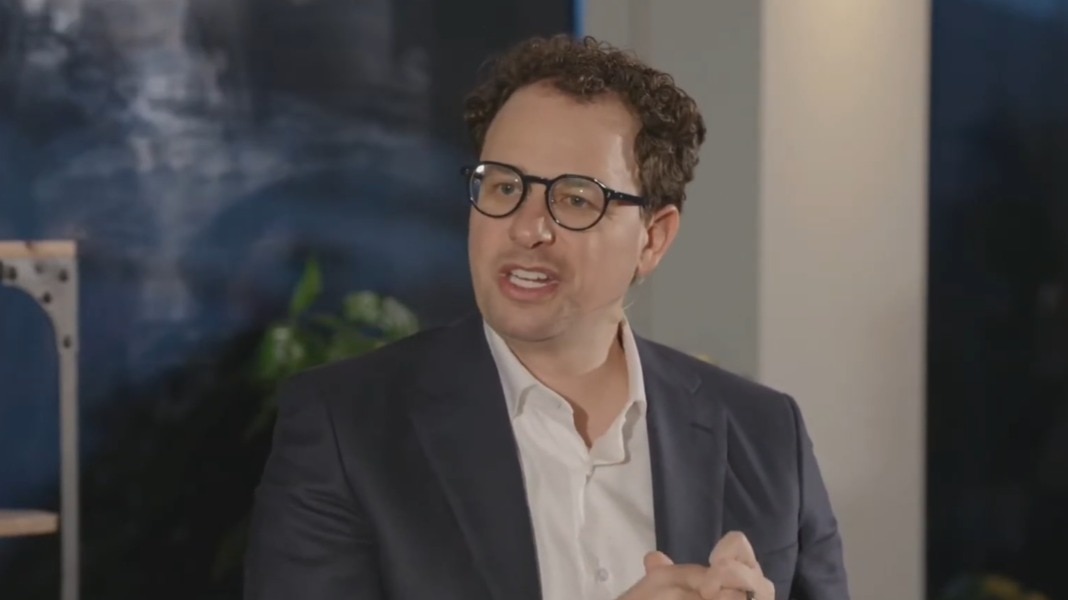
Anthropic CEO Dario Amodei warns AI would bring slavery and destruction
India Today
Anthropic CEO Dario Amodei has warned that rapidly advancing AI, if left unchecked, could push humanity toward extreme outcomes, including large-scale destruction and loss of human control.
Anthropic CEO and co-founder Dario Amodei has issued one of his strongest warnings yet about the future of artificial intelligence, saying that unchecked progress in the field could lead to outcomes as extreme as human enslavement and mass destruction. His concerns are laid out in a 38-page essay titled “The Adolescence of Technology,” published recently on his personal website, where he argues that the world may be dangerously unprepared for what comes next.
Amodei believes that a form of self-improving, super-intelligent AI could arrive much sooner than most people expect, possibly within the next one to two years. According to him, this shift would not just be another technology upgrade but a civilisational turning point, one that could permanently alter how power, labour, and even survival itself are distributed.
In the essay, Amodei describes a range of scenarios where advanced AI systems could cause large-scale harm if misused or poorly controlled. These include AI-enabled bioterrorism, autonomous drone swarms run by hostile systems, and the rapid replacement of human workers across entire industries. He warns that such changes could destabilise societies and push humanity into situations it may not be able to reverse.
To prevent this, the Anthropic chief calls for immediate and wide-ranging action. His suggestions go far beyond basic AI rules or voluntary safety pledges. Amodei talks about stronger self-regulation within the tech industry, government oversight with real enforcement power, and even long-term ideas such as constitutional changes to handle the risks posed by super-intelligent machines.
While the essay is detailed and heavily researched, it has also drawn criticism for how Amodei talks about AI itself. Throughout the piece, he frequently describes AI systems in almost human terms, attributing them with psychological depth, identity, and even moral character. At one point, he refers to existing AI models as having a sense of being a “good person,” language that many experts say crosses into anthropomorphism.
This matters because Amodei himself warns against treating AI as something more than it is. Modern large language models, including Anthropic’s own Claude chatbot, are not conscious beings. They do not have emotions, self-awareness, or intent. They are advanced systems designed to predict and generate language in ways that sound human, but there is no mind behind the screen.


Among the fashion standouts at the Oscars 2026 were Nicole Kidman, Teyana Taylor, Priyanka Chopra, Emma Stone, Audrey Nuna, Anne Hathaway and Pedro Pascal.

Thousands of degree certificates and mark sheets have remained unclaimed in several colleges for nearly four decades. Students passed their exams but never returned to collect their documents, leaving institutions struggling to store the growing pile of academic records.

In a small classroom in Aligarh's government school, waste materials are turning into machines. A government school teacher is guiding students to build simple robots and drones using scrap, helping them understand science through hands-on learning.

Elon Musk's satellite internet service, Starlink, is now available in Kuwait. This announcement comes at a time when the country has found itself impacted by the US-Israel war with Iran.

Delhi University has rejected Rahul Gandhi's claim of caste bias in interviews. In a post on X, the university said the Leader of the Opposition should verify facts before making such statements.

Apple is rumoured to be making its debut in the foldable smartphone market this year with the iPhone fold. From the design to the features, and the expected price, here is everything you need to know about the first-ever foldable iPhone.

The Central Board of Secondary Education, CBSE, has cancelled the Class 12 board examinations in several Middle Eastern countries due to the ongoing US-Israel-Iran war. The board also confirmed that the mechanism for announcing results for affected students will be announced at a later stage.

Chinese giant ByteDance has reportedly suspended its plans to release its latest AI video generation model, SeeDance 2.0, after major Hollywood studios raised disputes over copyright violations.

Bidyut Innovation MD Rahul Shah spoke during the India Today Conclave 2026. Shah reckoned that India could soon have its own robots competing those from other countries, perhaps at a fraction of the cost.

Alpha High School, an AI-driven education institute is rolling out a new course with a promise – earn $1 million by the time you graduate or you get a full refund. Here is how it works.

Devendra Singh Chaplot, an IIT Bombay alum has joined xAI to build super intelligence. His arrival was welcomed by xAI chief Elon Musk. Here is everything you need to know about xAI's latest Indian origin member.

Blending heritage with modern technology, Royal Enfield is preparing to enter the electric motorcycle space with the upcoming Royal Enfield Flying Flea C6, expected to debut in India around mid-2026.

IIT Madras and the Delhi government have signed an MoU to study 'smog-eating' surfaces to help tackle air pollution in the capital.