Akasa Air flying less after some pilots quit abruptly
The Hindu
Akasa Air, an Indian budget carrier, is flying less and taking legal action against pilots who quit without serving their mandatory notice period. This has caused their market share to slip to 4.2% in Aug. The airline is on track to announce a three-digit aircraft order and has been designated by MOCA as an International Scheduled operator. Shares of rival IndiGo rose 0.5% after the report.
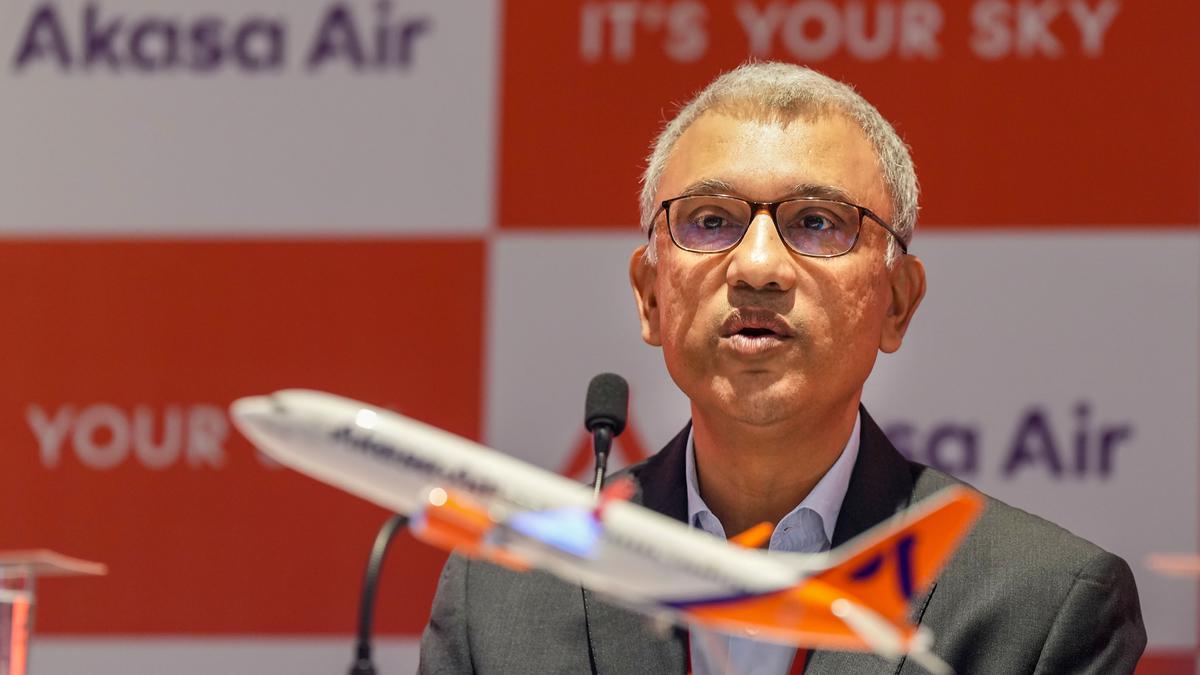
Indian budget carrier Akasa Air is flying less and will give up market share in the short term to ensure it runs a reliable operation after some pilots quit the airline, CEO Vinay Dube told employees in an email late on September 20.
"When a small set of pilots abandoned their duties and left without serving their mandatory contractual notice period, it forced a disruption of flights between July and September, necessitating last-minute cancellations," Mr. Dube said in the email reviewed by Reuters.
Akasa's market share slipped to 4.2% in August from 5.2% a month earlier, according to latest available data from the Directorate General of Civil Aviation (DGCA), India's aviation regulator.
The company has initiated legal action against the pilots who have quit without serving their mandatory contractual notice period, Mr. Dube said.
The airline, founded by Mr. Dube and former IndiGo president Aditya Ghosh in 2022, had in June placed an order for four Boeing 737 Max jets to further its plans to fly internationally by the end of the year.
The company is on track to announce a three-digit aircraft order before the end of the year, Mr. Dube said.
The Ministry of Civil Aviation (MOCA) designated the company as an International Scheduled operator, allowing Akasa to begin international flights, he said.


Wholesale price inflation hits 11-month high at 2.13%, driven by rising crude prices and increased costs across various sectors.

Kerala's wellness sector faces uncertainty due to the West Asian crisis, impacting tourism and threatening economic stability.

Experts link Punjab's distress migration to economic stagnation and job mismatches, highlighting systemic failures in political leadership.

India's merchandise exports remain flat in February, with Commerce Secretary warning of a potential dip in March due to trade constraints.

Hard Rock International closes 10 outlets in India, including three cafes in Bengaluru, while Goa hotel remains open.

The booming market for artificial intelligence servers brought Taiwan's Foxconn a 24 percent jump in annual net profit, the company said

In a statement on its website, Adobe said it has in recent years streamlined its sign-up and cancellation processes and made them more transparent.

Stock markets recover as Sensex and Nifty bounce back following a three-day slump, driven by value-buying in blue-chip stocks.

U.S. President Donald Trump’s administration is set to receive a roughly $10 billion fee from investors in the recently completed deal to take control of TikTok’s U.S. business, the Wall Street Journal reported

Meta is planning sweeping layoffs that could affect 20% or more of the company, three sources familiar with the matter told Reuters

Learn how to choose the best personal loan lender by evaluating eligibility, interest rates, and borrowing experience.

Discover why pension planning is essential in modern India to ensure financial security and peace during retirement.

The U.S. has launched two investigations under Section 301 of the Trade Act of 1974 against India and other economies to examine practices that may be ‘unreasonable or discriminatory and burden or restrict U.S. commerce’. One probe examines whether countries, including India, are using excess manufacturing capacity to export to the U.S. in a manner that hurts American businesses, while another looks at whether countries have taken ‘sufficient steps’ to prohibit imports of goods produced with forced labour.