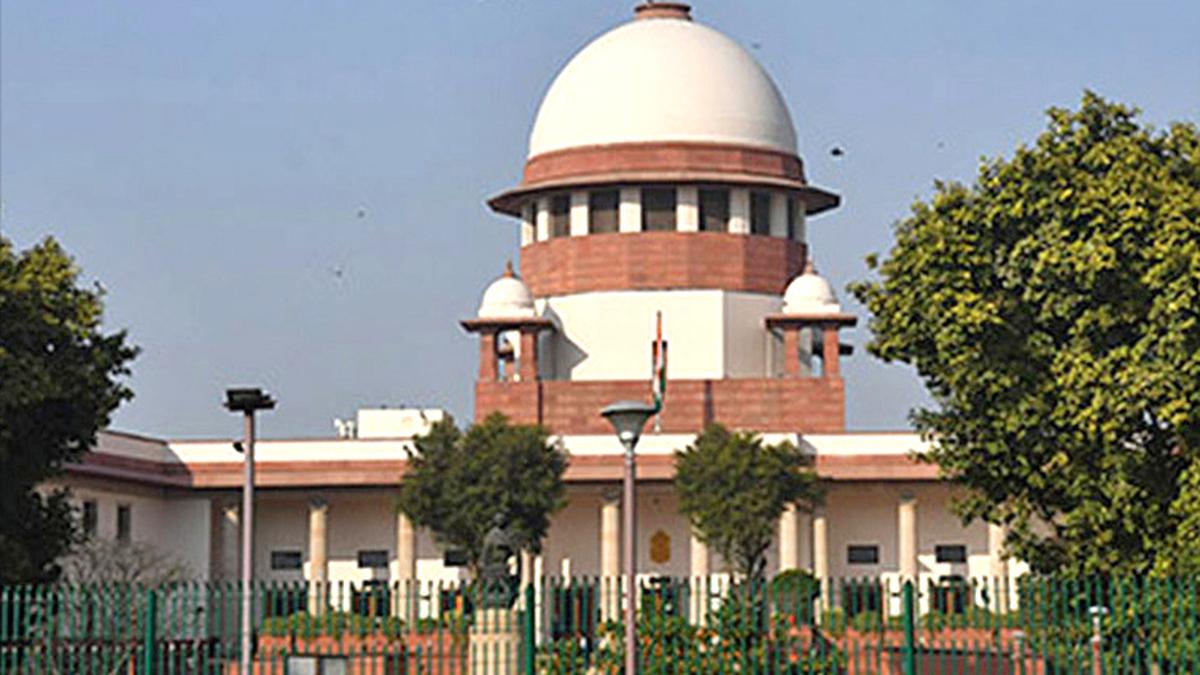
Affinity test cannot be the litmus test to decide a caste claim: SC
The Hindu
An affinity test cannot be the litmus test to decide a caste claim, the Supreme Court has held in a judgment.
An affinity test cannot be the litmus test to decide a caste claim, the Supreme Court has held in a judgment.
A three-judgment Bench led by Justice Sanjay Kishan Kaul said an affinity test is not an essential part of the process of the determination of correctness of a caste or tribe claim in every case.
An affinity test mandates the study and preparation of a report by authorities on caste/tribe claims based on the peculiar anthropological and ethnological traits, deities, rituals, customs, mode of marriage, death ceremonies, methods of burial of dead bodies, etc, of the particular caste or tribe and the applicants knowledge of them.
But the court said an “affinity test can never be conclusive” to prove a caste/tribe claim.
The judgment authored by Justice Abhay Oka pointed out that an applicant may have “good knowledge” about these traits without belonging to the particular caste or tribe.
Besides, Justice Oka reasoned that if the “applicant has stayed in bigger urban areas along with his family for decades or if his family has stayed in such urban areas for decades, the applicant may not have knowledge of the facts”.
In some cases, even the parents of the applicants would be unaware of intrinsic tribal or caste traits “for the reason that for several years they have been staying in bigger urban areas”.


Supreme Court reinstates FIR against IAS officer J. Manjunath, allowing bribery probe from 2022 involving Bengaluru Urban administration.

Telangana's screening reveals 26.9 lakh with hypertension and 14 lakh with diabetes, spotlighting a silent epidemic of non-communicable diseases.

KRG Studios appeals against leave granted to producer Kalaipuli Thanu for a suit regarding distribution rights of the film Max.

Supreme Court rejects petition for Q inclusion in census, citing concerns over social division and class creation.

Two RSS workers arrested for hurling a bomb at a policeman’s house in Kannur, Kerala; major tragedy averted.

Three youths radicalised by ISIS and AQIS arrested in Vijayawada for planning terror activities across India.

T.N. CM Stalin challenges PM Modi on government preparedness for West Asia crisis, emphasising leadership responsibility over public outsourcing.

Telangana DCA warns against unsupervised semaglutide use, stressing the importance of medical supervision and safe purchasing practices.

From origami classes at Rosary matriculation school to the two-day Makers Market in Mylapore, Chennai resident Priya Subramaniam has come a long way.

Election Commission bans exit poll results in Tamil Nadu from April 9 to April 29 ahead of Assembly elections.

Residents of Tambaram express concern over inadequate infrastructure amid rapid urban growth, highlighting traffic, drainage, and waste management issues.

Explore the defining moments and developments of Tamil Nadu's 16th Assembly, marked by political confrontations and administrative innovations.

Kerala CM Pinarayi Vijayan defends his remarks on G. Sudhakaran, labeling him a 'class traitor' amid election tensions.