A guide to ‘preventing’ public health misinformation
The Hindu
A new Lancet paper suggests interventions that can build resilience, manage information ecosystems and prevent infodemics beyond merely “reacting to misinformation or disinformation” crises.
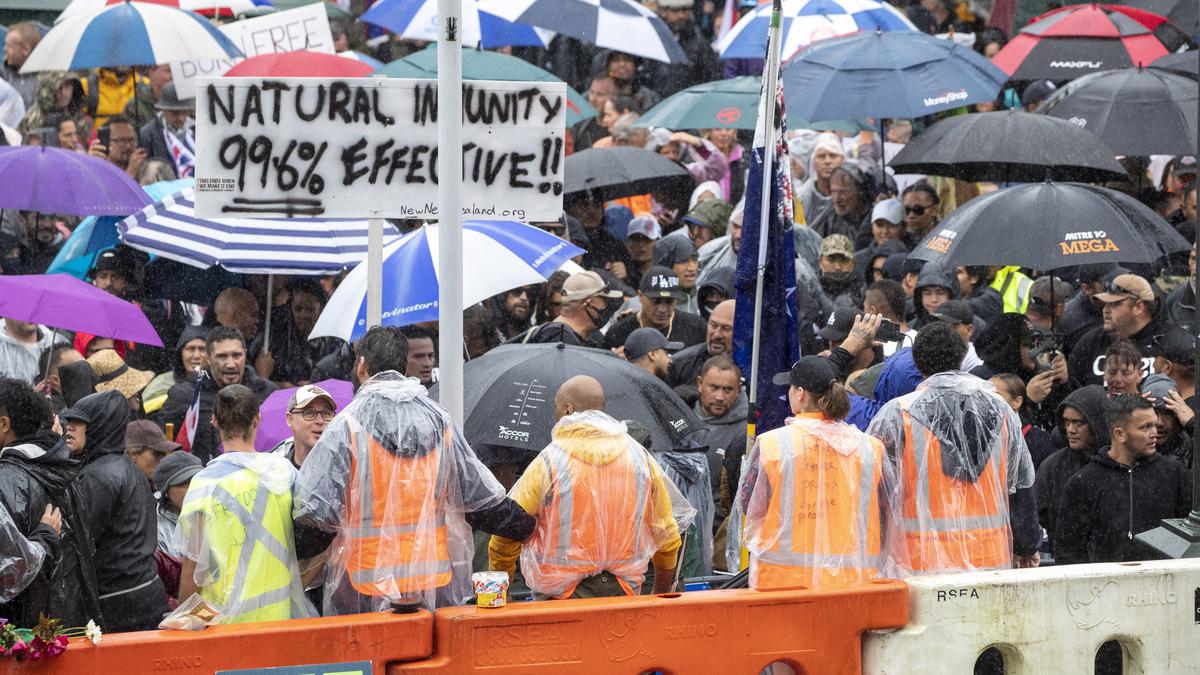
Some public health emergencies strike with suddenness, others fester slowly. Pandemics trigger lockdowns; influenza flu activates demand for antivirals; floods prompt advisories on communicable diseases. The peril is palpable, its elimination urgent. Some threats, however, are discreet. “We’re not only fighting an epidemic, but an infodemic,” said WHO Director-General Tedros Adhanom Ghebreyesus in February 2020, before COVID-19 swept the world. The alarm was rung as a surfeit of scientific information took hold: the evidence was ambiguous and false information ample. Public health infodemics crawl before they vanquish: they look like science, move to misdirect and prey on people, which in turn affected health behaviours and outcomes.
Infodemics emerge as a parallel threat as scientists warn of future outbreaks and nations join forces to bolster ‘pandemic preparedness’. Can misinformation — about pathogens, transmission, vaccines — be prevented too? A new Lancet paper offers a cocktail of real-world strategies to immunise communities from infodemics. These include, and are not limited to, training healthcare workers and improving access to reliable scientific information. The framework both preempts and responds to emergencies, suggesting interventions that begin before pathogens paralyse health systems.
Think of public health infodemic action as a river flowing downstream. The source at present is the ‘tertiary level’, when the focus is on minimising the negative effects of a crisis. Say, debunking false claims about COVID-19 vaccines, or penalising social media users who share misleading posts. The river trickles down to the ‘secondary’ level -- where strategies like listening to people and monitoring conversations can help identify infodemics at earlier stages. It reaches the ‘primary level’, where infodemics can be prevented by building literacy among people, and then the ‘primordial level’, when communities are resilient enough to not fall prey to information gluts.
The researchers at the U.S. Centers for Disease Control and Prevention reviewed literature published between 1961 and 2023, including peer-reviewed papers, reports and policy documents, to investigate how infodemics are understood and managed. A gap was evident. Frameworks sometimes included ideas but not implementation strategies; they were singularly focused on one discipline (such as epidemiology) and neglected other crises; there was little evidence linking information exposure to health behaviours and outcomes; the strategies were confined to emergency responses only, framed for the aftermath of a public health emergency.
Most pertinently, the current scaffolding missed the forest for the trees: it neglected to see misinformation as part of a complex ‘information ecosystem’ that does not function in silos. The ecosystem functions as a market. The demand for health information is spurred forward by people’s need for knowledge, literacy levels, a trust in political leaders; the supply of information is determined by public figures and social media platforms. The researchers investigated different components, “including not only misinformation and disinformation but also information overloads and information voids”. Eliminating misinformation is crucial, but “should not be the sole focus”, the paper noted.
Misinformation has floated around in the health system for centuries; the COVID-19 pandemic revealed the cost and consequences of a threat that rankles in silence. COVID-19 infodemics sparked confusion and risk-taking among the people, a sentiment that ossified into mistrust towards governments and the public health systems. The tide of fake news and globalised internet systems have weakened the foundation of health information ecosystems, says Parth Sharma, a public health physician who was not associated with the paper. This, coupled with healthcare becoming a profitable “industry”, has marked a new era where infodemics function and travel in hyperspeed. “Misinformation has become a bigger threat to the health of people than a lack of information,” adds Dr. Sharma.
The blind spots in the current framework, and regulatory challenges such as Patanjali’s allopathic dominance, have only exposed the degree of infodemic rot. A Lancet editorial recently flagged the lack of credible health data in India; the absence of which “impoverishes democratic choices”. Health misinformation also fans communal violence and hate speech. The false claims targeting Indian Muslims during COVID-19 framed the community as figures of threat and distrust, escalating the routine harassment, discrimination and violence they face. “No need to buy vegetables from ‘miyans’ [Muslims],” said a BJP leader from Uttar Pradesh in a video; hospitals reportedly separated wards for Muslim people.


A lorry carrying firecrackers caught fire after hitting a high-tension wire in Hyderabad, but drivers escaped unharmed.

A Q and A career counselling column for students

Senior Yakshagana artist Surikumeri K. Govinda Bhat, aged 88, has passed away, leaving behind a legacy of performance and teaching.

Meet Nivrritii Mahesh, a Bharatanatyam dancer who dances with Cochlear implants

A Lamborghini driver has been booked for performing dangerous stunts at Anil Kumble Circle, raising road safety concerns in Bengaluru.

Kunhalikutty files nomination in Malappuram, showcasing communal harmony with support from representatives of diverse communities.

NHRC mandates teams of qualified doctors for custodial death autopsies to ensure procedural integrity and objectivity in investigations.

PM Modi discusses regional stability with Iran's President, emphasizing secure shipping lanes and condemning attacks on critical infrastructure.

Tribal council chiefs and their families enter Assam's electoral scene, aiming for representation in the 2026 Assembly elections

A Russian drone strike in Zaporizhzhia kills two, complicating upcoming U.S.-Ukraine peace talks amid ongoing conflict.

Chief Minister Naidu advocates transforming TTD temples into advanced spiritual hubs for enhanced pilgrim experiences and proactive governance.

Himachal CM Sukhu presents a ₹54,928-crore budget for 2026-27, citing BJP's lack of support and raising milk procurement prices.

Three arrested in Chennai chain-snatching case; police recover ₹1.91 lakh and seize vehicle and mobile phone.