A gentle love story | Review of Once Upon a Summer by Manjul Bajaj
The Hindu
Discover the gentle love story in "Once Upon a Summer" by Manjul Bajaj, set against historical and cultural challenges.
Every memorable love story, especially one that endures, hinges on a serious hurdle, whether social, political, or rooted in class. In stories set in colonial times, the romance between an Indian man and a British woman serves as a powerful narrative device. This dynamic appears in Gulshan Nanda’s Palay Khan (later adapted into a film) and Ruskin Bond’s A Flight of Pigeons (filmed as Junoon), where the backdrop of rebellion or unrest amplifies the tension and heightens the dangers of the relationship.
Manjul Bajaj’s Once Upon a Summer follows the same course, but unlike the two novels mentioned above, it is far removed from the upheaval of rebellion. It tells a gentler, more restrained love story between an Indian syce (stablehand or groom) and the daughter of a senior British official. Here, class and racial identity create the central stakes.
The novel begins in 1950s New York, where the narrator, a Manhattan-based publisher (whose identity and connection to the protagonists, Azeem and Madeline, are not revealed here, as that would be a major spoiler), tells a story that begins in the early 20th century.
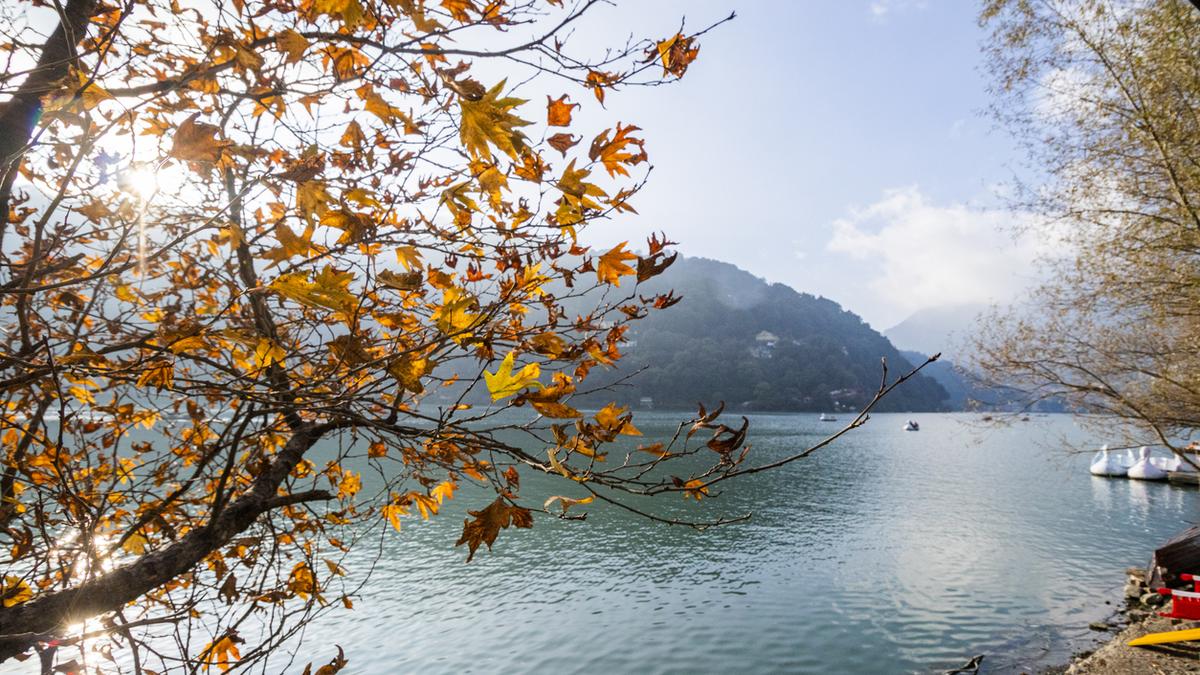
This narrative takes readers across continents and decades, offering glimpses into the political and social climate of the period. It shows how Azeem, a stablehand in Nainital, could captivate and transform Madeline, an English girl, defying the rigid boundaries of their world. Both characters are endearing, and the fact that they are based on real-life figures makes readers connect with them even more.
Their journey stretches from Nainital’s hill station to Quetta, Aden, Baghdad, Portugal, and finally the United States. Differences in colour, class, race, and upbringing make their union unthinkable to society, with each step toward one another shadowed by risk.
Author Manjul Bajaj


Modi and Jaishankar advocate for dialogue as India and France collaborate to de-escalate tensions amid escalating strikes on energy infrastructure.

The star-studded event was held in Mumbai and was attended by rithik Roshan, Alia Bhatt, Bobby Deol, Shahid Kapoor, Vijay Varma, Sonakshi Sinha, Jyotika, Ali Fazal, Sonali Bendre, Preity Zinta, Ravi Kishan and others

Shorts News:We are working on securing LPG, petroleum to meet our energy security needs: MEA

P. Veldurai served five years as MLA and was later asked to repay ₹21 lakh in Tamil Nadu.

Supreme Court reserves verdict on defining 'industry' under Industrial Disputes Act, impacting educational and healthcare sectors.

Dindigul Collector S. Saravanan held a meeting with Election Observers to ensure smooth election monitoring across seven constituencies.

Despite delays from the Centre, 24 States allocate funds for a new rural jobs program, using past MGNREGA expenditure as a baseline.

Congress’s third candidate list for Assam Assembly elections highlights the Pradyut factor and notable party shifts among MLAs.

Scholars foresee political shifts and governance concerns at BRS Ugadi celebrations, predicting potential opposition strength amid public dissatisfaction.

Election observers deployed in Thoothukudi; field inspection begins

Sri Sathya Sai Prema Sadan celebrated Ugadi with Vedic chants, Ugadi Pachadi, and Sri Rama Navami preparations in Visakhapatnam.

Visakhapatnam celebrated Ugadi with Panchanga Sravanam, cultural events, and auspicious predictions for a prosperous new year.

Celebrating diverse top talents, including visually impaired achievers, artists, and cultural icons honored with Ugadi awards.