YSRCP moves to consolidate its vote bank in the North Andhra region ahead of 2024 elections
The Hindu
Its choice of candidates hailing from the communities that have hitherto been neglected for the MLC elections is seen as a well thought out strategy
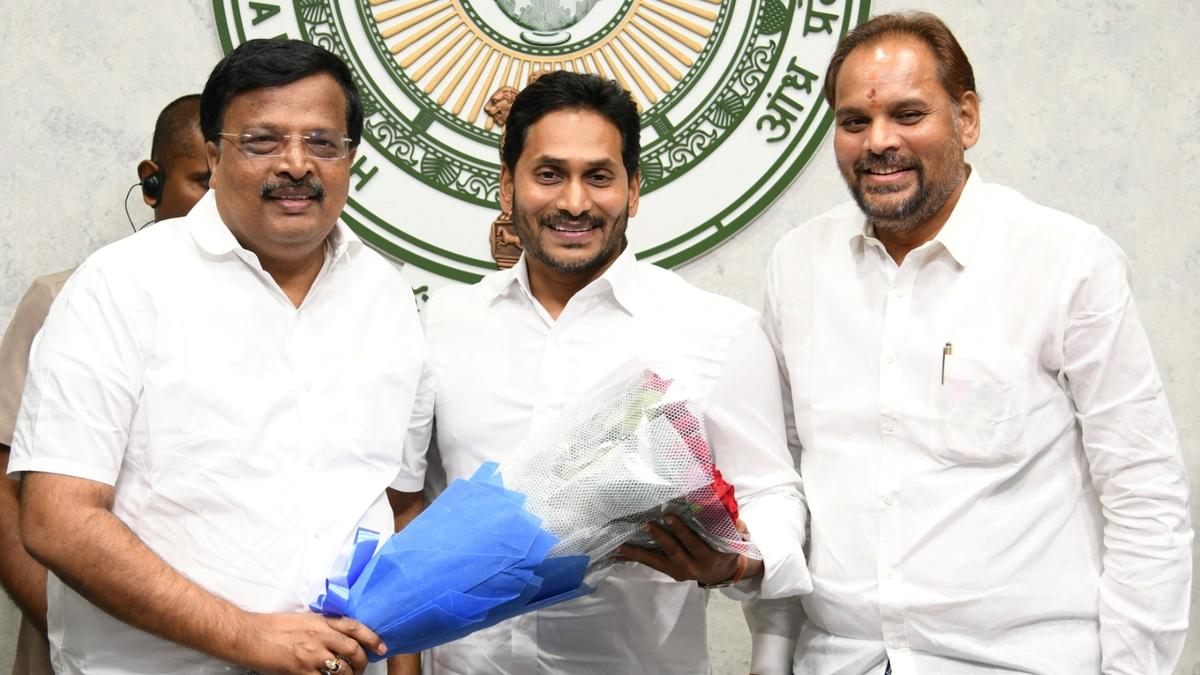
The ruling YSR Congress Party (YSRCP), which is keen on consolidating its vote bank in the North Andhra region, seems to have strategically chosen members of various communities hitherto neglected as its MLC candidates ahead of the 2024 general elections.
The selection of YSRCP State secretary Narthu Rama Rao as its candidate from Srikakulam under the local bodies quota vouches for it.
Mr. Rama Rao, who had unsuccessfully contested the 2014 general elections from Itcharapuram, belongs to the Yadava community.
The community, which is mostly involved in the dairy business, has been neglected by almost all the parties for the last three decades.
The selection of Mr. Rama Rao is seen as an attempt to please the community that plays a key role in the Itchapuram constituency, where the YSRCP had been defeated in 2019 inspite of the wave in its favour across the State.
The party had initially considered the names of A.P. Kalinga Vysysa Corporation chairman Andhavarapu Suribabu, former Srikakulam Municipal chairperson M.V. Padmavati and Srikakulam DCCB former chairman Dola Jaganmohana Rao for the MLC seat.
However, the leadership has plumped for Mr. Rama Rao to consolidate the vote bank in Itcharapum, where the TDP is strong and its candidate Bendalam Ashok had won the seat in 2019 elections.


Dakshina Kannada Zilla Panchayat has rolled out digital mode of water bill generation and collection in 23 gram panchayats on a pilot basis for the first time in Karnataka. This is set to be extended to the remaining 200 panchayats shortly, according to the Zilla Panchayat Chief Executive Officer Narwade Vinayak Karbhari.

Bengaluru police questioned a man carrying ₹6 lakh for medical expenses at Vidhana Soudha, later releasing him after verification.

BJP accuses Bengaluru's Congress government of corruption in e-Khata issuance, halting infrastructure projects due to financial mismanagement.

Misinformation in Hyderabad sparks panic buying, causing disruptions as residents react to unfounded rumors of an impending lockdown.

Bengaluru Metro extends services until 2 a.m. on March 28 for IPL match, ensuring convenient travel for spectators.

A bus truck-collision in Andhra Pradesh's Markapuram district, killing several. Catch LIVE updates here!

Residents of Thiruporur constituency face civic challenges amid rapid urbanization, impacting resources, infrastructure, and local livelihoods.

NTK chief Seeman criticizes competitive populism and freebies at a rally, warning against northern influence in Tamil Nadu politics.

A 32-year-old man is arrested for abusive social media posts and mid-air misconduct involving Bengaluru police and Indigo Airlines.

A tragic bus-truck collision in Markapuram kills 10-12 and injures over 20, prompting a state investigation and condolences from the Chief Minister.

Telangana sets up control rooms after a deadly bus fire in Markapuram, aiding victims' families from Andhra Pradesh.

Microplastics, especially nylon fibres, are present in Chennai’s beach sediments in relatively low abundance, but low overall microplastic abundance does not necessarily imply low ecological risk. Even small particles can cause long-term ecological damage by affecting marine life, moving up the food chain, and eventually impacting human health through contaminated seafood.

Fuel outlets in Hyderabad remain crowded for the third day, as LPG auto drivers face ongoing shortages despite government assurances.