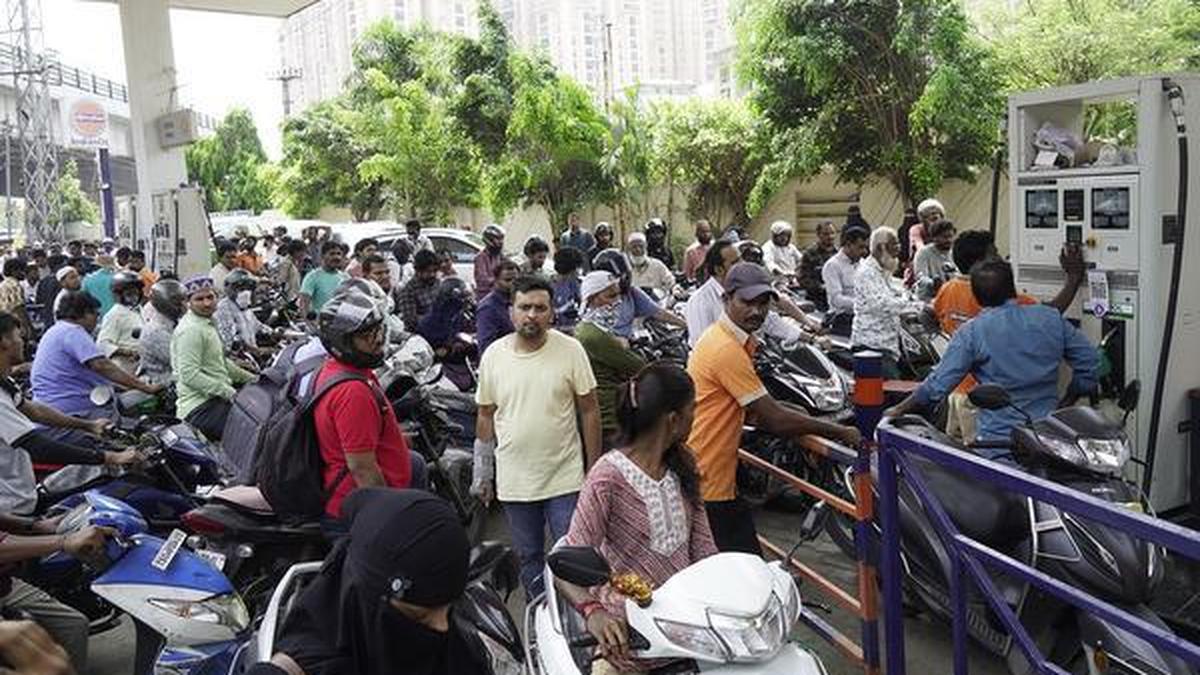
Misinformation wave deepens anxiety in Hyderabad, triggers panic buying and citywide disruption
The Hindu
Misinformation in Hyderabad sparks panic buying, causing disruptions as residents react to unfounded rumors of an impending lockdown.
From Instagram reels warning of an “energy lockdown” and urging people to stock up on essentials, to WhatsApp forwards dissecting global tensions and predicting work-from-home mandates and travel curbs, a flood of speculative content is shaping public perception in Hyderabad. Even as the city grapples with global uncertainties and supply concerns, a more insidious challenge is rapidly taking hold — an unchecked wave of misinformation is fuelling fear, anxiety, prompting residents to prepare for disruptions that authorities say have not been announced.
Also Read | Fuel outlets in Hyderabad packed
In the past few days, rumours of an impending “lockdown” have spread swiftly across social media platforms, prompting residents to rush to grocery stores and fuel stations in a bid to stock up on essentials. The result has been a familiar but troubling pattern: panic-driven demand overwhelming systems that were otherwise functioning normally.
On a weekday morning, Suresh Kumar, a police official, found himself dealing with such fear at home. His wife, alarmed by messages circulating online, insisted they prioritise stocking up on groceries over everything else. “She was convinced a lockdown is coming. She was very stressed and wanted us to prepare immediately,” he said.
Similar scenes are unfolding in households across the city. S. Rahul, an IT employee, described returning home to find his family already in preparation mode. “My mother had bought large quantities of vegetables and fruits - 15 kilos of onions, 5 kilos of tomatoes, and 10 kilos of potatoes. She asked me to place a bulk order for rice, flour and cereals with our go-to kirana shop and said it is for the upcoming lockdown,” he sighed.
This surge in fear is not occurring in isolation. Hyderabad has, in recent days, already witnessed how misinformation can trigger real-world consequences. Rumours of an LPG shortage led to households placing multiple cylinder orders, artificially inflating demand and straining supply. Soon after, unverified claims of a fuel shortage resulted in kilometres-long queues at petrol pumps, with demand surging up to three to five times within hours and traffic across several parts of the city grinding to a halt.


Dakshina Kannada Zilla Panchayat has rolled out digital mode of water bill generation and collection in 23 gram panchayats on a pilot basis for the first time in Karnataka. This is set to be extended to the remaining 200 panchayats shortly, according to the Zilla Panchayat Chief Executive Officer Narwade Vinayak Karbhari.

Bengaluru police questioned a man carrying ₹6 lakh for medical expenses at Vidhana Soudha, later releasing him after verification.

BJP accuses Bengaluru's Congress government of corruption in e-Khata issuance, halting infrastructure projects due to financial mismanagement.

Misinformation in Hyderabad sparks panic buying, causing disruptions as residents react to unfounded rumors of an impending lockdown.

Bengaluru Metro extends services until 2 a.m. on March 28 for IPL match, ensuring convenient travel for spectators.

A bus truck-collision in Andhra Pradesh's Markapuram district, killing several. Catch LIVE updates here!

Residents of Thiruporur constituency face civic challenges amid rapid urbanization, impacting resources, infrastructure, and local livelihoods.

NTK chief Seeman criticizes competitive populism and freebies at a rally, warning against northern influence in Tamil Nadu politics.

A 32-year-old man is arrested for abusive social media posts and mid-air misconduct involving Bengaluru police and Indigo Airlines.

A tragic bus-truck collision in Markapuram kills 10-12 and injures over 20, prompting a state investigation and condolences from the Chief Minister.

Telangana sets up control rooms after a deadly bus fire in Markapuram, aiding victims' families from Andhra Pradesh.

Microplastics, especially nylon fibres, are present in Chennai’s beach sediments in relatively low abundance, but low overall microplastic abundance does not necessarily imply low ecological risk. Even small particles can cause long-term ecological damage by affecting marine life, moving up the food chain, and eventually impacting human health through contaminated seafood.

Fuel outlets in Hyderabad remain crowded for the third day, as LPG auto drivers face ongoing shortages despite government assurances.