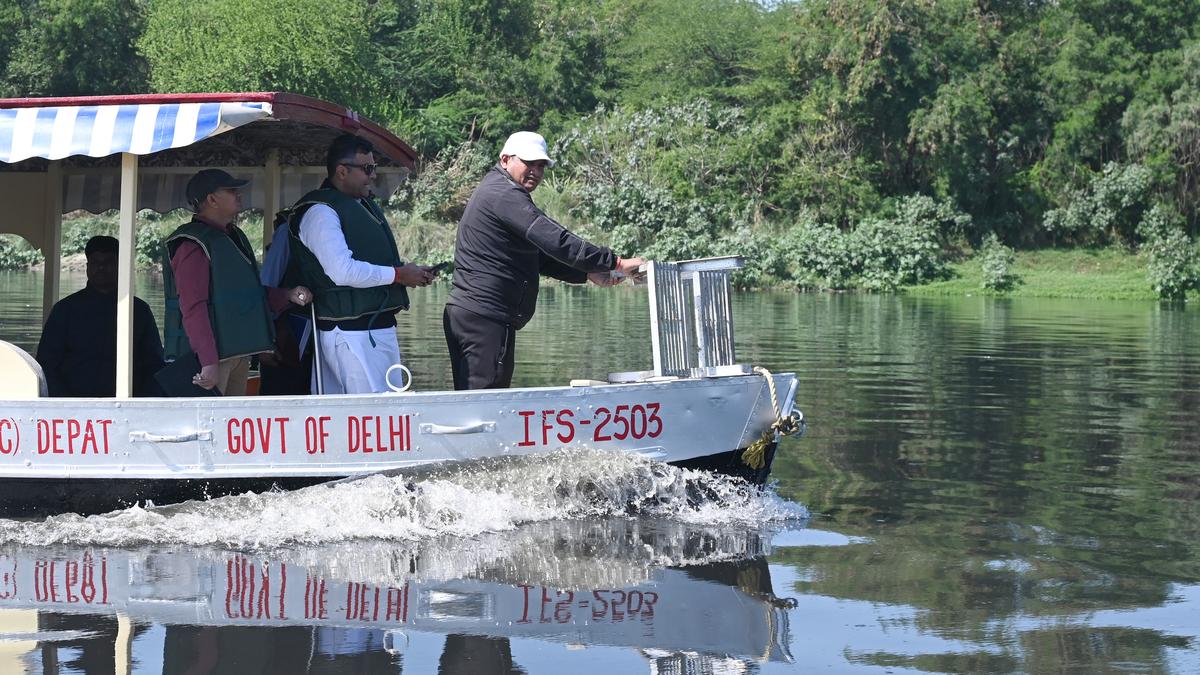
Yamuna cleaning: Faecal sludge to free flow, CSE report charts new course
The Hindu
CSE report calls for urgent reforms to revive polluted Yamuna river, emphasizing sewage treatment and industrial pollution control.
The Centre for Science and Environment (CSE), a Delhi-based research and advocacy group, released a comprehensive report on Thursday that calls for immediate and systemic reforms to revive the heavily polluted Yamuna river.
The report titled ‘Yamuna: The Agenda for Cleaning the River’ emphasises the need to collect and treat all faecal sludge from non-sewered areas. It recommends reworking strategies for the Najafgarh and Shahdara drains, which contribute a staggering 84% of the pollution load into the river.
Highlighting inefficiencies in current sewage treatment practices, the CSE criticises the discharge of treated water into drains that are already polluted with untreated waste, rendering the treatment process ineffective. “Each sewage treatment plant (STP) must plan not just how it will treat, but also how it will discharge treated effluents,” the report notes.
It also calls for an increase in river flow to improve the river’s ability to assimilate waste. This could involve reducing water intake, enhancing storage, and directly discharging clean, treated water into the river.
The report raises concerns about unchecked industrial pollution, particularly from units operating in unauthorised areas beyond regulatory oversight.
CSE Director General Sunita Narain stated that despite years of investment and legal pressure, the river shows no sign of improvement.
“The agenda for cleaning the river is critical as a ‘dead Yamuna’ is not just a matter of shame, it also adds to the burden of providing clean water to Delhi as well as to the cities downstream,” Ms. Narain said.


BJP Puducherry president V. P Ramalingam files nomination for Raj Bhavan, joined by Union Minister Mandaviya and Khushbu Sundar.

History-sheeter 'Thoppai' Ganesh shot dead by police in Chennai after attacking officers during attempted escape.

The government plans to amend the FCRA, introducing new regulations for NGO asset management and accountability for key functionaries.

The draft policy for “Responsible Digital Use Among Students”, released on Monday by the Department of Health and Family Welfare, has recommended that parents set structured routines with clear screen-time rules and prioritise privacy, safety, and open conversation with children on digital well-being.

Police Observer Sushant Kumar Saxena conducts surprise inspection at Shencottai police station, reviewing warrants and security arrangements ahead of elections.

Andhra Pradesh government to launch key projects in April, focusing on industrial growth and infrastructure development, says Nara Lokesh.

Lok Sabha refers the Corporate Laws (Amendment) Bill to a JPC amid opposition concerns over CSR provisions dilution.

SHG members in Kanniyakumari use snakes and ladders to raise election awareness and boost voter turnout.

Government accelerates consultations for early implementation of the Women’s Reservation Act to ensure women’s representation in 2029 elections.

CM A. Revanth Reddy distributes ₹1 crore insurance cheques to families of deceased Electricity department employees, enhancing financial security for workers.

The Bengaluru Traffic Police (BTP) registered 634 cases of drunk driving during a week-long special enforcement drive conducted across the city between March 16 and March 22.

GHMC intensifies action against property tax defaulters, seizing properties and offering a One Time Settlement scheme for payments.

CCB arrests three drug peddlers in Mangaluru, seizing ₹2.5 lakh worth of MDMA and other valuables.