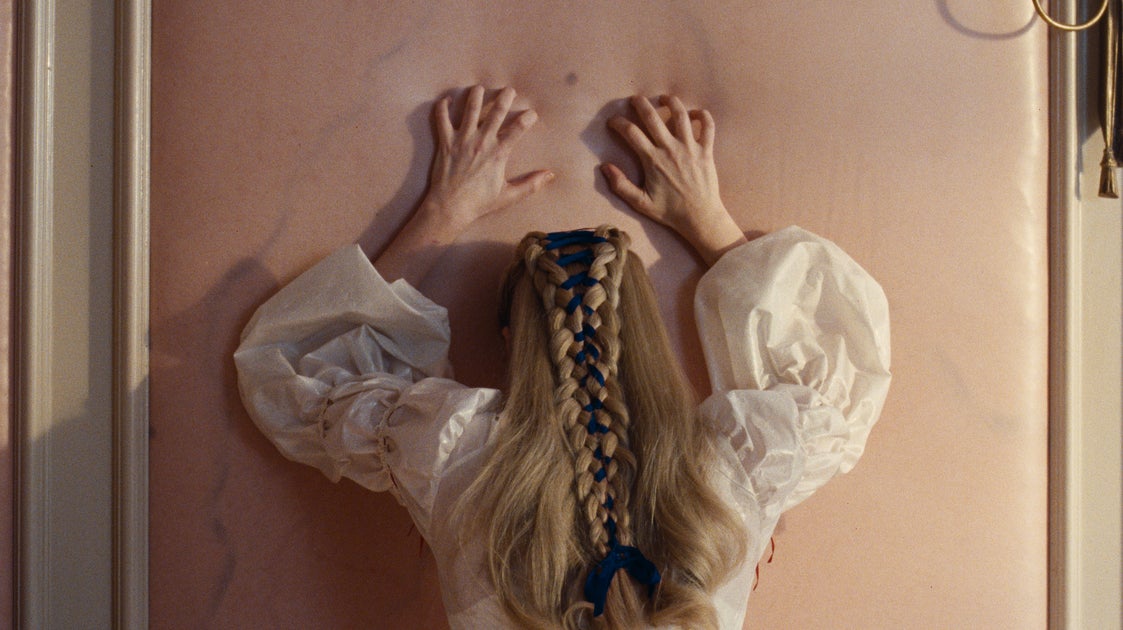
'Wuthering Heights' Is Like A Horny Teenage Fever Dream — And Yes, That's A Good Thing
HuffPost
The film adaptation of Emily Bronté's novel starring Margot Robbie and Jacob Elordi is nothing like the book you read in English class — and for good reason.
In “Dying for You,” Charli XCX sings, “cause you’re the poison I drink, I drink you twice to be sure.” The song is on her new album, “Wuthering Heights,” and was written for Emerald Fennell’s screen adaptation of Emily Bronté’s 1847 novel about the toxic love that binds Catherine (Margot Robbie) to her father’s ward, Heathcliff (Jacob Elordi).
Fennell’s adaptation — styled “Wuthering Heights” in quotation marks to connote that it is not a strict interpretation of the gothic text — was inspired by the “profound connection” the director felt to the book as a teenager. With the film, she “wanted to make something that was the book that I experienced when I was 14.”
Mission accomplished.
Fennell’s version of the classic story feels exactly like the kind of ruinous love someone would ruminate in their childhood bedroom while listening to angsty music and imagining that romantic love is supposed to hurt to be real. Put another way, Fennell purposefully sets aside some of the story’s larger themes of gender, class and race to distill it into one of childhood infatuation that evolves into adult devastation.
The result is that viewers looking for a straightforward adaptation of the book are sure to be disappointed, especially since it ignores over half of the source material. However, if you’re like me and open to a cinematic experience that feels like an amorous 14-year-old’s fever dream about a disastrous love story full of irreverent longing that is symbolized through viscous objects like egg yolks and gelatinous fish mouths, then this is the movie for you. Because, like such a dream, it’s visceral and hard to look away and makes you feel everything.


The film adaptation of Emily Bronté's novel starring Margot Robbie and Jacob Elordi is nothing like the book you read in English class — and for good reason.

The "Real Time" host also discussed a different kind of "dick" elsewhere in the episode.

"I was standing in swanky restaurant in New York City wearing a black dress short enough to satisfy management, and I had just broken the most important rule of the job."

The "Late Show" host found the president's latest appeal for cash to be a little too desperate.

"Proof of life” used to mean sending a grainy image of a person who's been abducted. That's no longer true.

The Grammy-winning singer sang on hits like “Up, Up and Away,” "Stoned Soul Picnic," and 1969’s “Aquarius/Let the Sunshine In.”

Laura Benanti brought her impression of the first lady back to “The Late Show,” where she also took jabs at the president, Eric Trump and Elon Musk.

Maria Shriver and Jennifer Garner were among the stars who reacted to the "Today" show host's emotional message to her mother's possible kidnappers.

The late night host wants to see some receipts.

The "Late Show" host said this issue isn't going away -- no matter how much the president wants it to.

Guthrie was due to co-host the opening ceremony with Terry Gannon but NBC said she was no longer traveling to Italy due to her mother's disappearance.

The comedian looks like a completely different person in a promo photo for his upcoming film, “Outcome.”

Nancy Guthrie has several ailments that require care, a law enforcement bulletin revealed.