WIPO concludes new treaty to protect genetic resources, traditional knowledge; India plays key role
The Hindu
Members of WIPO have concluded an agreement under which it will be mandatory for patent applicants to disclose country of origin or source of genetic resources.
Members of Geneva-based World Intellectual Property Organization (WIPO) have concluded an agreement under which it will be mandatory for patent applicants to disclose country of origin or source of genetic resources if the claimed invention is based on those materials or associated traditional knowledge.
The treaty will provide additional protection for Indian genetic resources and traditional knowledge. Although these are currently protected within India, they are prone to misappropriation in countries, which do not have disclosure obligations.
The current patent legislation does not have a mandatory provision requiring patent applicants to disclose the country of origin or source in case where the invention is based on genetic resources.
At present, only 35 countries have some form of disclosure obligations, most of which are not mandatory and do not have appropriate sanctions or remedies in place for effective implementation.
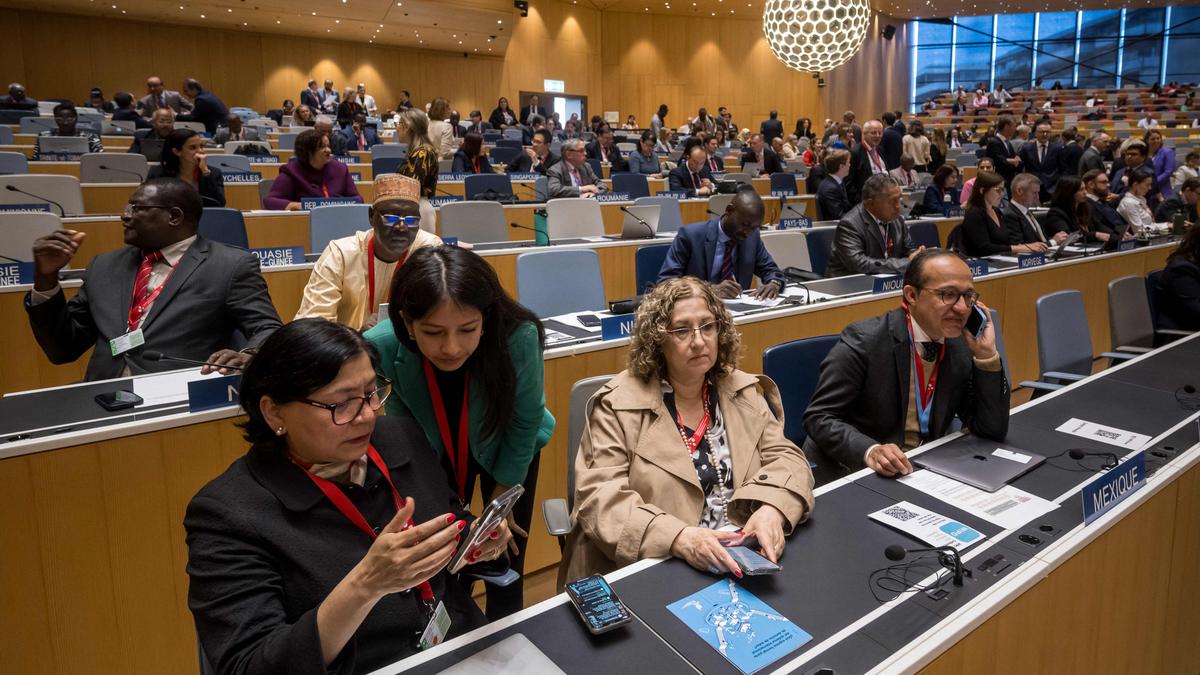
The new treaty was adopted on May 24 at the WIPO headquarters in Geneva after 192 countries and 86 observers participated in the two-week negotiations from May 13-24 at a Diplomatic Conference.
This treaty will require contracting parties, including the developed world, to bring changes in their existing legal framework for enforcing disclosure of origin obligations on patent applicants.
Genetic resources (GRs) are present in things like medicinal plants, agricultural crops, and animal breeds. While genetic resources themselves cannot be directly protected as intellectual property, inventions developed using them can, most often through a patent.


Denmark's recent election results leave Prime Minister Mette Frederiksen's future uncertain amid a fragmented parliamentary landscape.

An explosion at Valero's Port Arthur refinery caused a temporary shutdown but resulted in no reported injuries.

Anduril and Palantir Technologies are working together to develop software for U.S. President Donald Trump’s Golden Dome antimissile shield initiative, a source familiar with the matter said

A federal judge weighing the merits of the Pentagon’s designation of rising Silicon Valley star Anthropic as a security threat repeatedly questioned the government’s reasons for vilifying the company

When the conflict in West Asia, which began with the U.S. and Israel’s attack on Iran on February 28, escalated into a regional war, analysts said that the war would last as long as Iran had missiles or until the Gulf nations ran out of interceptors. However, with “emergency” military sales, piling monetary costs and a strained supply chain, is the U.S. becoming too constrained in its effort to keep the war going — both militarily and monetarily?

U.S.-Israel war on Iran LIVE: Follow The Hindu for updates on the West Asia conflict on March 25, 2026

Jair Bolsonaro to serve his sentence at home due to health issues, monitored by police, with a review in 90 days.

A New Mexico jury finds Meta liable for harming children's mental health, marking a significant shift in accountability for tech companies.

Modi and Dissanayake discuss energy cooperation, West Asia conflict, and global supply chain disruptions in a recent phone call.

Russia launches a massive drone and missile attack on Ukraine, signaling the potential beginning of a spring offensive.

U.S. official Elbridge Colby emphasizes India's vital role in the Indo-Pacific, highlighting mutual benefits despite existing differences.

Philippine President Marcos declares national energy emergency amid Middle East conflict, ensuring fuel and essential goods supply stability.

Mohammad Baqer Zolqadr appointed as Iran's new security chief, succeeding Ali Larijani after his assassination.