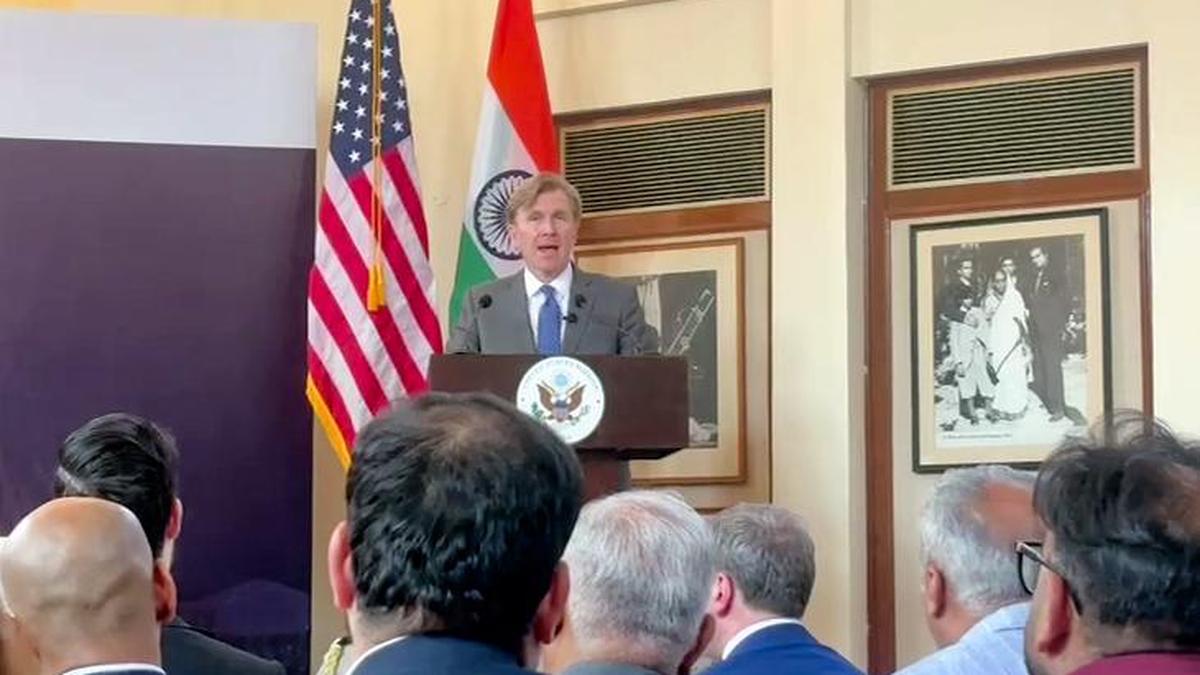
India an ‘essential’ U.S. partner in Indo-Pacific, its rise is good for American interests, says top Pentagon official
The Hindu
U.S. official Elbridge Colby emphasizes India's vital role in the Indo-Pacific, highlighting mutual benefits despite existing differences.
India and the U.S. desire an Indo-Pacific in which no one power can dominate, said a senior Pentagon official, but did not make any reference to the Quad while detailing the Trump administration’s policy for the region.
The official, U.S. Assistant Secretary in the Department of War (formerly Department of Defense) Elbridge Colby, is visiting Delhi amidst the war in West Asia, and spoke ahead of his talks with Ministry of Defence officials in the Defence Policy Group on Wednesday. While his speech praised India as an “essential partner” in the region, he said both countries had differences but did not need to agree on everything to “cooperate effectively”.
“America’s objective is to build a partnership between two great republics that will form critical pillars of maintaining a favourable and stable balance of power in this critical region,” Mr. Colby told an audience of diplomats and foreign policy thinkers in Delhi. “A strong, confident India is not only good for the Indian people. It is good for Americans as well,” he said.
Mr. Colby added that India’s importance in the Indo-Pacific region stems from its size and economic potential, and also from its geography and strategic position.
“India possesses a long tradition of strategic autonomy and a growing capacity to shape events well beyond its borders. It is the largest republic in the world. Its success thus carries profound symbolic and political weight. It has formidable, self-reliant and capable military forces willing and able to shoulder significant security responsibilities,” he said, comparing “vigorous, self-assured states” favourably to those “with dependencies”.
Mr. Colby’s mention of India’s rise being in the U.S.’s interests follows close on the heels of a controversial speech by U.S. Deputy Secretary of State Christopher Landau earlier this month, where he had said the U.S. would not support India’s economic rise as it did with China in the 2000s.


Kim Jong Un vows to solidify North Korea's nuclear status and labels South Korea as its "most hostile" adversary.

U.S.-Israel war on Iran LIVE: Follow The Hindu for updates on the West Asia conflict on March 24, 2026

Trump claims “very good” talks with Iran, despite Tehran’s denial, as U.S. negotiators plan potential meetings in Pakistan.

Netanyahu discusses U.S.-Israeli military gains with Trump, emphasizing commitment to protect Israel's interests amid ongoing conflicts.

Pakistan reaffirms commitment to combat terrorism as Afghan ceasefire approaches end amid rising tensions and recent casualties.

Trump postpones military strikes on Iranian power plants for five days amid escalating tensions and ongoing diplomatic discussions.

Shorts News:Watch: NATO chief: 22-nation group forming to secure Strait of Hormuz

Saudi Aramco reduces crude supply to Asia for April, citing disruptions from the Iran-Israel conflict affecting trade routes.

Tencent launched a tool on Sunday to integrate its WeChat messaging platform with the OpenClaw agent

An Air Canada flight collided with a Port Authority vehicle at LaGuardia Airport, causing significant damage and police response.

Saudi Arabia and the UAE face missile attacks, with casualties reported and air defenses engaged amid escalating regional tensions.

Slovenia's parliamentary election results show a tight race between liberals and populists, signaling potential political instability ahead.

IEA chief warns of a potential energy crisis worse than the 1970s, with 11 million barrels lost daily amid regional conflicts.