Why Kerala declared tidal flooding a State-specific disaster | Explained Premium
The Hindu
Kerala declares tidal flooding a State-specific disaster due to severe impacts on coastal communities, marking a historic first in India.
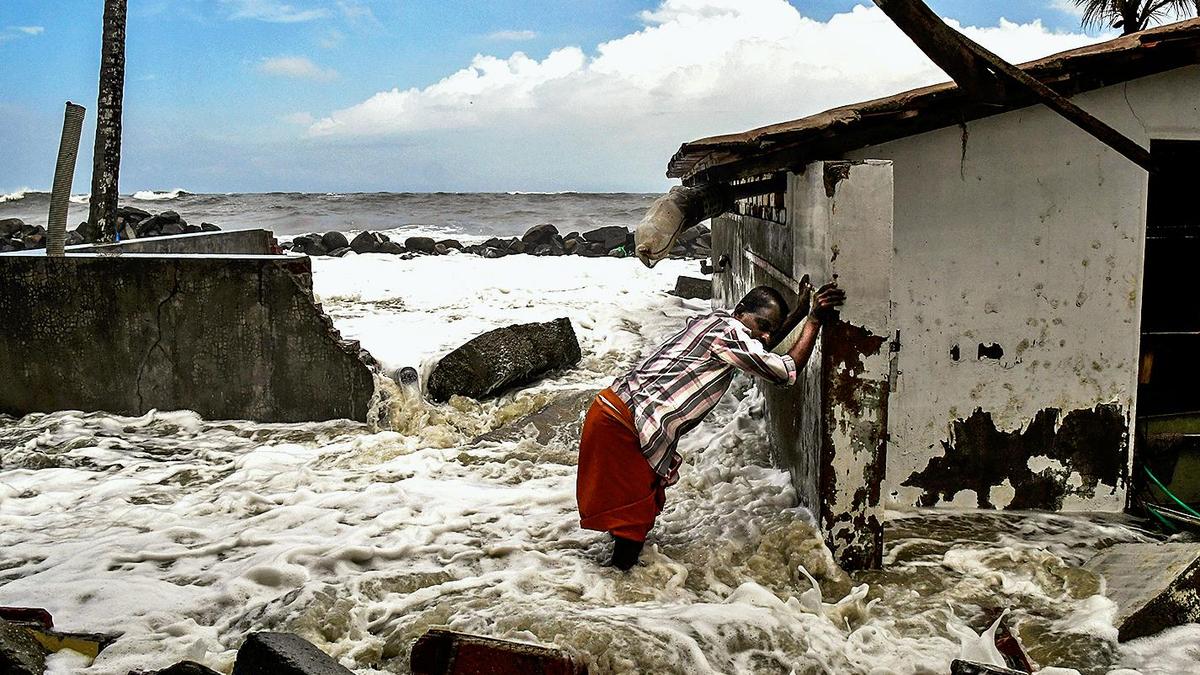
The story so far: Kerala has declared that flooding caused by tidal rise along the extensive coastline of the State, adversely affecting the coastal community and resulting in loss of life and livelihood, can be considered a State-specific disaster. A government order in this regard declared that financial assistance, similar to that provided to victims of natural disasters under State Disaster Response Fund (SDRF), will be given to victims of floods caused by tidal rise. This is the first time in the country that a State has declared tidal flooding a State-specific disaster.
It is a common phenomenon along Kerala’s coastline, where the Arabian Sea level temporarily rises above an identified threshold for a brief period, inundating low-lying coastal areas. Unlike cyclone-induced storm surges, tidal flooding happens twice in a day and is more severe during full or new moons. The issue becomes more complex when coastal storms, triggered by meteorological conditions, coincide with high tides, increasing both the depth and extent of coastal flooding. This type of flooding is particularly a concern in the coastline of nine coastal districts of Kerala, where spring tides can also join to make things worse.
Normally, flooding exacerbated by extreme events comes under the State Disaster Response Fund (SDRF) norms. Since tidal rise is a routine natural phenomenon, it is not practicable to declare normal tidal rise a disaster under the SDRF norms, and hence, financial assistance cannot be provided under these. However, Section 2(d) of the Disaster Management Act says that if flooding caused by tidal rise adversely affects a community, resulting in loss of life, livelihood, and living conditions, such a natural phenomenon can be considered a disaster.
The land use pattern and the topography of the State are quite different in Kerala compared to other parts of the country. For instance, parts of the coastal plains of Alappuzha, especially in the Kuttanad region, lie below sea level, while the commercial city of Kochi is situated very close to sea level. So, water intruding beyond the ‘high tide line’ (HTL) generally constitutes dangerous sea incursion exceeding the normal high tide range. During high tides, seawater rises and enters residential areas through adjoining rivers, backwaters, and canals. Along the Kerala coast, particularly in areas such as Vypin, Chellanam, Edakochi, and Perumbadappu in the Kochi Corporation, as well as Kumbalanghi panchayat, recurrent tidal flooding due to by seawater ingress occurs frequently.
This causes extensive damage to residential areas and infrastructure. It is a serious natural phenomenon that directly affects the lives of fishermen, coastal agricultural sectors, coastal residents, and small traders. Therefore, based on the HTL, the natural phenomenon termed ‘coastal high-tide flooding/sea incursion’ falls within the scope of the definition of ‘disaster’ under the Disaster Management Act in Kerala.
At least 10% of the population of the State is affected by high-tide flooding. Due to deficiencies in land use, a significant number of houses and structures are located in floodplains or adjacent to rivers and puramboke lands near water bodies. In addition, factors such as excessive siltation and reduced depth of rivers and lakes aggravate coastal flooding in a manner not previously experienced. Unlike rainfall-induced flooding, tidal flooding is a hazard that can occur throughout the year, which further enhances the relevance of declaring it a State-specific disaster.


Kerala High Court quashes Nava Kerala Citizens Response Programme, citing misuse of public funds ahead of Assembly elections.

Congress wins Chairperson positions in Jangaon and Thorrur Municipalities through lottery draws after tied elections amid political tensions.

Farooq Abdullah urges unity against rising fascism, advocating for federalism and democracy during a seminar in Thiruvananthapuram.

Madras High Court orders Income Tax probe into Ramanathapuram MP Navas Kani's alleged asset misrepresentation and unlawful enrichment.

Delhi University bans all protests and public gatherings for one month following recent clashes during UGC protests to maintain peace.

Hardik Singh takes over as captain for India at the Hobart Pro League following Harmanpreet Singh's withdrawal.

Shorts News:Watch: Kerala CM Vijayan visits family of Kerala’s youngest organ donor

Tamil Nadu's Finance Minister criticizes the 16th Finance Commission for inadequate tax share and cesses in the Interim Budget.

Kerala declares tidal flooding a State-specific disaster due to severe impacts on coastal communities, marking a historic first in India.

Kerala's Vision 2031 aims for a transformative development path, emphasizing participatory governance and social justice, says CM Pinarayi Vijayan.

Karnataka High Court dismisses BJP's defamation case against Rahul Gandhi, citing legal abuse and constitutional protections for criticism.

Malla Reddy Group of Institutions Hosts India’s Largest Mahashivaratri Celebration; 40,000-Strong Gathering Marks a Spiritual Milestone

Tamil Nadu's Interim Budget projects a debt rise to ₹10.71 lakh crore, citing lack of Union government cooperation.