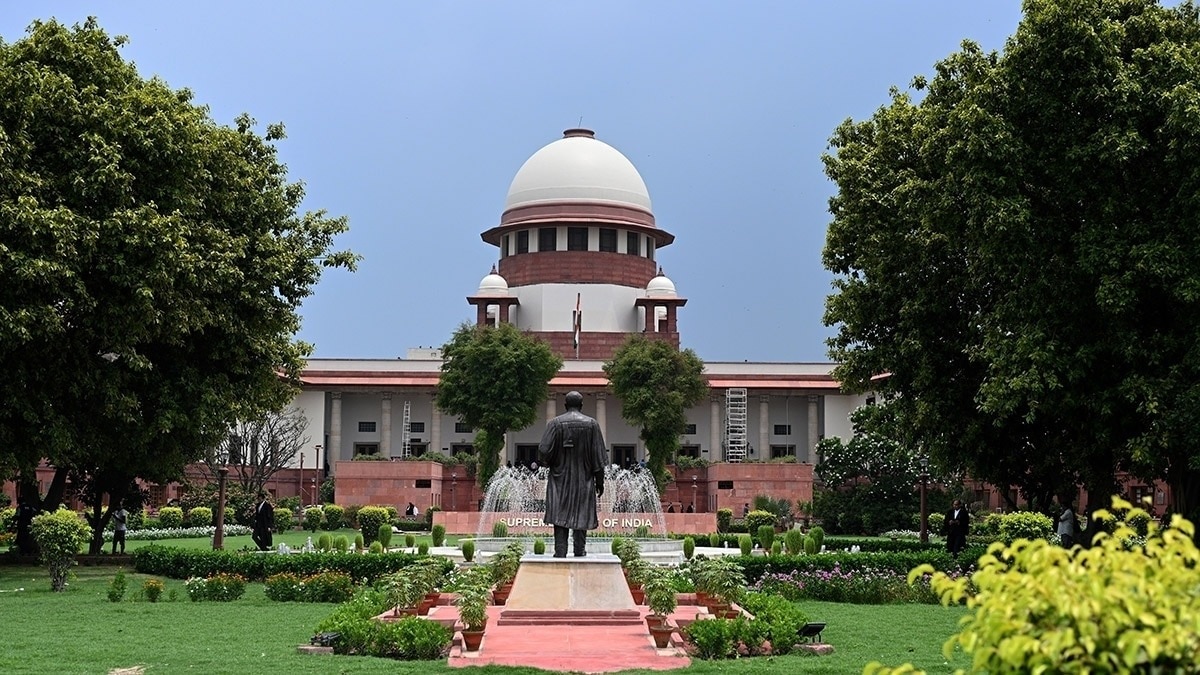
Why can't assets be seized? Supreme Court for tougher punishment for acid attacks
India Today
The Supreme Court's observations came while hearing the plea of Shaheen Malik, an acid attack survivor, who challenged a trial court's acquittal of the accused in her case.
The Supreme Court has flagged the need for harsher punishment in acid attack cases, suggesting that the assets of the accused should be attached and auctioned off to compensate the victims. The observations came while hearing the plea of Shaheen Malik, an acid attack survivor, who approached the Supreme Court after a trial court acquitted the accused in her case.
A bench of Chief Justice of India Surya Kant and Justice Joymalya Bagchi suggested that the Centre should make the punishment stringent for acid attack accused, as such crimes leave no room for a reformative approach.
"We need to have some extraordinary measures. Unless the punishment is painful, these are the kind of cases where reformative theory has no place. Why can't assets be seized and sold off to compensate victims?" the CJI said.
The top court also suggested a reversal of the burden of proof in acid attack cases, similar to those applicable to dowry death offences.


For years, Ram Setu has been invoked as "national heritage" in political discourse. But an RTI response reveals that, in official records, its status remains "nil".


Two LPG tankers tracked by India Today's OSINT team have taken the new route via Larak-Qeshm to cross the Strait of Hormuz.

What began as an abuse complaint has snowballed into a massive scandal involving rape allegations, hidden camera evidence, fraud and even murder claims, as more victims come forward against a Nashik godman.

From April 2026, the Delhi government is planning to recover over Rs 38,000 crore in dues to discoms.

The bill could increase total Lok Sabha seats to 816, reserving 273 for women, marking a major push to enhance female representation in Parliament based on the 2011 census.

Students told the Mahila Congress that the LPG shortage had disrupted their daily meals. They said the hostel administration had altered the menu, reduced one meal and discontinued evening tea in recent days.

India's consumer courts promise quick justice, but rising backlogs and staff shortages tell a different story. As cases pile up, the gap between what the system offers and what it delivers is widening.

A second patient died within 72 hours at RG Kar Hospital, with his family alleging that a lack of stretcher and basic facilities forced the critically ill man to walk 100 metres, leading to his death.

As Parliament prepares to bring amendments to the Transgender Act, activists warn the proposed changes risk rolling back years of hard-won rights.

A high-speed boat crash in the Maldives has left two Indians missing, including a celebrated rally figure, even as Gautam Singhania returns home. Search teams continue efforts amid mounting concern and unanswered questions.

A prominent seer, Pranavananda Swamiji, alleged that mutts backing Karnataka Deputy Chief Minister DK Shivakumar to take over the top post were denied any allocation in the state budget presented by Chief Minister Siddaramaiah. He reiterated his support for Shivakumar to take over as the chief minister.

India's original Dhurandhar, Ravindra Kaushik, rose from acting at college theatres, to infiltrating the Pakistan Army as a RAW Agent. He provided critical intelligence on Pakistani troop movements and the country's nuclear programme, but died a lonely death after his betrayal and subsequent capture by the ISI.