When debris from space crashes to the earth, who is responsible? Premium
The Hindu
Space debris poses a growing threat to Earth, highlighting the urgent need for stronger regulations and accountability in space governance.
Imagine going about your day when a heavy metal object suddenly crashes in front of your house. You and your neighbours are shocked. You rush out to check what has happened and struggle to make sense of the sight: a misshapen piece of hot metal, blackened by fire and soot, with a cloud of dust swirling around it.
This isn’t a scene from a sci-fi film. On December 30, 2024, a metal object weighing 500 kg fell in Makueni county in Kenya. Experts from the Kenya Space Agency characterised it as a separation ring from a space-bound rocket. While Jonathan McDowell, an astronomer known for cataloguing space launches and objects in orbit, and some others have expressed scepticism that the object was a part of a rocket, similar incidents in the US and Australia before have served repeated reminders of the urgent problem of space debris.
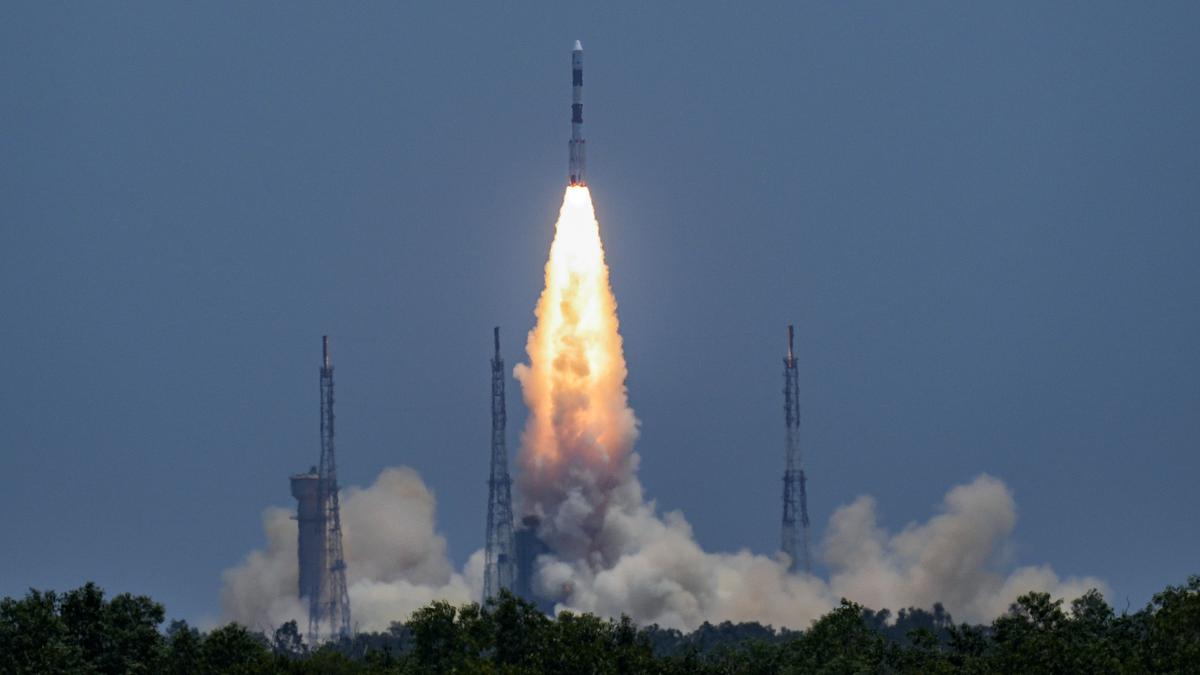
Space activity is becoming more brisk as countries are launching more rockets, satellites, and spacecraft. Falling debris also challenges the laws that protect humans. The question of accountability looms largest: when debris crashes to the earth, who is responsible and how can they be held accountable?
Despite being a critical issue in space governance, space debris lacks a universally accepted legal definition in international treaties. Commonly accepted working definitions come from the Inter-Agency Space Debris Coordination Committee and the UN Committee on the Peaceful Uses of Outer Space (COPUOS). The latter refers to space debris thus: “Space debris is all man-made objects, including fragments and elements thereof, in Earth orbit or re-entering the atmosphere, that are non-functional.”
Given the lack of definition, legal disputes often hinge on whether a piece of debris qualifies as a “space object” under the Convention for International Liability for Damage Caused by Space Objects of 1972. This distinction is critical because liability attaches to space objects under the Convention, but if debris is no longer under a state’s jurisdiction, responsibility becomes more challenging to enforce.
Article VI of the Outer Space Treaty 1967 forms the cornerstone of international space law. It says states bear responsibility for all national space activities, whether conducted by governmental or private entities. The 1972 Convention also introduced “absolute liability” for damage caused by space objects on the earth. Unlike fault-based liability, absolute liability requires no proof of negligence: launching states are automatically responsible for harm caused by their debris.
But enforcement remains a crucial challenge. The resolution of disputes banks on diplomatic negotiations, often resulting in prolonged settlements that fall short of actual costs. After the Soviet satellite Cosmos 954, carrying a nuclear reactor, crashed in Canada in 1978, Canada spent years negotiating with the USSR and ultimately secured only $3 million of the estimated $6 million clean-up cost. The case underscored the gap between legal liability and practical enforcement, leaving affected parties vulnerable to inadequate resolutions.


CERN's Large Hadron Collider discovers the Xi-cc-plus particle, enhancing understanding of quantum mechanics and baryon behavior.

Vibha Batra’s latest book, Spotless (Hachette India) is a novel in verse for young adults

In its first edition, the Madras Art Salon spotlights the works of journalist and artist Narayan Lakshman at The Botanical Club, a social space in the British Deputy High Commission, Chennai

Cholesterol enhances melanoma cell invasion by making nuclei squishier, revealing a potential treatment target in cancer progression.

The designers reinterpret the Swedish artist’s symbolic forms and colour energy through contemporary resortwear silhouettes

Discover the inspiring legacy of Bibha Chowdhuri, a pioneering woman in physics and a trailblazer in STEM history.

Discover the inspiring legacy of Bibha Chowdhuri, a pioneering woman in physics and a trailblazer in STEM history.

Ashdeen’s Spring 2026 collection features saris inspired by the designer’s Parsi gara archive

Red ochre burials, ritual markings and myths across cultures show that red repeatedly marks liminal thresholds such as puberty, sacrifice and death; anthropologists argue that the colour functions as a technology of collective ritual and value, binding communities through shared symbolic acts

India approves 23 institutions for quantum labs under the National Quantum Mission, aiming to advance quantum technology and research.

India approves 23 institutions for quantum labs under the National Quantum Mission, aiming to advance quantum technology and research.

The Gaza conflict exacerbates environmental damage, emitting millions of tonnes of CO2 and threatening climate stability in West Asia.

Chefs and cookery experts share smart kitchen hacks, hybrid cooking methods and appliance tips to help households reduce LPG use without compromising on food