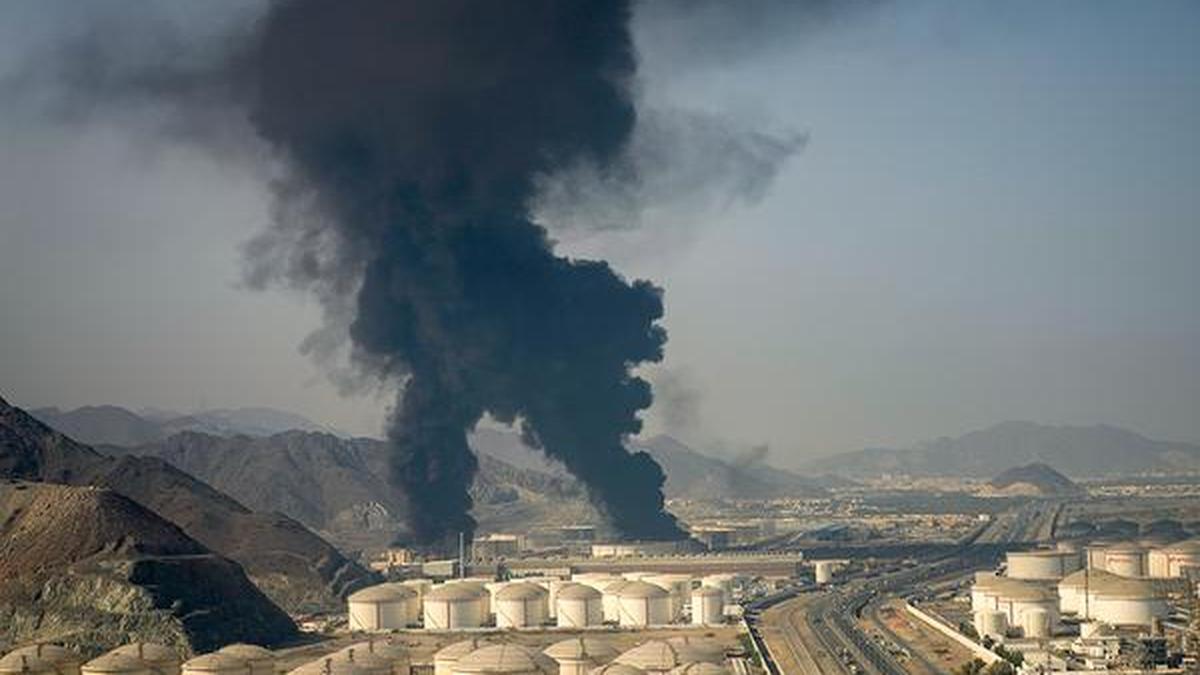
The environment, another casualty of war in West Asia
The Hindu
The Gaza conflict exacerbates environmental damage, emitting millions of tonnes of CO2 and threatening climate stability in West Asia.
From the jet fuel used in bombing raids to acrid smoke from burning oil depots, the conflict in West Asia is inflicting a significant toll on nature and the climate.
US and Israeli aircraft use a considerable amount of fuel reaching the Gulf and flying sorties over Iran, said Benjamin Neimark at the Queen Mary University of London.
Deploying stealth bombers and fighter jets around the clock adds a significant amount of planet-warming greenhouse gas emissions into the atmosphere.
“The US Navy also has a significant fleet which will be operating remotely for some time,” Neimark said. “That is a significant number of US troops that need to be fed, housed, and working around the clock. These floating cities all need energy.”
This is provided in part by diesel generators, even if most larger aircraft carriers are nuclear powered, an energy source that produces far less emissions than fossil fuels.
But many experts take into account everything from the manufacture of weapons and explosives to post-war reconstruction efforts when estimating the total environmental impact of conflict.


A study reveals that certain antibiotics can cause long-lasting changes in gut microbiome diversity for up to eight years.

Indian scientists and international experts are divided over a study questioning the viability of a nuclear reactor fuel called HALEU-thorium; while critics cite safety risks, proponents argue the technology is vital to achieve national energy goals.

ISRO and AIIMS partner to enhance space medicine research, focusing on human health during long-duration space missions.

A practical guide to induction setups for students, families, and home food businesses as India’s LPG supply faces its biggest disruption in years

Explore the electrifying Oscars 2026 race, featuring standout films, baffling nominations, and memorable performances amid a cinematic transition.

Zai and Rom Whitaker’s latest book for young readers, The Book of Indian Snakes, tackles common misconceptions surrounding snakes, highlighting their utility to humans

Discover PC Mahalanobis's pivotal role in India's statistical revolution and his lasting influence on modern statistics in this episode.

Explore why nothing can exceed light speed and the paradoxes that arise if it were possible.

Scientists have engineered bacteria to produce designer proteins by smuggling artificial amino acids, enabling precise drug delivery and multifunctional applications.

Scientists successfully grew chickpeas in simulated lunar soil, paving the way for future extraterrestrial agriculture on the moon.

Scientists urge India to halt importing African cheetahs due to habitat shortages and conservation concerns amid Project Cheetah's challenges.

The Hindu quiz on firebombings of World War II by Vasudevan Mukunth. The worst damage a weapon can inflict in a war need not be nuclear

ISRO and ESA sign a key agreement to enhance collaboration on Earth Observation missions and scientific studies.