Cholesterol makes cells’ nuclei squishy, helping melanoma spread Premium
The Hindu
Cholesterol enhances melanoma cell invasion by making nuclei squishier, revealing a potential treatment target in cancer progression.
Melanoma is one of the most dangerous common skin cancers. It starts in melanocytes, the skin cells that make melanin, the pigment that gives skin its colour.
Cancer doesn’t appear overnight. A normal cell becomes cancerous in steps, as its DNA and its gene-control systems pick up changes over time. These changes push the cell to do three things: divide too much, avoid being destroyed by the immune system, and spread into other parts of the body. This spread is called metastasis, and it is what makes many cancers deadly.
Researchers want to know which changes matter most because those changes can become targets for treatment.
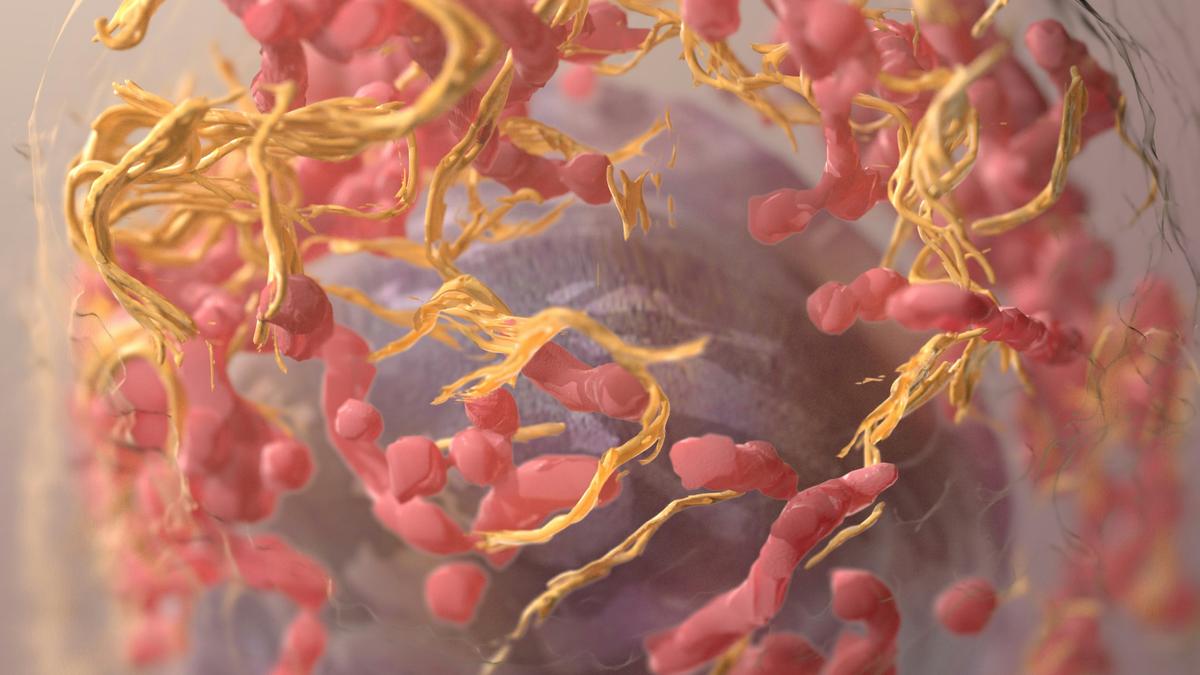
A recent study led by scientists at the U.S. National Institutes of Health reported an unexpected driver of cancer spread: cholesterol in the membrane around the cell nucleus. The nucleus is the cell’s control room, where most of the DNA is stored. It’s wrapped in a thin nuclear envelope, like a flexible shell.
The team found this pattern in melanoma and also in breast and prostate cancers. When cholesterol levels in the nuclear envelope were high, the nucleus became easier to deform. In other words, it became more squishy. This is important because cancer cells often have to squeeze through tight gaps between other cells to spread. A squishier nucleus makes that squeezing easier, so the cancer can invade new tissues more successfully.
High cholesterol did something else, too: it made the nuclear envelope more fragile. Fragile envelopes were more likely to tear in small, local spots. When a tear happens, the DNA inside can be exposed to forces that damage it. Damaged DNA can lead to new mutations, and some of those new mutations can make the cancer even more aggressive.


Discover efficient pressure cooking techniques to save up to 50% on fuel. OPOS B Ramakrishnan tells you how

Mercedes-Benz CLA 250+ with EQ Technology review: design, performance, range and features explained. Discover how the new electric CLA combines advanced AI, long range, fast charging and futuristic styling for the next generation of luxury EVs.

Pi Day is celebrated every year on March 14, honouring the significance of the mathematical constant π and its applications in mathematics.

Discover how sculptural interior design transforms modern spaces, blending creativity and functionality to evoke emotion and identity.

A study reveals that certain antibiotics can cause long-lasting changes in gut microbiome diversity for up to eight years.

Indian scientists and international experts are divided over a study questioning the viability of a nuclear reactor fuel called HALEU-thorium; while critics cite safety risks, proponents argue the technology is vital to achieve national energy goals.

ISRO and AIIMS partner to enhance space medicine research, focusing on human health during long-duration space missions.

A practical guide to induction setups for students, families, and home food businesses as India’s LPG supply faces its biggest disruption in years

Explore the electrifying Oscars 2026 race, featuring standout films, baffling nominations, and memorable performances amid a cinematic transition.

Zai and Rom Whitaker’s latest book for young readers, The Book of Indian Snakes, tackles common misconceptions surrounding snakes, highlighting their utility to humans

Discover PC Mahalanobis's pivotal role in India's statistical revolution and his lasting influence on modern statistics in this episode.

Explore why nothing can exceed light speed and the paradoxes that arise if it were possible.

Scientists have engineered bacteria to produce designer proteins by smuggling artificial amino acids, enabling precise drug delivery and multifunctional applications.