Weather woes, pest attack deal a blow to Telangana’s mango harvest, flavour
The Hindu
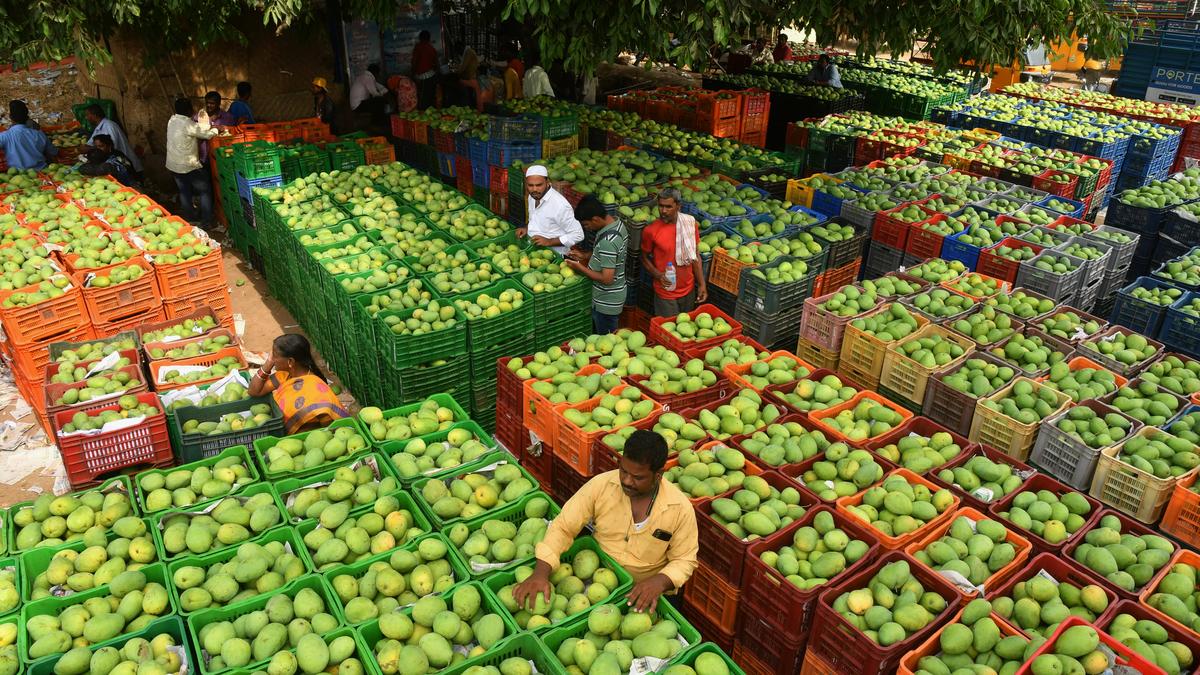
Unseasonal rain, spells of hailstorm, and mango hopper infestation have cut harvest of the fruit by 70% in the State and robbed them of sweetness as well.
Unseasonal rain, spells of hailstorm, and mango hopper infestation have cut harvest of the fruit by 70% in the State and robbed them of sweetness as well.
“The climatic conditions were not conducive for a good harvest. The main factors were hailstorms, winter rain, and mango hopper infestation in Sangareddy area,” said Suchitra, a scientist at the Fruit Research Station (FRS), Sangareddy. The impact of the climatic conditions can be gauged from the fact that the FRS could harvest fruit from only 77 varietals out of the 400 that it has on its property.
The adverse climatic conditions have meant that eating the fruit is less than a satisfying experience. “It rained after the fruit had matured, leading to loss of sugar content and leaving an insipid taste. The shelf life also has been affected,” said the scientist at FRS.
Mangoes have been one of the key export items from the region, including varieties like Banganapalli, Suvarnarekha, Neelum, and Totapuri, according to Agricultural & Processed Food Products Export Development Authority data. “Last year, I sent between 130-150 trucks of mangoes to Mumbai. This year, I have sent 18 trucks and will be able to send another 15-18 trucks over the next few days,” said Mohammed Saleem, a grower and trader from Zaheerabad. Hyderabad is surrounded by mango orchards in Rangareddy, Sangareddy, Siddipet, Vikarabad and Medak districts.
“There used to be a three-day exhibition of 400 varieties of mangoes at FRS. This year, we had it for one day. We had trouble from the flowering stage in November-December when it was extremely cold and cloudy. Then the big damage was due to rain and hailstorm,” said Akhil Ahmed, a trader and grower from Kohir.
However, for connoisseurs of mangoes who can shell out a little more, the market is flooded with varieties from across the country, including Imampasand, Dasheri, Alphonso, Kesar, Malgoa, and other mouth-watering varieties. But they are priced in the range of ₹150 and ₹400 per kg.


Navy delegates from 50 countries explore natural dyeing and local crafts at Sankalpa Art Village during the International Fleet Review.

Farmers complained about indiscriminate stone quarrying taking place in Madurai district, particularly at Kallanai in Kalligudi taluk. They urged authorities to take necessary action to stop the indiscriminate quarrying activities and protect the environment

Madras High Court dismisses Ramadoss's petitions to freeze 'mango' symbol, emphasizing resolution through civil court, not writs.

After more-than-two-year wait, the flyover at Goripalayam junction will be commissioned on Saturday. As of now, the main arm of the new flyover, named after freedom fighter Netaji Subash Chandra Bose, will help to decongest vehicular movement from Tamukkam junction till Nelpettai junction on East Veli Street.

PAC criticizes the government for poor execution and financial delays in the ₹4,455 crore SANKALP skill development scheme.

Coimbatore is emerging as a leading hub for Global Capability Centres in Tamil Nadu, driven by strong educational infrastructure and investment.

Peace talks between fishermen from Rameswaram and Karaikal aim to resolve fishing territory disputes and ensure maritime harmony.

Telangana's Food Safety Department inspects 122 establishments in a statewide drive, enforcing compliance on cereal products and safety standards.

The Greater Bengaluru Authority expands to 86 members, enhancing representation with key political figures included.

Civil Aviation Minister Rammohan Naidu Kinjarapu on Friday e-inaugurated (virtually) the Udan Yatri Cafe at Mangaluru International Airport and digitally launched DigiYatra at the facility.

Tension in Bagalkot as stones are thrown during Shivaji Jayanti procession; police ensure safety and investigate the incident.

Uday Bala Krishnan emphasises the vital role of compassionate teachers in nurturing young minds amidst the rise of Artificial Intelligence.

A.K. Jayasankaran Nambiar appointed executive chairman of Kerala State Legal Services Authority by the Governor and Chief Justice.