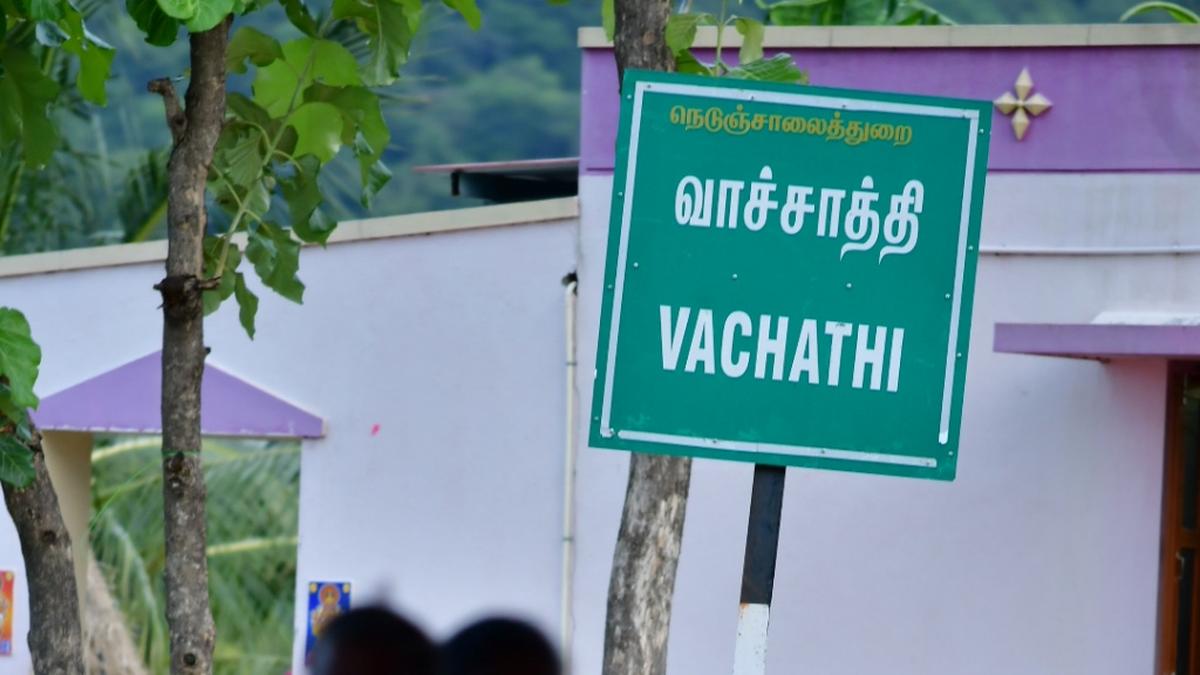
Vachathi | A tribal hamlet’s road to justice paved over the course of 31 years amid hurdles
The Hindu
Thumbal Krishnamoorthy's walk to Vachathi in 1992 was a stark contrast to his recent one. In '92, TNTA was trying to mobilise people, while they feared Forest Dept. personnel. After the '92 raid, 3 girls told of rape, and PIL was dismissed. But the IP, held 3 times, clinched the case. With the support of lawyers, CBI, judges, officers, and activists, justice was finally served in the 31-year journey.
When Thumbal Krishnamoorthy ran into a group of women gathered under the vast shadow of a banyan tree in Vachathi, a tribal hamlet on the foothills of Sitheri in Dharmapuri district, on the heels of the Madras High Court’s verdict in the case of State brutality on Friday, it was a walk of calm closure – quite different from his first walk to the village in 1992, alongside Basha John, a fellow member of the then just-formed Tamil Nadu Tribal Association (TNTA).
In July 1992, the TNTA meeting in Sitheri Hills was a damp affair, with the party trying to mobilise people and the people fearing the Forest Department personnel. Sitheri Hills were a mystery. That was when, the Communist comrades of Harur, Ambrose and others, told them of an ‘attack on a village at Sitheri’s foothill’.”
Explained | What is the 1992 Vachathi brutality all about?
Mr. Krishnamoorthy and others travelled 18 km on foot down the hills and crossed three villages to reach Vachathi. “When we entered Vachathi, there was an old man and a dog wandering about what was essentially a ghost village. Many had vanished into the hills and others, including the raped women, were in Salem jail. Houses had been vandalised, kerosene poured onto the rice, which was thrown into the village well along with livestock intestines.”
The same day, they all went to meet then Collector Dasarathan well into midnight. He received them but said he was unaware of what happened in Vachathi. The following morning, the party called for a press meet to counter the narrative of “the raid on the sandalwood smuggling village.”
“We along with the now State secretary of TNTA P. Shanmugam and then CPI(M) MLA Annamalai went straight from here to Salem jail to meet the jailed villagers.” But the enormity of what happened hit him, when three girls told him of the rape days later. “Till then we thought it was vandalism by raid,” Mr. Krishnamoorthy says.
In 1992, the first public interest litigation petition filed by the party was dismissed by the then judge Padmini Jesudurai, who was the first woman judge of the Madras High Court, on the grounds that people in high positions were unlikely to commit such offences. It was akin to the judicial reasoning in the acquittal in the Keezhvenmani killings, when the court said, it was unlikely that men who drive cars were prone to commit such heinous crime.


Abhishek Banerjee challenges BJP's Suvendu Adhikari in Nandigram, pledging community health initiatives if Trinamool Congress wins.

Rising LPG shortages in Karnataka boost firewood demand, reviving an informal market as households and hotels seek alternatives.

Against the backdrop of intense poll activity, a 400-metre stretch of an arterial road in the outskirts of Chennai (technically in Madurapakkam panchayat under Tambaram assembly constituency) presents a salute to the idea of res publica, which underpins India’s system of governance, where citizens have a say, at least before a government is securely ensconced in the seat of power. A Republic Day initiative shines bright every night

Fadnavis claims zero FIR in Ajit Pawar crash is a defamation attempt by Karnataka against Maharashtra's investigation efforts.

Set to unfold as a one-day pop-up on April 5, the Easter Sadya brings together both vegetarian and non-vegetarian menus, offering a peek into the food traditions of the Syrian Christian (Nasrani) community. While the traditional Sadya is often associated with dishes such as sambar, avial, and rice, this version expands to include community-specific festive dishes.

BJP nominates mother of R.G. Kar victim Abhaya to contest from Panihati in West Bengal Assembly elections.

Veteran Malayalam actor-director E.A. Rajendran passes away at 71, leaving behind a rich legacy in the film industry.

Dakshina Kannada Zilla Panchayat has rolled out digital mode of water bill generation and collection in 23 gram panchayats on a pilot basis for the first time in Karnataka. This is set to be extended to the remaining 200 panchayats shortly, according to the Zilla Panchayat Chief Executive Officer Narwade Vinayak Karbhari.

Bengaluru police questioned a man carrying ₹6 lakh for medical expenses at Vidhana Soudha, later releasing him after verification.

BJP accuses Bengaluru's Congress government of corruption in e-Khata issuance, halting infrastructure projects due to financial mismanagement.

Misinformation in Hyderabad sparks panic buying, causing disruptions as residents react to unfounded rumors of an impending lockdown.

Bengaluru Metro extends services until 2 a.m. on March 28 for IPL match, ensuring convenient travel for spectators.

A bus truck-collision in Andhra Pradesh's Markapuram district, killing several. Catch LIVE updates here!