UNGA declares December 21 as World Meditation Day, unanimously adopts resolution co-sponsored by India
The Hindu
India co-sponsors UN resolution declaring December 21 as World Meditation Day, promoting global well-being and inner peace.
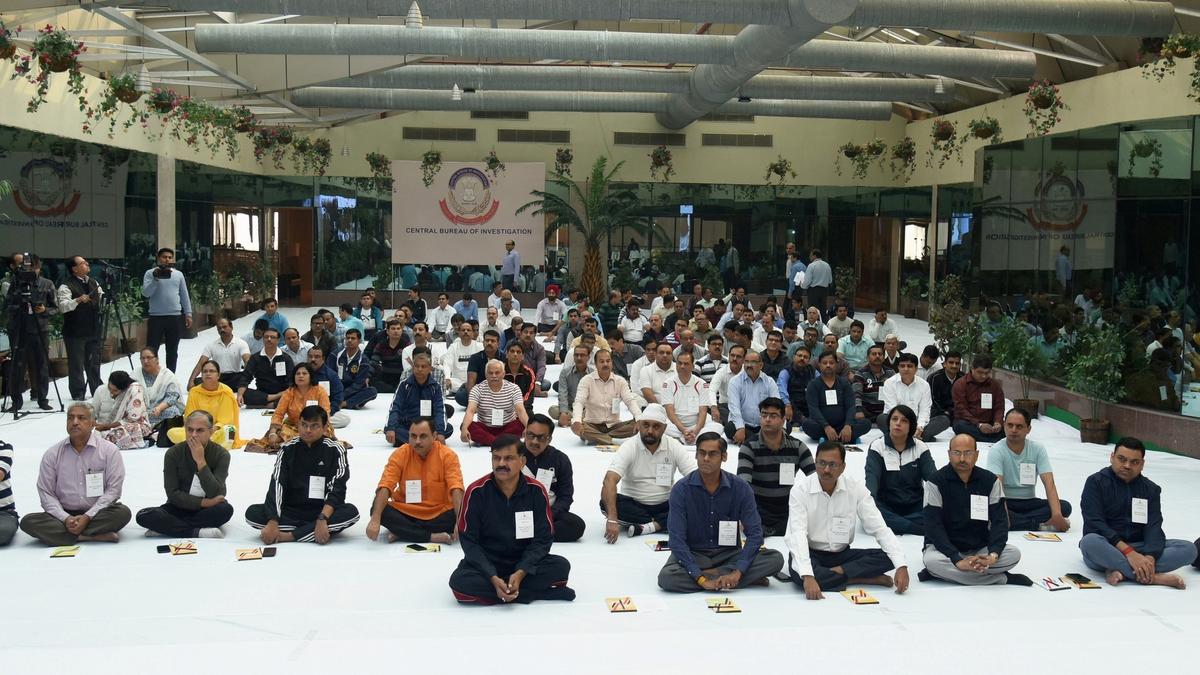
India co-sponsored a UN General Assembly draft resolution that was unanimously adopted to proclaim December 21 as World Meditation Day.
India, including Liechtenstein, Sri Lanka, Nepal, Mexico and Andorra, was a member of the core group of countries that guided the unanimous adoption of the resolution titled ‘World Meditation Day’ in the 193-member UN General Assembly on Friday (December 6, 2024).
“A day for comprehensive well-being and inner transformation! Glad that India along with other nations of the core group guided the unanimous adoption of the resolution on the declaration of December 21 as World Meditation Day @UN General Assembly today (Friday),” India’s Permanent Representative to the UN Ambassador Parvathaneni Harish said in a post on X.
He said India’s leadership in overall human wellbeing stems from “our civilisational dictum of #VasudhaivaKutumbakam - the whole world is one family”.
Mr. Harish noted that December 21 marks the Winter Solstice, which in Indian tradition is the beginning of “Uttarayana – an auspicious time of the year, especially for inner reflection” and meditation.
It also falls exactly six months after the International Day of Yoga commemorated on June 21, which is the Summer Solstice.
Recalling that India had in 2014 taken the lead in declaring June 21 as International Day of Yoga, Mr. Harish said that in a decade, it has become a global movement which has led to common people across the globe practising yoga and making it part of their daily lives.


Denmark's recent election results leave Prime Minister Mette Frederiksen's future uncertain amid a fragmented parliamentary landscape.

An explosion at Valero's Port Arthur refinery caused a temporary shutdown but resulted in no reported injuries.

Anduril and Palantir Technologies are working together to develop software for U.S. President Donald Trump’s Golden Dome antimissile shield initiative, a source familiar with the matter said

A federal judge weighing the merits of the Pentagon’s designation of rising Silicon Valley star Anthropic as a security threat repeatedly questioned the government’s reasons for vilifying the company

When the conflict in West Asia, which began with the U.S. and Israel’s attack on Iran on February 28, escalated into a regional war, analysts said that the war would last as long as Iran had missiles or until the Gulf nations ran out of interceptors. However, with “emergency” military sales, piling monetary costs and a strained supply chain, is the U.S. becoming too constrained in its effort to keep the war going — both militarily and monetarily?

U.S.-Israel war on Iran LIVE: Follow The Hindu for updates on the West Asia conflict on March 25, 2026

Jair Bolsonaro to serve his sentence at home due to health issues, monitored by police, with a review in 90 days.

A New Mexico jury finds Meta liable for harming children's mental health, marking a significant shift in accountability for tech companies.

Modi and Dissanayake discuss energy cooperation, West Asia conflict, and global supply chain disruptions in a recent phone call.

Russia launches a massive drone and missile attack on Ukraine, signaling the potential beginning of a spring offensive.

U.S. official Elbridge Colby emphasizes India's vital role in the Indo-Pacific, highlighting mutual benefits despite existing differences.

Philippine President Marcos declares national energy emergency amid Middle East conflict, ensuring fuel and essential goods supply stability.

Mohammad Baqer Zolqadr appointed as Iran's new security chief, succeeding Ali Larijani after his assassination.