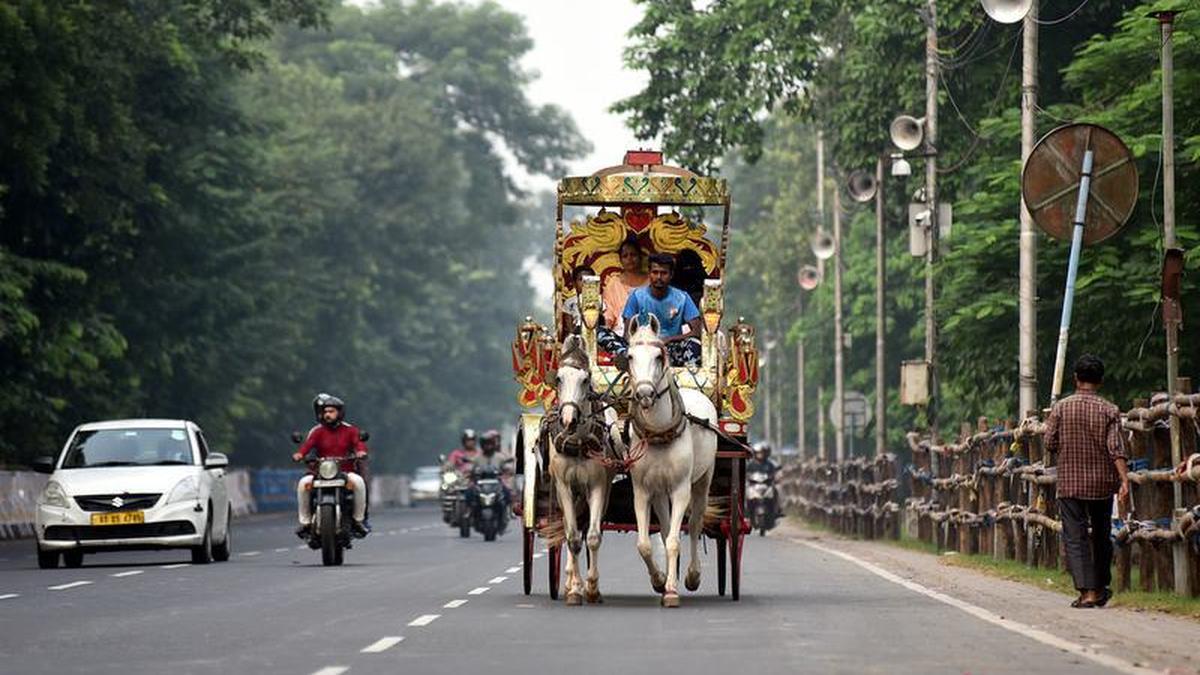
Uncertainty looms over Kolkata’s horse-drawn carriages
The Hindu
Discover the fading tradition of Kolkata's horse-drawn carriages through the eyes of 17-year-old Rahul Das and his beloved horses.
Early one October morning, amid the vibrant sounds of Durga Puja dhaks (drums) resonating throughout Kolkata, 17-year-old Rahul Das embarks on his daily routine — harnessing his two horses to his carriage and driving from the stables in Kidderpore in the city’s south-west to the centrally located Queens Way — around 6.30 a.m. Upon arriving outside the iconic Victoria Memorial, he parks his vehicle in a long queue of around 20 horse-drawn carriages and then provides his horses with breakfast before starting another day of ferrying tourists through the city’s streets.
Clad in a black shirt and pants, Rahul explains the care he devotes to his horses’ nutrition, detailing their meal consisting of chana (chickpeas), ghash (grass), and bhushi (husk). “I feed them four times a day — in the morning, twice in the afternoon, and at night,” he says. By 9 a.m., the horses are ready to greet passengers and traverse the city till they return home in the evening.
Seventy-seven years after India’s Independence, horse-drawn carriages continue to evoke Kolkata’s colonial heritage, transforming from a luxury reserved for high society into a cherished tourist attraction. However, this symbol of the city’s past now faces scrutiny from animal rights activists, sparking a debate about the delicate balance between preserving a legacy and ensuring animal welfare.
For ₹500, groups of five can enjoy a scenic 20-minute carriage ride starting and ending at the majestic Victoria Memorial gates on Queens Way. This 2-km journey along Kidderpore Road and Maidan passes the historic Fort William, an 18th-century structure now serving as the headquarters of the Army’s Eastern Command. Alternatively, solo riders can opt for horseback rides along Queens Way at two rates: ₹400 for an extended route and ₹200 for a shorter stretch.
Unlike his peers who attend school, Rahul has been driving a horse-drawn carriage since 2019, taking over his elder brother’s labour contract after he left the job. He earns ₹14,000 a month and also receives food and accommodation from his employer, who owns three carriages and six horses. Rahul is resolute about his future: “I’ll continue driving the horse-drawn carriage for as long as it’s needed.”
His long-term plan, however, involves handing over the reins to his brother when he returns, and heading back “home” — a term that evokes memories of his childhood in Assam’s Guwahati, where he shared a modest dwelling with his parents and brother near the railway quarters. “Now, I live with my horses at the Kidderpore stables, where the other horses and drivers spend their nights. My favourite horse, Joker, lives, eats, and works with me,” he says, as he lovingly pets one of the white horses attached to his carriage.
Rahul says he quickly adapted to his role, mastering horse riding and carriage driving in just four months. “The only time I got kicked by my horses was when I was new and they weren’t familiar with me. Joker, for example, is aggressive with everyone else, but with me, he’s gentle.”


From traditional handicraft items from Manipur to a variety of dress materials from across state by women Self-Help group members are on display at the stalls at the National SARAS mela in Karavali Utsava ground in Mangaluru. The nine-day long mela began on Friday.

India participated as an observer at the Board of Peace meeting, reaffirming its support for a viable Palestinian state.

T.N. Deputy Chief Minister inaugurates CREDAI FAIRPRO 2026, showcasing over 500 real estate projects from 80 developers in Chennai.

Andhra Pradesh prioritizes Guntur Mirchi Yard's development with a new committee focused on quality yields and farmer support.

Navy delegates from 50 countries explore natural dyeing and local crafts at Sankalpa Art Village during the International Fleet Review.

Farmers complained about indiscriminate stone quarrying taking place in Madurai district, particularly at Kallanai in Kalligudi taluk. They urged authorities to take necessary action to stop the indiscriminate quarrying activities and protect the environment

Madras High Court dismisses Ramadoss's petitions to freeze 'mango' symbol, emphasizing resolution through civil court, not writs.

After more-than-two-year wait, the flyover at Goripalayam junction will be commissioned on Saturday. As of now, the main arm of the new flyover, named after freedom fighter Netaji Subash Chandra Bose, will help to decongest vehicular movement from Tamukkam junction till Nelpettai junction on East Veli Street.

PAC criticizes the government for poor execution and financial delays in the ₹4,455 crore SANKALP skill development scheme.

Coimbatore is emerging as a leading hub for Global Capability Centres in Tamil Nadu, driven by strong educational infrastructure and investment.

Peace talks between fishermen from Rameswaram and Karaikal aim to resolve fishing territory disputes and ensure maritime harmony.

Telangana's Food Safety Department inspects 122 establishments in a statewide drive, enforcing compliance on cereal products and safety standards.

The Greater Bengaluru Authority expands to 86 members, enhancing representation with key political figures included.