Two key panels urge Karnataka government to align recruitments with changing economy
The Hindu
Karnataka commissions urge government to rethink recruitment strategies amid economic shifts and high vacancy rates in public sectors.
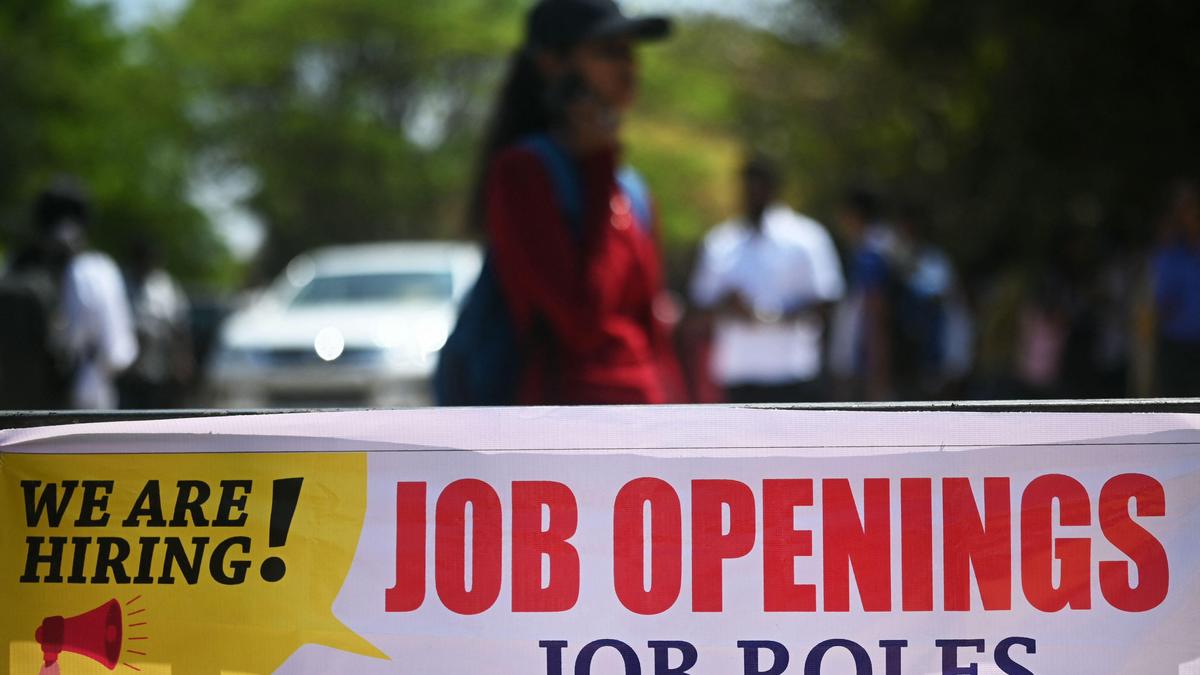
The protest by aspirants for public employment in Dharwad seems to have put the ruling dispensation under pressure, while about 36% of the sanctioned posts in the State government are currently lying vacant. The Opposition has been quick to seize the opportunity and extend support to the protesting candidates.
While the State government’s current predicament comes around the confusion and judicial intervention in the internal reservation issue that has stalled recruitment for nearly a year now, two key commissions — reports of which were submitted to the government in recent months — have cautioned the government against “automatic” replacement of retiring staff.
“Sanctioned faculty posts reflect older disciplinary boundaries, curriculum modes, and staffing patterns. A blind recruitment exercise has risk of locking public resources into outdated programme architecture that may no longer serve societal or economic priorities”
The Karnataka Policy and Planning Commission, headed by B.R. Patil, which submitted its report recently, is learnt to have cautioned the government against filling up existing vacancies on “as-is” basis, especially in the faculty recruitment for Karnataka’s higher education system. Of the 24,788 posts in higher education, 13,599 are currently vacant and the government has sanctioned filling up of 2,000 posts.
The education sub-committee in the commission is learnt to have pointed out that hiring without re-thinking the higher education’s future runs the risk of misalignment with rapidly evolving economy, which is being driven by Artificial Intelligence, automation, and emerging industries. The sub-committee, sources said, was not against recruitment and also acknowledged significant shortage of teaching staff across government degree colleges and State universities.
“Technological shifts such as AI, digitisation, and new labour models, have reduced market’s reliance on generic degrees. Many traditional degree programmes across social sciences, humanities, and general sciences were historically valued for symbolic degree capital rather than job-linked competence,” the source explained.


Former Chief Minister Narayanasamy opts out of Puducherry Assembly elections to maintain alliance harmony amidst seat-sharing talks with DMK.

Dr Prarthana Venkatesh, the founder of nutraceutical brand Longevita, talks about the inspiration behind the brand, why the longevity discourse is now exploding and how modern medicine is tackling aging

Ponmudy seeks Madras High Court's intervention to dismiss BJP councillor's complaint over alleged derogatory speech against religious groups.

Congress leader K.C. Venugopal alleges corruption in Kerala's bar license renewals, accusing CPI(M) and BJP of unethical collusion ahead of 2026 polls.

Bengaluru police arrest three in a money-doubling fraud, recovering ₹40 lakh and uncovering additional victims.

AIADMK faces perception challenges and electoral setbacks in Tamil Nadu, struggling to maintain its traditional stronghold and voter base.

K. Ashok appointed Executive Director of BHEL Tiruchi, succeeding S. Prabhakar after 36 years of experience in the company.

Garbage collection resumes in Bengaluru amid contractor disputes over payment delays and new waste segregation rules by BSWML.

Delhi High Court rules universities cannot restrict peaceful expression of dissent, emphasizing the importance of independent thought and discourse.

Mettur Dam's water level is at 82.83 feet, with an inflow of 384 cusecs and discharge of 800 cusecs.

Lebanon expels Iran's ambassador, declaring him persona non grata, while maintaining a Charge d'Affaires at the embassy.

Sunny Joseph accuses Pinarayi Vijayan of targeting Rahul Gandhi as part of a political deal with the BJP.

AIADMK faces perception challenges and electoral setbacks in Tamil Nadu, struggling to maintain its traditional stronghold and voter base.