Trump’s Cuba actions: from blockade to asphyxiation Premium
The Hindu
Explore Trump's Cuba policies and their impact on the island's energy crisis amid U.S. sanctions and Russian support.
Two ships moving through the Atlantic Ocean have caught the attention of maritime intelligence companies and geostrategists across the world. The Anatoly Kolodkin, owned by the Russian government and carrying an estimated 7,30,000 barrels of crude oil, is heading towards energy-starved Cuba in clear defiance of Donald Trump’s illegal energy blockade of the socialist island-nation. Shipping tracker firm Kpler reported that the Kolodkin could reach Cuba as early as Monday (March 23, 2026).
It would not be the first tanker attempting to bring Russian fuel to Cuba in recent weeks. The Sea Horse, loaded with 2,00,000 barrels of gas oil believed to be from Russia but owned by a Chinese firm, was headed to Cuba before it abruptly halted in the middle of the Atlantic last month — likely fearing consequences from the U.S. government. If the Russian ships arrive, defying the U.S. blockade, they will be Cuba’s first energy shipments in three months.
Even so, the relief would be temporary. The 7,30,000 barrels of crude can produce diesel, gasoline, and jet fuel, while also helping power the electric grid, Jorge Piñón, a former oil executive who studies Cuba’s energy at the University of Texas, told The New York Times. But the crude would first need to be refined, and Cuba’s refineries are highly inefficient, meaning it would likely take several weeks and waste oil in the process. The Russian shipment, Mr. Piñón said, would give Cuba “breathing room of no more than 30 days”.
The morning after Mr. Trump’s comments about “taking” Cuba earlier this week, Dmitry Peskov, a Kremlin spokesman, told reporters that Russia was in close contact with Cuba about its energy crisis and was “ready to provide all possible assistance.” Cuba, he added, is “an independent sovereign state that faces major economic difficulties due to the suffocating embargo imposed on the country.”
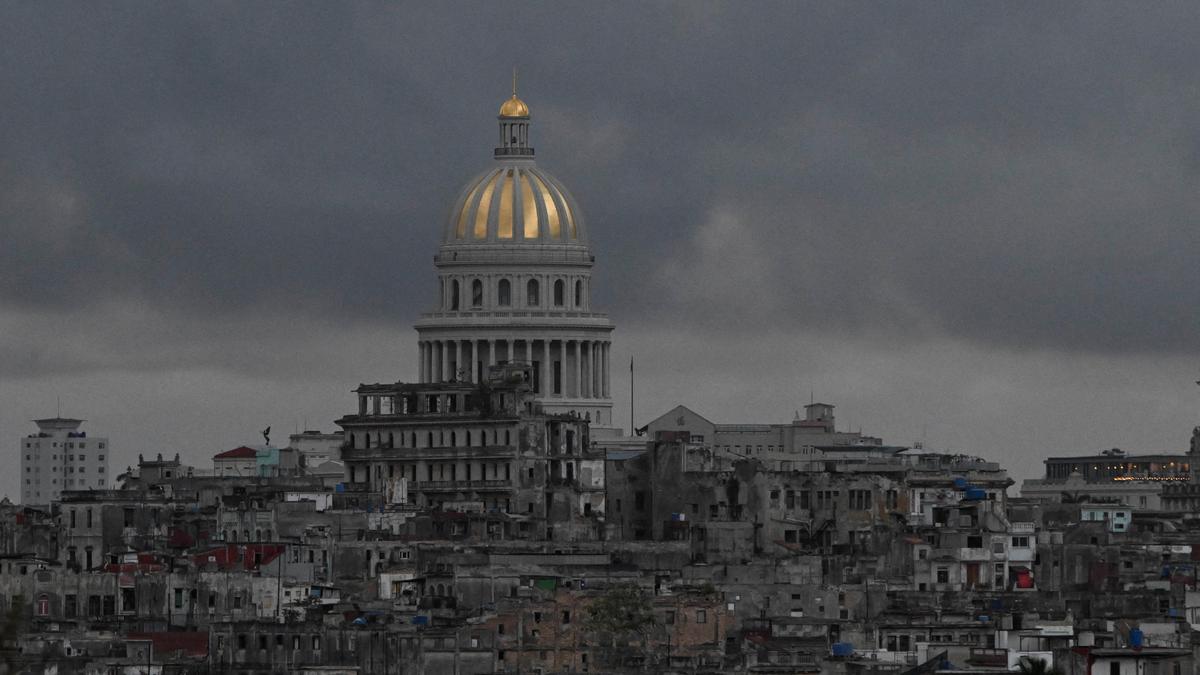
Russia’s help would be a massive succour to a desperate Cuba. The country’s entire electricity grid collapsed this week, leaving about 10 million people without power. Although the government managed to partially restore supply to parts of Havana, the consequences have been disastrous for ordinary Cubans. A report from the ground in Havana by The Guardian indicated that there are few cars on the roads, most airlines serving the island have suspended flights, the Canadian company Sherritt International has shuttered nickel mining operations in Cuba, state offices have closed, and schools have partly suspended classes. Many, the newspaper reported, are struggling with spoiled food, stifling heat, and sleepless children.


Iran-Israel war: Follow the latest updates from The Hindu on the West Asia war, on March 21, 2026

A federal judge blocks the Pentagon's restrictive press access policy, emphasizing the public's right to diverse information.

UK approves US strikes from British bases on Iran missile sites, while Prime Minister Keir Starmer seeks to avoid war.

Czech authorities investigate a suspected arson at a drone technology warehouse linked to anti-Israel group claims.

Ayatollah Khamenei claims Iran has struck a significant blow against enemies amid escalating tensions and ongoing conflict with Israel.

Trump labels NATO allies "cowards" for not supporting the U.S.-Israel war against Iran, criticizing their inaction amid rising oil prices.

Iran warns that global tourist sites are unsafe for Israeli and U.S. officials, while continuing missile development amid ongoing conflict.

Explore how U.S. and Israeli assassinations have transformed Iranian leaders into martyrs, reinforcing a culture of sacrifice and defiance.

Exiled Iranian writer Shahrnush Parsipur’s banned novella explores women’s freedom amid political repression and cultural patriarchy.

Sri Lanka denies U.S. warplanes access to its airport, balancing ties with the U.S. and Iran amid trade interests.

Indonesian President Prabowo Subianto condemns acid attack on activist Andrie Yunus as terrorism, pledging to pursue justice.

Norway's Crown Princess Mette-Marit regrets her friendship with Epstein, claiming she was 'manipulated and deceived' amid scandal.

A fire at a South Korean auto parts factory injures at least 50, prompting a large-scale firefighting response.