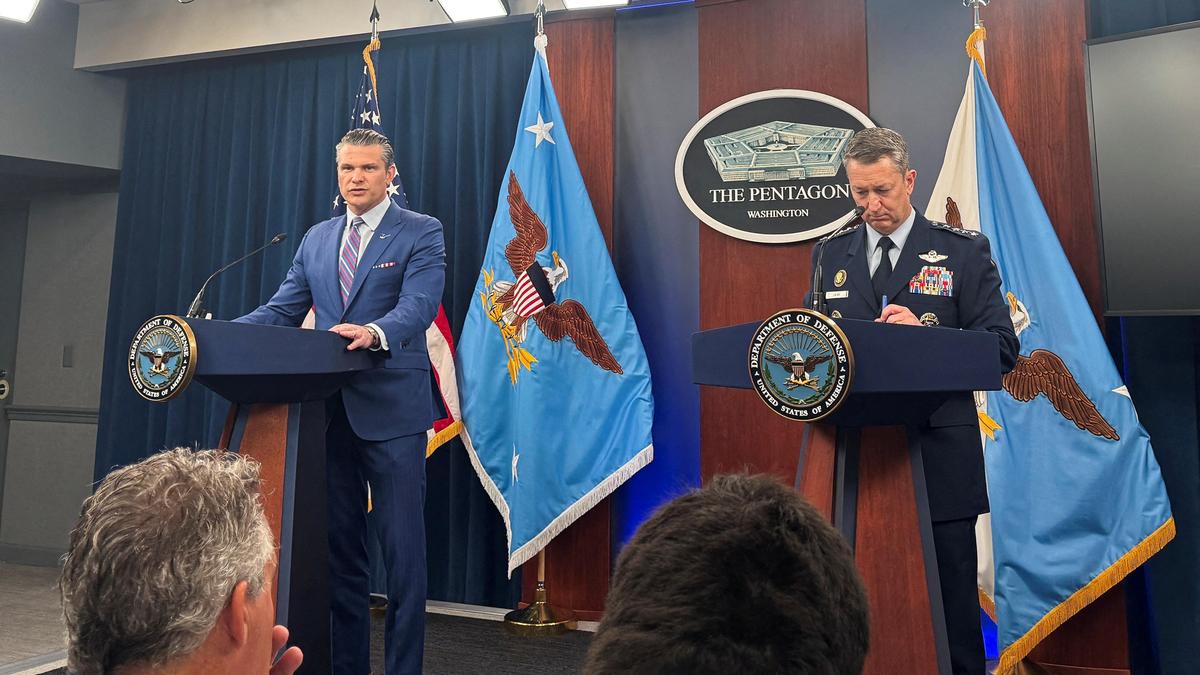
U.S. judge blocks restrictive Pentagon press access policy
The Hindu
A federal judge blocks the Pentagon's restrictive press access policy, emphasizing the public's right to diverse information.
A federal judge on Friday (March 20, 2026) blocked the Trump administration’s restrictive Pentagon press access policy, which threatens journalists with being branded security risks if they seek information not authorized for public release.
The lawsuit by the New York Times in Washington, D.C., federal court alleged that policy changes by the Defense Department last year gave it free rein to freeze out reporters and news outlets over coverage the department did not like, in violation of the Constitution’s protections for free speech and due process. The government disputed that characterization and said the policy is reasonable and necessary for national security.
U.S. District Judge Paul Friedman said in his ruling that he recognized the importance of protecting troops and war plans but that it was “more important than ever that the public have access to information from a variety of perspectives about what its government is doing” in light of President Donald Trump’s recent “incursion” into Venezuela and war with Iran.
The Pentagon and the New York Times did not immediately respond to requests for comment on the ruling. The government is likely to appeal.
The changes approved under Defense Secretary Pete Hegseth in October 2025 state that journalists can be deemed security risks and have their press badges revoked if they solicit unauthorized military personnel to disclose classified, and in some cases unclassified, information.
Of the 56 news outlets in the Pentagon Press Association, only one agreed to sign an acknowledgment of the new policy, according to the Times’ lawsuit. Reporters who did not sign surrendered their press passes.


Norway's Crown Princess Mette-Marit regrets her friendship with Epstein, claiming she was 'manipulated and deceived' amid scandal.

A fire at a South Korean auto parts factory injures at least 50, prompting a large-scale firefighting response.

IEA suggests working from home and avoiding air travel to mitigate rising energy prices amid the U.S.-Israel conflict with Iran.

NTSB investigates a near-collision between Alaska Airlines and FedEx jets at Newark, raising safety concerns in air traffic control.

Vietnam accelerates its shift to ethanol fuel as rising energy prices from the Iran war impact its economy.

Teenagers sue Musk's xAI, alleging its image-generator created explicit images of them as minors, sparking concerns over AI safety.

Shorts News:Watch: Netanyahu: Israel ‘acted alone’ in Iranian gas field attack

Indonesian billionaire Michael Bambang Hartono, co-founder of Djarum Group, has died at 86, leaving a significant legacy.

European nations, Japan, and Canada unite to ensure safe passage through the Strait of Hormuz and stabilize energy markets.

Some of the estimated 20 billion yuan ($2.9 billion) worth of equipment, including screen-printing production lines, will require export approval from Chinese regulators, according to the people. It wasn't immediately clear how much of the equipment would require approval or how long it would take.

Three men, including a Super Micro VP, charged with smuggling U.S. AI technology to China, threatening national security.

Trump compares U.S. strikes on Iran to Pearl Harbor in meeting with Japan's PM, highlighting the element of surprise.

Iran-Israel war: Follow the latest updates from The Hindu on the West Asia conflict on March 20, 2026