Tragedy on DVP sparks calls for more suicide barriers on Toronto's bridges
CBC
WARNING: This story contains discussion of suicide.
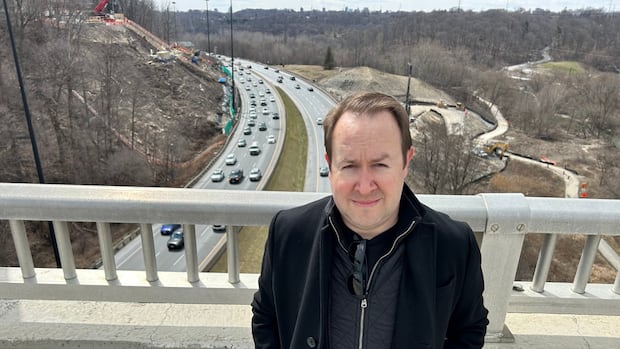
A horrific event on the Don Valley Parkway last Father's Day has spurred Toronto city councillors to demand a speedier timeline for installation of suicide barriers on the Leaside Bridge.
Tali Uditsky tearfully told Wednesday's meeting of the infrastructure and environment committee that her father, Harold Lusthouse, was on his way to meet her for brunch that day in 2024 when someone leapt from the Leaside Bridge and landed on his car on the DVP. The 76-year-old grandfather died in hospital several days later.
"I was shocked, devastated, angry and my heart felt like it was going to explode," Uditsky told councillors. "He was stolen away from us ... as a result of the failure of the city to protect its citizens."
Plans to install suicide barriers on either side of all major bridges in Toronto have been in the works since 2016, according to Coun. James Pasternak, who spearheaded the effort to have barriers erected on the Leaside Bridge shortly after Uditsky approached him last summer.
A feasibility study on that bridge has been underway since then, with councillors getting an update on its progress at Wednesday's meeting.
Figures from Toronto police indicate there were 17 suicides or attempted suicides from the Leaside Bridge in 2023, nine in 2024 and none so far in 2025.
After Uditsky's emotional deputation, councillors voted unanimously to press staff to speed up the process for installing barriers at the Leaside Bridge. The current plan allows for several years before construction begins, and councillors gave staff until Sept. 26 to come up with a plan to install a temporary suicide barrier. That recommendation goes to council for final approval later this month.
Staff said they do not have citywide statistics for suicide deaths at Toronto bridges, but a 2018 report from the city's medical officer of health states that from 2004 to 2015, there were a total of 125 suicide deaths involving bridges in Toronto, for an average of 10 such deaths per year.
"Many jurisdictions have erected barriers at bridge locations and found them to be effective in preventing or reducing suicide deaths, with little displacement of suicide deaths to other bridges," the report states.
City staff wouldn't say which other bridges in Toronto are being studied as part of their report "given the sensitivity of the topic."
However, Pasternak said it's well known that suicide prevention barrier projects are underway at at least two nearby sites — the Glen Road Pedestrian Bridge over Rosedale Valley Road and the Overlea Boulevard Bridge over the DVP.
"There's no doubt it's not cheap — it's in the tens of millions of dollars," he said. "I believe it's worth it."
Toronto's lone suicide prevention barrier is on the Bloor Street Viaduct. Work was completed on the Luminous Veil, as the $5 million project was nicknamed, in 2003.


A national organization is seeking people with experience in Canada's forestry sector as they put together a working group that will examine ways to improve forest recovery following wildfires.

Ella Heyder is bracing for a breakup, even though she already moved out decades ago.

Shawne Hopkins never saw it coming.

Politicians return to Queen’s Park Monday for a shortened spring session, as Premier Doug Ford prepares to unveil his eight budget amid heightened global economic uncertainty.

Despite a recent announcement that a water supply pipeline will be build in Oneida Nation of the Thames, some members of the community say that's no excuse for taking water for granted.

As scandal has swirled around former prince Andrew Mountbatten-Windsor, questions and curiosity have also focused on his ex-wife, Sarah Ferguson, and their daughters, Princesses Beatrice and Eugenie.

Friday may have been the first day of spring, but winter storms are not over yet for Newfoundland.

While we officially welcomed spring last week, an incoming system will be a reminder that snow is still very much part of the new season, especially early on.

The future of a national historic site in Fredericton is up for discussion at meetings across New Brunswick in the next few weeks as the Anglican diocese considers what to do about costly repairs needed at Christ Church Cathedral.

Amanda Lathlin, the first First Nations woman to be elected to the legislative assembly in Manitoba's history, has died, the provincial NDP said on Saturday.

CBC's road trip series Land of Living Stories explores inspiring stories of community spirit from across Saskatchewan. In our latest visit, CBC-Radio Canada hit the road to La Ronge. This is the fifth of a multi-part series from that community.

Dozens of people filled Regina's Fresh and Sweet cafe on Saturday to paint, collage and craft their concerns about artificial intelligence by making zines — a type of self-published small booklet, typically created by hand.

Wildfire season has officially started in Alberta. As the snow starts to melt, people are starting to wonder: Will I have to evacuate this year?