The mechanics of crowd control: anticipation, preparation, prevention Premium
The Hindu
How crowd crush tragedies in India, rooted in poor infrastructure, socioeconomic inequality, and flawed planning, expose systemic neglect rather than crowd behaviour, urging science-based, inclusive solutions for safety.
In his 1997 book ‘Dominance Without Hegemony’, historian Ranajit Guha recounted how Mahatma Gandhi, “perhaps India’s foremost ideologue of self-discipline”, created an “elaborate” set of rules about how people should behave around him as they travelled the country. To Gandhi, Guha wrote, a haphazard crowd was “unmanageable”, “uncontrollable”, “undisciplined”, and ultimately entailed a “mobocracy”. Gandhi demanded “sacrifice, discipline, and self-control” and deplored the “instances of noise and confusion”. Yet he often suffered what Guha called a frustration “deeply felt”.
As anthropologist Ajay Gandhi wrote in a 2013 paper, “For nationalist reformers, proper comportment signalled a people’s capacity to be modern and responsible. The ‘rogues’ … who could not maintain decorum had to be expelled from official nationalism.”
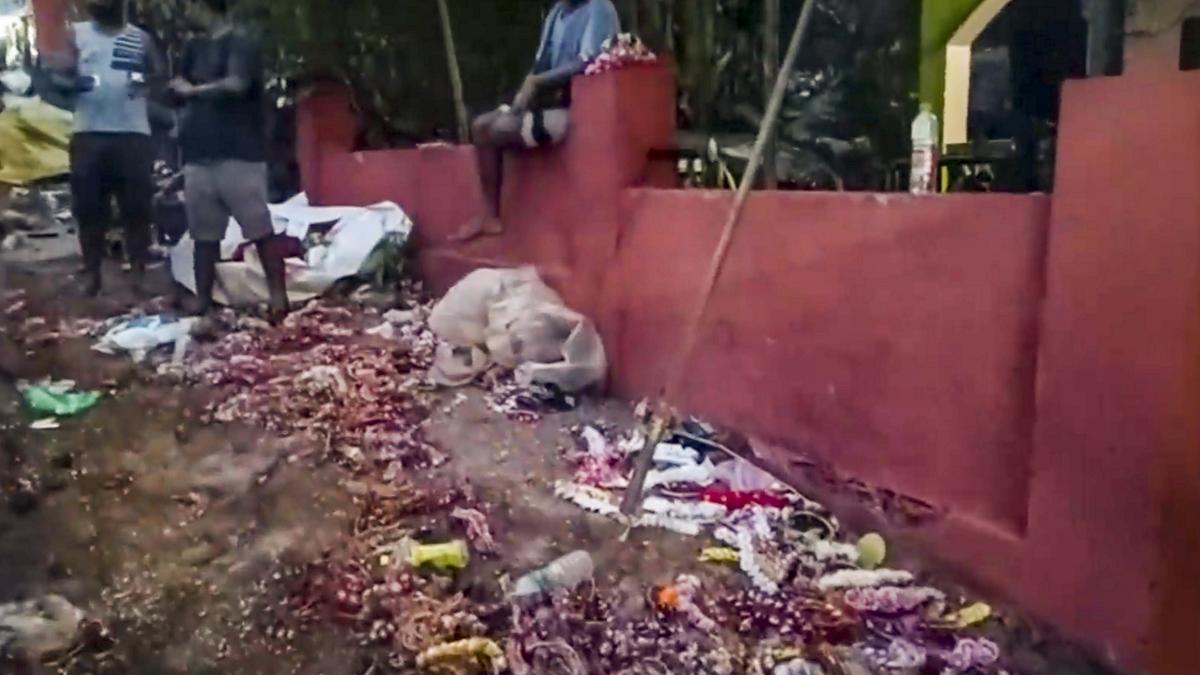
On July 2, 2024, a crowd crush in Mughal Garhi village in Uttar Pradesh’s Hathras district, at the end of a conclave organised by self-proclaimed spiritual guru Suraj Pal Singh, left 121 people dead. Subsequent media reports suggested the local police had granted permission for 80,000 people to gather whereas some 2.5 lakh turned up. Even as Mr. Singh departed the venue in his car, “thousands of devotees shouted and ran towards the vehicle, crushing others still seated,” Reuters said citing a subsequent first information report. “Some people were trampled after falling in an adjacent field of slush and mud.”
On December 4, 2024, actor Allu Arjun made an appearance at the Sandhya Theatre premises in Hyderabad. As the throngs of people who had gathered for a film’s premier rushed towards him, a woman was trampled underfoot and her eight-year-old son was critically injured. Members of the duo’s family later filed a criminal complaint against Mr. Arjun and his security detail, the theatre’s owner, and the film’s makers. According to an officer investigating the incident, the actor’s security guards blocked exit points from the screening hall to stem the tide of people flowing towards him.
On January 29, 2025, a crowd crush during the Maha Kumbh Mela in Prayagraj, Uttar Pradesh, left at least 50 dead and more than a hundred injured. At the 1954 Kumbh, more than 800 people died in a crowd collapse; similar events claimed the lives of 39 at the Nashik Kumbh in 2003, 36 at the Allahabad Kumbh in 2013, and 10 at another Nashik Kumbh in 2015. The 2021 Kumbh Mela in Haridwar is widely believed to have been a ‘superspreader’ event after the Indian government allowed it to go ahead despite the COVID-19 pandemic.
Before the 2025 Kumbh began, Prime Minister Narendra Modi had said it would happen under the gaze of 2,700 cameras outfitted with artificial intelligence (AI) models able to spot unsafe instances of crowding and alert the authorities, so they could ameliorate the risk, in real-time. Reuters reported that the “software running the cameras” sends updates to a control centre staffed by more than 500 people when it “detects a surge in any one section of the festival city, a fire, or if people cross barricades they are not supposed to.” After the incident, State chief minister Yogi Adityanath commissioned an independent judicial inquiry.
On February 15, a ‘stampede’ at the New Delhi Railway Station (NDLS) left 18 people dead and several more injured. Initial reports from the ground indicated the incident involved trains headed for the Mela in Prayagraj.


PM Modi emphasizes India's pursuit of diverse gas and crude oil sources amid the global energy crisis due to West Asia conflict.

Kerala BJP chief Rajeev Chandrasekhar challenges Congress to prove undisclosed assets allegations in court, dismissing them as distractions.

As per information by Minister of State for Civil Aviation Murlidhar Mohol to a question in the Rajya Sabha, ₹146.89 crore has been utilised under the UDAN scheme till October 31, 2025.

Supreme Court rules women officers in Armed Forces deserve equal opportunities, upholding their right to permanent commission and pension benefits.

Telangana government assures no fuel shortage; Hyderabad police commissioner urges citizens to avoid panic buying

Telangana government employees will receive 10-20% discounts on electric vehicles to promote eco-friendly transportation, announces Transport Minister.

Discover the engaging teaser of 'Pallichattambi,' a period drama starring Tovino Thomas, releasing on April 10.

SP P. Jagadeesh reviews night patrols in Anantapur to enhance security and public safety during Operation Night Safety.

DMK announces candidates for 13 seats in Puducherry elections, reserving one seat for ally VCK amid strategic alliances.

Delhi HC safeguards Sonakshi Sinha's personality rights, prohibiting unauthorised use of her image and attributes across platforms.

Mohanlal's 'Drishyam 3', directed by Jeethu Joseph, has been postponed to May 21, coinciding with his birthday. The film marks the franchise's final installment.

Family of custodial death victims demands harsh punishment for nine convicted policemen to prevent future abuses of power.

United Democratic Front's candidate list for the 2026 Kerala Assembly elections, aiming for a significant political comeback.