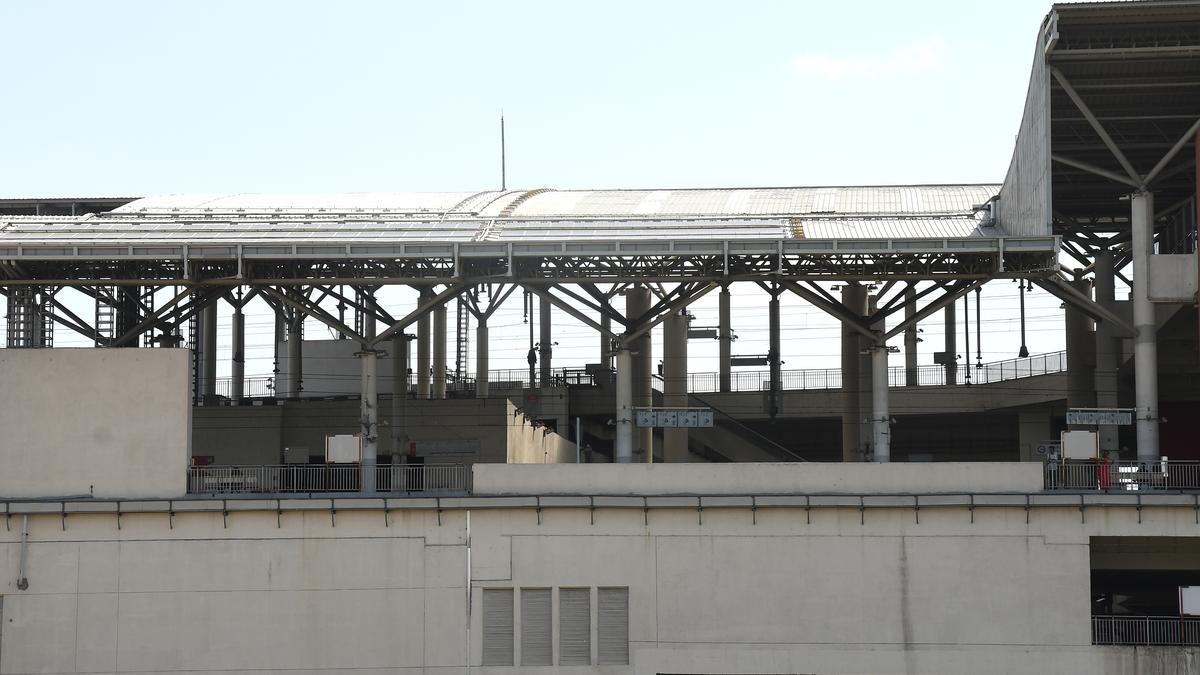
The Green Metro Line blues
The Hindu
The picture cannot be more contrasting. Travelling in the Hyderabad Metro Rail (HMR) Green Line or Corridor Two from Jubilee Bus Station (JBS), Secunderabad, to Mahatma Gandhi Bus Station (MGBS), Imlibun, with 10 stations for about 11 km, is like a picnic with enough space inside the three coach trains even during the peak hours. In comparison, Red Line (Corridor One) running between Miyapur and LB Nagar runs full while the Blue Line (Corridor Three) between Nagole and Raidurg is also packed to capacity with the metro rail authorities struggling to deal with the peak hours rush in the morning and nights even with increased frequency of short distance trips from Mettuguda towards Raidurg.
The picture cannot be more contrasting. Travelling in the Hyderabad Metro Rail (HMR) Green Line or Corridor Two from Jubilee Bus Station (JBS), Secunderabad, to Mahatma Gandhi Bus Station (MGBS), Imlibun, with 10 stations for about 11 km, is like a picnic with enough space inside the three coach trains even during the peak hours.
In comparison, Red Line (Corridor One) running between Miyapur and LB Nagar runs full while the Blue Line (Corridor Three) between Nagole and Raidurg is also packed to capacity with the metro rail authorities struggling to deal with the peak hours rush in the morning and nights even with increased frequency of short distance trips from Mettuguda towards Raidurg.
It shows up in the passenger count. If the Red Line has a daily ridership of about 2.50 lakh passengers, Blue Line has a ridership of about 2.18 lakh, whereas, on the Green Line, it is about 25,000 only even when it traverses through some of the busiest thoroughfares of the twin cities snaking through the dense residential colonies, educational institutions, movie theatres, markets, hospitals and so on.
So, why is this poor patronage when the other two lines are bursting at their seams? Opinions vary - there are passengers regularly travelling on the metro line, pointing out the time lag between two trains defeating the very purpose of running the metro service of providing quick public transport and maintaining punctuality.
“I entered the MGBS metro station from the bus complex making an overnight journey but realised there was no train for more than 20 minutes. I quickly took a local RTC bus to reach Tarnaka directly. If I took the metro, I would have to get down at the Parade Grounds station and catch the connecting Blue Line, which would have taken a lot more time,” says Krishna, another regular passenger.
There are those who, like Plus Two student Dhruv K, travels from Raidurg to Parade Grounds on the Blue Line and then take the Green Line from JBS to Chikkadpally at the cross-over station to attend his classes every day at a coaching institute. He is forced to factor in the less number of services when he hops into the Green Line in the morning and, on return, in the evening during his hectic academic schedule. “Otherwise, it’s very convenient,” he says.
“We should consider this route is well serviced by RTC buses. The metro service in this region sure has made a lot of difference to us because of the air-conditioned travel, faster service and connectivity to new growth regions like Miyapur, Raidurg, Nagole and others. But, unless metro trains are run on schedule with a good frequency - whether packed to capacity or not, how will people shift from the roads,” asks Dr. Srikanth, a regular rider.


Abhishek Banerjee challenges BJP's Suvendu Adhikari in Nandigram, pledging community health initiatives if Trinamool Congress wins.

Rising LPG shortages in Karnataka boost firewood demand, reviving an informal market as households and hotels seek alternatives.

Against the backdrop of intense poll activity, a 400-metre stretch of an arterial road in the outskirts of Chennai (technically in Madurapakkam panchayat under Tambaram assembly constituency) presents a salute to the idea of res publica, which underpins India’s system of governance, where citizens have a say, at least before a government is securely ensconced in the seat of power. A Republic Day initiative shines bright every night

Fadnavis claims zero FIR in Ajit Pawar crash is a defamation attempt by Karnataka against Maharashtra's investigation efforts.

Set to unfold as a one-day pop-up on April 5, the Easter Sadya brings together both vegetarian and non-vegetarian menus, offering a peek into the food traditions of the Syrian Christian (Nasrani) community. While the traditional Sadya is often associated with dishes such as sambar, avial, and rice, this version expands to include community-specific festive dishes.

BJP nominates mother of R.G. Kar victim Abhaya to contest from Panihati in West Bengal Assembly elections.

Veteran Malayalam actor-director E.A. Rajendran passes away at 71, leaving behind a rich legacy in the film industry.

Dakshina Kannada Zilla Panchayat has rolled out digital mode of water bill generation and collection in 23 gram panchayats on a pilot basis for the first time in Karnataka. This is set to be extended to the remaining 200 panchayats shortly, according to the Zilla Panchayat Chief Executive Officer Narwade Vinayak Karbhari.

Bengaluru police questioned a man carrying ₹6 lakh for medical expenses at Vidhana Soudha, later releasing him after verification.

BJP accuses Bengaluru's Congress government of corruption in e-Khata issuance, halting infrastructure projects due to financial mismanagement.

Misinformation in Hyderabad sparks panic buying, causing disruptions as residents react to unfounded rumors of an impending lockdown.

Bengaluru Metro extends services until 2 a.m. on March 28 for IPL match, ensuring convenient travel for spectators.

A bus truck-collision in Andhra Pradesh's Markapuram district, killing several. Catch LIVE updates here!