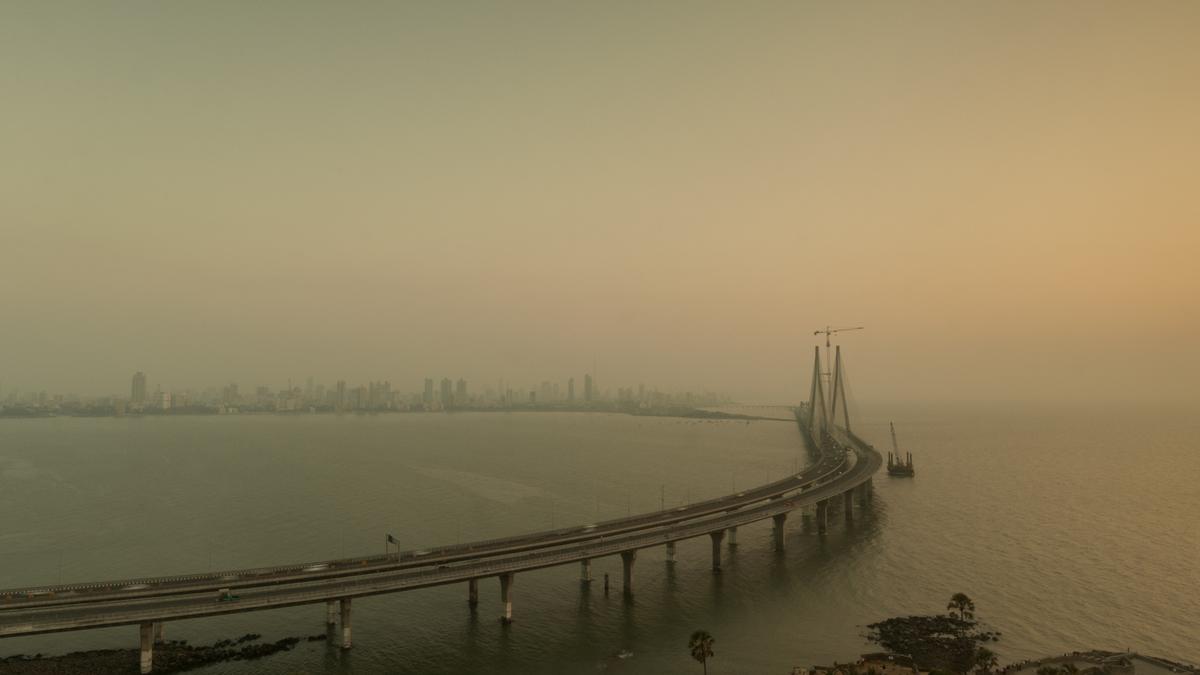
Study suggests cities like Mumbai should adapt to regional airshed approach to tackle air pollution
The Hindu
Pan India study suggests regional airsheds can improve Mumbai's air quality by addressing local and external pollution sources.
A pan India study suggests that by controlling local sources of air pollution alone, Mumbai or any metro city, cannot improve its air quality especially during the winter months when pollution spikes due to both internal and external factors.
Through this study, conducted by Sarath Guttikunda, founder of UrbanEmissions.info, a research platform on air pollution and emission sources, the researcher proposes dividing India into 15 regional airsheds [a geographic area where air pollution is measured and managed as a whole], each tailored to address the distinct agro-climatic and pollution patterns of that region.
The study proposes that Mumbai city is integrated into a coastal airshed which includes all its satellite cities to effectively address and manage urban and non-urban emission sources. In this process, the regional airshed will foster cooperation among the Urban Local Bodies, which are influencing each other’s air quality.
The peer-reviewed study, ‘Designating Airsheds in India for Urban and Regional Air Quality Management’, published in Molecular Diversity Preservation International’s Air journal, indicates that Mumbai’s air quality can be possibly improved by tackling pollution from both inside and outside the city.
An airshed is a geographic area where air pollution is measured and managed as a whole. It recognises that air pollution does not stop at city or state borders—pollutants can travel across regions. As a result, effective pollution management requires cooperation between cities, states, and even neighbouring countries.
Why Mumbai needs a regional airshed?
Mumbai’s air quality worsens significantly during the winter months, driven by a combination of meteorological factors and pollution sources from both within and beyond the city limits. According to the World Air Quality Report 2023, Mumbai’s PM2.5 levels or fine particulate matter [a key indicator of air quality] rose by 23% in January 2023 compared to the same period in 2022, making it one of the worst-affected cities globally during the winter season.


Amit Shah reviews Manipur's security, urging the CM to tackle drug cartels and aid displaced communities after ethnic violence.

Kerala's fisherfolk urge political parties to address livelihood concerns, demanding fair pricing, rule enforcement, and better support during elections.

Moderate rainfall in Visakhapatnam brings relief but causes traffic disruptions and power outages across the city.

Shubman Gill’s Gujarat Titans banks on its tried-and-tested formula

Agriculture Ministry reviews unseasonal rains' impact, assesses farm losses, and discusses relief measures for affected farmers.

Premium petrol prices rise by ₹2 per litre, but government claims no impact on the common man amidst global oil tensions.

Kum. Veerabhadrappa’s acclaimed novel Aramane has been adapted into a television serial. Kannada channel DD Chandana (Doordarshan) has launched the serial with the same name. National Award-winning filmmaker Mansore is the director behind the project,

Diya Chitale and Manav Thakkar reach semifinals, while Yashaswini Ghorpade upsets top seed Sreeja Akula at National TT Championships.

DYFI criticizes A.P.'s job calendar for failing unemployed youth, demanding a revision to include 1 lakh posts and higher age limits.

‘Lethargic’ officials who left Chambal sanctuary to the mercy of sand miners will be held liable: SC
Supreme Court holds negligent officials accountable for enabling illegal sand mining in Chambal Sanctuary, emphasizing habitat protection laws.

Work on the Srisailam Left Bank Canal tunnel resumes after 13 months, with completion targeted by 2027-end, says Minister Reddy.

Ancient ‘Vanni’ tree at Sri Meenakshi Sundareswarar Temple tilts; steps on to restore it

Bengaluru Metro penalises 14 passengers for disrupting services with loud singing, following a viral clip of their antics.