India’s Iran stance does fuel a foreign policy debate Premium
The Hindu
India's Iran policy could be shaped by the evolving dynamics of the U.S.–Israel war
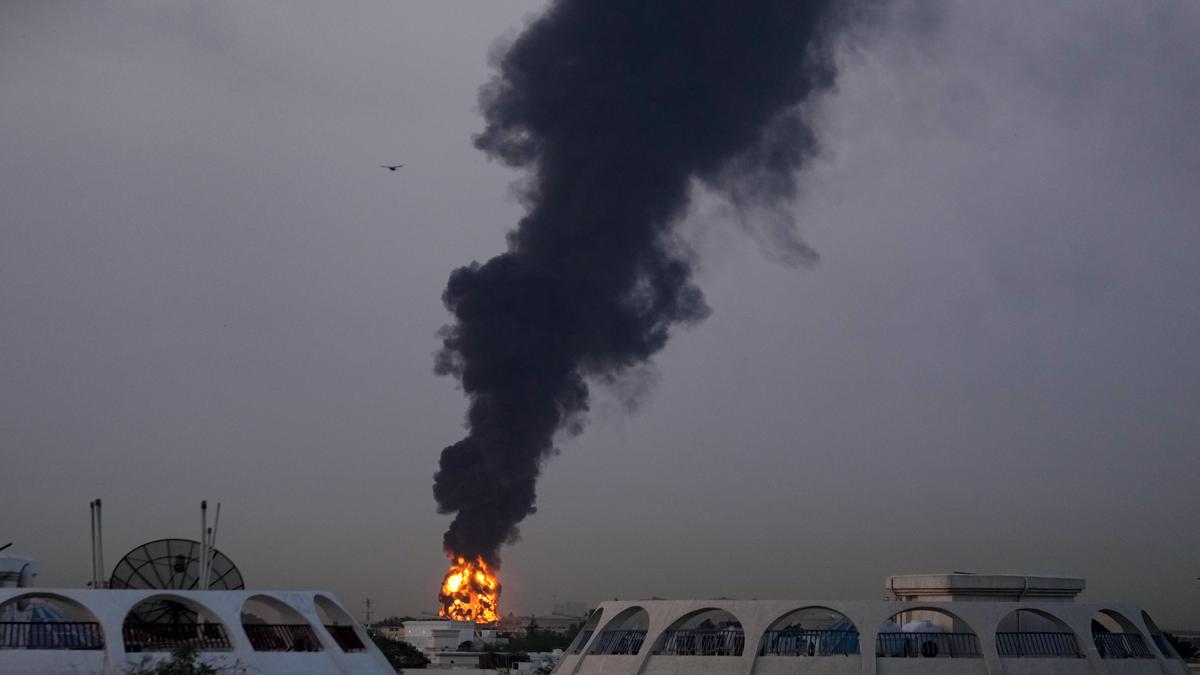
A debate, for the most part civilised, is going on in India about foreign policy. The provocation for the debate is the ongoing Israeli-American war on Iran, now in its third week and India’s response to it.
I belong to the tribe of ‘professional’ diplomats. We consider ourselves experts with special skills to propound on foreign policy issues. It is true that we are trained to read between the lines and to research whatever issue occupies the attention of the international community at a given time. However, it is not as if we are born with a particular gift for foreign policy; the gift or expertise is cultivated over a period of time. Almost anybody can handle foreign policy with experience and exposure to the issues. Everyone has an opinion on foreign policy, and it would not be correct to dismiss those opinions as ill-informed or irrelevant.
The debate is argued between those who generally support the government’s stand on the war, which began on February 28, and those who criticise it as weak-kneed or surrendering to the Americans, or as hostile to Iran, a close and civilisational friend. The deliberate decision not to condole the assassination of Iran’s Supreme Leader, Ayatollah Ali Khamenei, has come in for particular criticism.
Foreign policy is an instrument in the hands of the government to protect and promote the country’s national interests. It follows that it is within the province of the government of the day to define what the national interests are and how to protect them. Some interests are sui generis, such as defending the sovereignty and territorial integrity of the country. For a country such as India, the improvement in the standard of living of its citizens is an extremely important objective.
In a highly globalised and interdependent world, this task imposes on the government the duty to chart its policy with deliberation and calculation. A government led by one party may take one position whereas a government led by another party may take another. The same party may take one position when in opposition but might pursue that very policy when in power. The Congress-led government under Manmohan Singh decided that obtaining the nuclear deal with America was in India’s interest whereas the Bharatiya Janata Party at the time opposed the deal. Once in power, it went beyond what even the previous government had not agreed; it absolved the suppliers of nuclear reactors from any liability, for accident or defect in the reactors.
Foreign policy often is, but should not be, influenced by the ideological orientation of the ruling party. If it is to adhere strictly to the objective of promoting national interest, it cannot afford to be too concerned about principles or rights and wrongs. At times, a particular position might offend our sense of justice or morality, but the government of the day will have to make an objective decision, even if it is not popular.


Matheesha Pathirana will miss the start of IPL 2026, while Harshit Rana's participation remains uncertain for KKR.

Shashi Tharoor advocates for peace in the West Asia conflict, emphasizing the urgent need for de-escalation and international cooperation.

Assembly polls 2026: Follow updates from The Hindu on the upcoming elections in five States, on March 21, 2026

Maharashtra women's panel chief resigns amid controversy over ties to rape-accused godman, facing political pressure and public backlash.

India's Iran policy could be shaped by the evolving dynamics of the U.S.–Israel war

Will G. Sudhakaran's independent run disrupt the Left's stronghold in Ambalappuzha and reshape Kerala's political landscape?

The Hindu Morning Digest gives a select list of stories to start the day. Read the top news today on March 21, 2026

Manjeswaram gears up for a tightly contested Kerala Assembly election in 2026, featuring key candidates from UDF, NDA, and LDF.

Thirty-three detained Bangladeshi nationals from Tamil Nadu are being deported to Bangladesh via West Bengal with police escort.

Tree felling for a flyover and underpass on the Manikonda-Hitech City stretch sparks outrage as Hyderabad’s road expansion drives another green loss.

Residents of Velachery express concerns over flooding and development issues, while welcoming the MRTS extension.

Seeman advocates for a benevolent authoritarianism and an agriculture-centered economy to ensure discipline and self-sufficiency in Tamil Nadu.

Residents of Velachery express concerns over flooding and development issues, while welcoming the MRTS extension.