Study reveals how new species evolve without geographic barriers
The Hindu
IIT Bombay study reveals how sympatric speciation can occur without geographic barriers, challenging traditional views on speciation.
A new study conducted by scientists from the Indian Institute of Technology Bombay (IIT Bombay), Mumbai published in NPJ Systems Biology and Applications, has shed light on the process of speciation, meaning the formation of new species, in the absence of geographic barriers. Traditionally, it is believed that speciation largely occurs when populations of a species are isolated from each other by geographical barriers such as mountains or bodies of water. This is called allopatric speciation. However, the new IIT Bombay research suggests that speciation can happen even when populations live in the same area without geographical barriers. This mode of speciation is called sympatric speciation.
Professor Supreet Saini, from Department of Chemical Engineering and DBT/Wellcome Trust (India Alliance) Fellow at IIT Bombay and the lead researcher of this study said, “While there is ecological evidence in favour of sympatric hypothesis, there is no experimental evidence. And without a laboratory model to study sympatric speciation, it becomes difficult to understand it as a process. The motivation behind our work is to understand how the environment and the underlying genetics can lead to sympatric speciation and design biologically insightful experiments.”
The researchers used a genetic-based model to investigate the factors that contribute to speciation when populations live in the same geographic area. This theoretical study focused on a population of birds using simulated data and specifically looked at how three aspects that encourage speciation, namely, disruptive selection, sexual selection, and genetic architecture play a role in driving and maintaining sympatric speciation.
Disruptive speciation
“In sympatric speciation, the “divide” in the population can be created due to non-uniform resources present in the environment, and geography has no role to play here. This is called ecological disruptive selection,” co-author Pavithra Venkataraman, PhD student and a Prime Minister’s Research Fellow at IIT Bombay explained. In other words, disruptive selection is a process by which individuals with extreme traits have a higher fitness than those with intermediate traits.
Ms. Venkataraman added, “Disruptive selection is necessary for speciation to occur in sympatry because it favours heritable differences in the population and ensures that the offsprings produced by the mating of individuals belonging to two different groups do not survive. These two factors are extremely important for maintaining biodiversity in sympatry.”
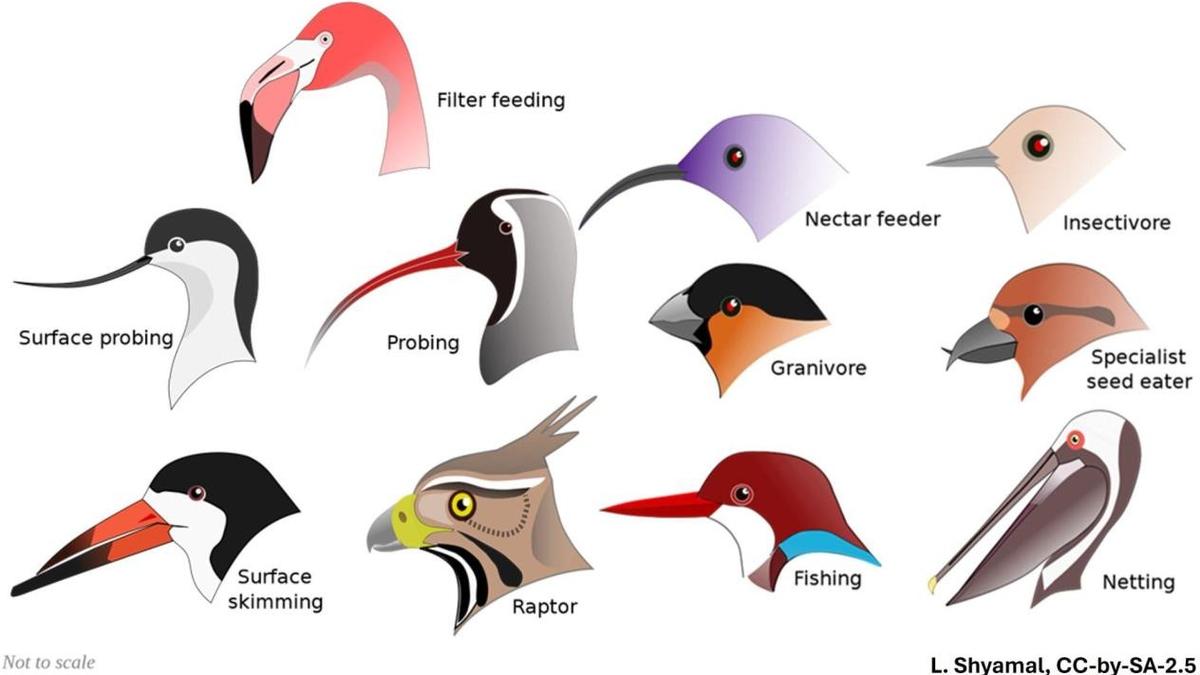
In this study, the researchers focused on a physical trait of the birds - the beak size. The birds in the population had to adapt their beak size to best utilise two types of food resources, such as nuts and flower nectar. Birds with small beaks will be better at utilising resource nuts, while those with longer beaks will be more efficient at utilising flower nectar as their resource.


Discover the inspiring legacy of Bibha Chowdhuri, a pioneering woman in physics and a trailblazer in STEM history.

Ashdeen’s Spring 2026 collection features saris inspired by the designer’s Parsi gara archive

Red ochre burials, ritual markings and myths across cultures show that red repeatedly marks liminal thresholds such as puberty, sacrifice and death; anthropologists argue that the colour functions as a technology of collective ritual and value, binding communities through shared symbolic acts

India approves 23 institutions for quantum labs under the National Quantum Mission, aiming to advance quantum technology and research.

India approves 23 institutions for quantum labs under the National Quantum Mission, aiming to advance quantum technology and research.

The Gaza conflict exacerbates environmental damage, emitting millions of tonnes of CO2 and threatening climate stability in West Asia.

Chefs and cookery experts share smart kitchen hacks, hybrid cooking methods and appliance tips to help households reduce LPG use without compromising on food

Discover groundbreaking research on Titan's lakes, bat vaccinations, and the unique aroma of ripening bananas in just one minute.

IRSO's NavIC system faces challenges as the last atomic clock fails, reducing operational satellites for navigation services.

Discover efficient pressure cooking techniques to save up to 50% on fuel. OPOS B Ramakrishnan tells you how

Mercedes-Benz CLA 250+ with EQ Technology review: design, performance, range and features explained. Discover how the new electric CLA combines advanced AI, long range, fast charging and futuristic styling for the next generation of luxury EVs.

Pi Day is celebrated every year on March 14, honouring the significance of the mathematical constant π and its applications in mathematics.

Discover how sculptural interior design transforms modern spaces, blending creativity and functionality to evoke emotion and identity.