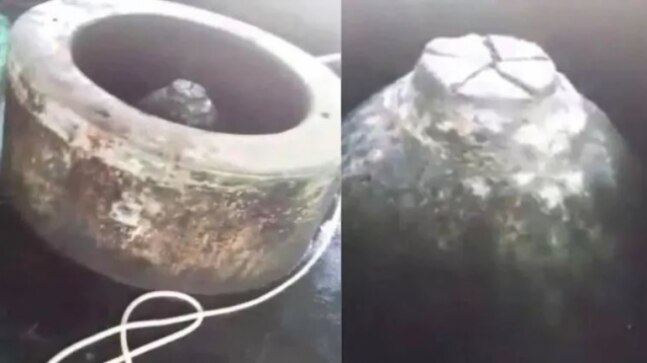
Structure found inside Gyanvapi mosque resembles Gupta-era shivling, claims historian
India Today
The shivling-like structure found inside Gyanvapi Masjid is similar to the one from the Gupta-era discovered at a nearby site in Varanasi, claimed historian Shri Bhagwan Singh.
The shivling-like structure found inside the Gyanvapi mosque has a striking similarity with the one from Gutpa period found near Varanasi, said historian Shri Bhagwan Singh.
Singh is a PhD from Banaras Hindu University and specialises in idol worship and ancient Indian history.
In an exclusive interview with India Today, Singh said, “The shivling which is preserved in the museum was excavated years ago from the Saidpur area near Varanasi. Saidpur and nearby areas were one of the capitals of Gupta empire. The structure found inside the Gyanvapi mosque is similar to the Saidpur shivling.”
“A shivling is identified by its material and type of construction. An expert can easily tell whether a structure is a shivling and if it is, then it belongs to which era,” said Singh.
The first known shivlings were found at Harappa and Mohanjodaro sites.
Contrary to the theory of Aryan invasion, historians say people in the Harappan civilization were ardent disciples of ‘Shaivism’ as the first known shivlings were found during the excavation of Harappa and Mohanjodaro archaeological sites.
Jhon Marshall, who was involved in the excavation of the sites, has mentioned the types of shivlings found at the sites in his book, Mohanjodaro-The Indus Civilization.


As Parliament prepares to bring amendments to the Transgender Act, activists warn the proposed changes risk rolling back years of hard-won rights.

A high-speed boat crash in the Maldives has left two Indians missing, including a celebrated rally figure, even as Gautam Singhania returns home. Search teams continue efforts amid mounting concern and unanswered questions.

A prominent seer, Pranavananda Swamiji, alleged that mutts backing Karnataka Deputy Chief Minister DK Shivakumar to take over the top post were denied any allocation in the state budget presented by Chief Minister Siddaramaiah. He reiterated his support for Shivakumar to take over as the chief minister.

India's original Dhurandhar, Ravindra Kaushik, rose from acting at college theatres, to infiltrating the Pakistan Army as a RAW Agent. He provided critical intelligence on Pakistani troop movements and the country's nuclear programme, but died a lonely death after his betrayal and subsequent capture by the ISI.


According to the police, 19-year-old Sachin Dharmendrabhai Chaudhary, who works as a labourer, had borrowed the money before expressing his inability to repay it immediately, police said. He was allegedly threatened with his life over the delay in repayment. Fearing for his life, Sachin immediately alerted the police.

A quiet arrest in Rajasthan has unravelled a wider espionage network, linking an Air Force employee to Pakistani handlers. Investigators say the trail began months ago and may reach deeper than first believed.

A 36-year-old woman plotted to murder her mother-in-law with the help of her 21-year-old lover. The murder plot was exposed by CCTV installed inside the house.


A former village pradhan who had been missing since March 18 was found dead in a sack near a canal in Pratapgarh. Police have arrested his lover, claiming she carried out the murder with accomplices.

From a Kashmiri widow parting with her late husband's cherished jewellery to children emptying their piggy banks, a wave of generosity is emerging across India as citizens step up to support people affected by the escalating conflict in Iran.

Uttar Pradesh CM Yogi Adityanath conducted an on-site review of preparations at Noida International Airport ahead of its March 28 inauguration by PM Narendra Modi, directing officials to ensure seamless arrangements, robust security and world-class execution.