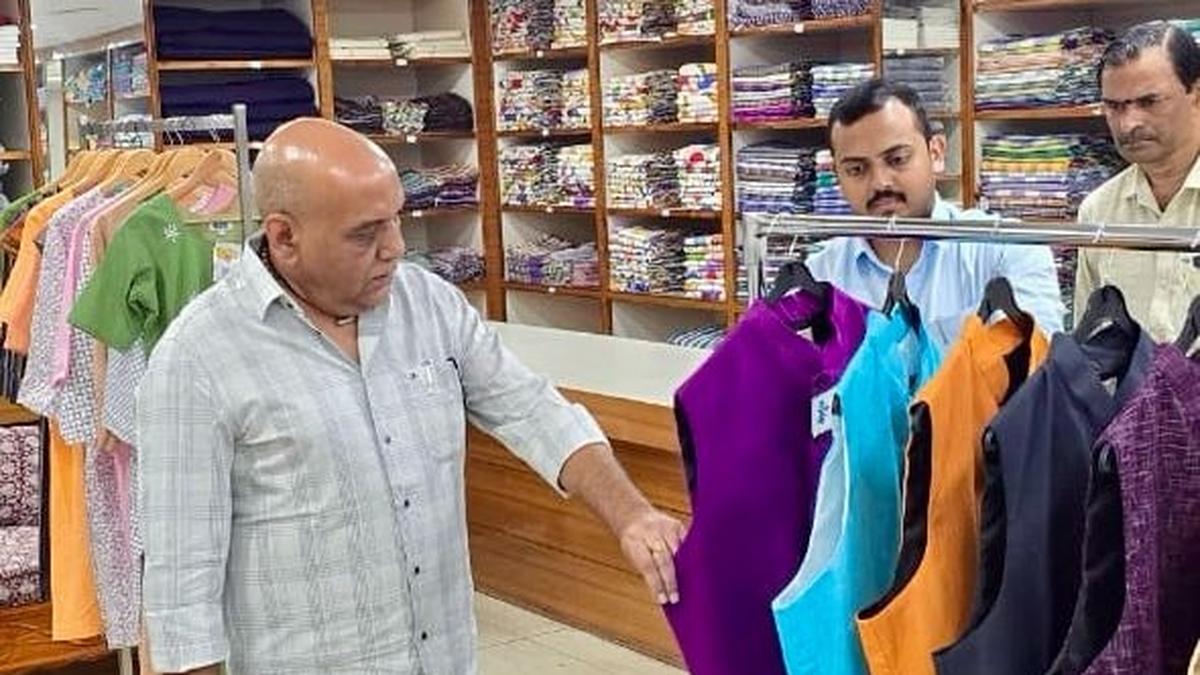
Strategic roadmap outlined to modernise and make APCO and Lepakshi global entities
The Hindu
Special Chief Secretary, Handlooms and Textiles, Ram Prakash Sisodia emphasises the need to modernise and transform the APCO and Lepakshi into a vibrant, profitable, and globally competitive entities.
Special Chief Secretary, Handlooms and Textiles, Ram Prakash Sisodia on Friday emphasised the need to modernise and transform the Andhra Pradesh State Handloom Weavers Cooperative Society (APCO) and Lepakshi into a vibrant, profitable, and globally competitive entities.
Addressing a review meeting at the APCO central office in Vijayawada, Mr. Sisodia evaluated the current status of the State’s two flagship institutions dedicated to the promotion of handlooms and handicrafts and charted a forward-looking strategy. Managing Director Viswa Kumar gave a detailed presentation on operations, challenges, and new opportunities for expansion.
Laying out a series of strategic directives, beginning with the integration of all product lines under a single retail roof through unified, multi-brand showrooms, Mr. Sisodia said that this would enable a consolidated brand identity and a more attractive experience for customers, promoting cross-selling and greater footfall. He directed the immediate development of a mobile marketing application and a WhatsApp-based marketing strategy to engage customers directly, share updates, promote offers, and build lasting digital relationships with target audiences. “These tools will significantly increase visibility, especially among younger and tech-savvy consumers,” he said.
To explore new revenue streams, Mr. Sisodia proposed allowing private advertising within showroom spaces, which could be monetised without disrupting the retail ambience. He also wanted the officials to identify unused immovable assets and put them to commercial use to enhance financial strength.
Appointment of a single banker to handle all transactions, preferably one that could provide CSR contributions, lower interest rates, and free software for financial and operational management was a crucial reform discussed in detail. Mr. Sisodia also insisted on adoption of a double entry system of accounting to ensure transparency, accuracy, and better financial discipline across departments.
In the area of sales and performance, he called for introduction of a structured system of rewards and punishments for sales personnel, ensuring accountability while also motivating achievers. He also highlighted the need for differential markups, dynamic pricing, and targeted discounts based on product categories and customer behaviour to optimise margins and stay competitive in a fast-moving retail environment.
Mr. Sisodia said there was a need to diversify product ranges, improve branding and imagery, and make the offerings more appealing to urban and global markets. Enhancing visual identity, packaging, and storytelling around each product was noted as vital to capturing new audiences and building brand loyalty.


The government plans to amend the FCRA, introducing new regulations for NGO asset management and accountability for key functionaries.

The draft policy for “Responsible Digital Use Among Students”, released on Monday by the Department of Health and Family Welfare, has recommended that parents set structured routines with clear screen-time rules and prioritise privacy, safety, and open conversation with children on digital well-being.

Police Observer Sushant Kumar Saxena conducts surprise inspection at Shencottai police station, reviewing warrants and security arrangements ahead of elections.

Andhra Pradesh government to launch key projects in April, focusing on industrial growth and infrastructure development, says Nara Lokesh.

Lok Sabha refers the Corporate Laws (Amendment) Bill to a JPC amid opposition concerns over CSR provisions dilution.

SHG members in Kanniyakumari use snakes and ladders to raise election awareness and boost voter turnout.

Government accelerates consultations for early implementation of the Women’s Reservation Act to ensure women’s representation in 2029 elections.

CM A. Revanth Reddy distributes ₹1 crore insurance cheques to families of deceased Electricity department employees, enhancing financial security for workers.

The Bengaluru Traffic Police (BTP) registered 634 cases of drunk driving during a week-long special enforcement drive conducted across the city between March 16 and March 22.

GHMC intensifies action against property tax defaulters, seizing properties and offering a One Time Settlement scheme for payments.

CCB arrests three drug peddlers in Mangaluru, seizing ₹2.5 lakh worth of MDMA and other valuables.

TVK's 28 candidates in Puducherry include former BJP MLAs, a sitting Independent, and a retired police IG.

BRS submits notice on private member bill to Speaker