Space junk in Earth orbit and on the Moon will increase with future missions − but nobody’s in charge of cleaning it up Premium
The Hindu
With more countries landing on the Moon, people back on Earth will have to think about what happens to all the landers, waste and miscellaneous debris left on the lunar surface and in orbit
There’s a lot of trash on the Moon right now – including nearly 100 bags of human waste – and with countries around the globe traveling to the Moon, there’s going to be a lot more, both on the lunar surface and in Earth’s orbit.
In August 2023, Russia’s Luna-25 probe crashed into the Moon’s surface, while India’s Chandrayann-3 mission successfully landed in the southern polar region, making India the fourth country to land on the Moon.
With more countries landing on the Moon, people back on Earth will have to think about what happens to all the landers, waste and miscellaneous debris left on the lunar surface and in orbit.
I’m a professor of astronomy who has written a book about the future of space travel, articles about our future off-Earth, conflict in space, space congestion and the ethics of space exploration. Like many other space experts, I’m concerned about the lack of governance around space debris.
Data | Small debris orbiting Earth pose threats to space assets
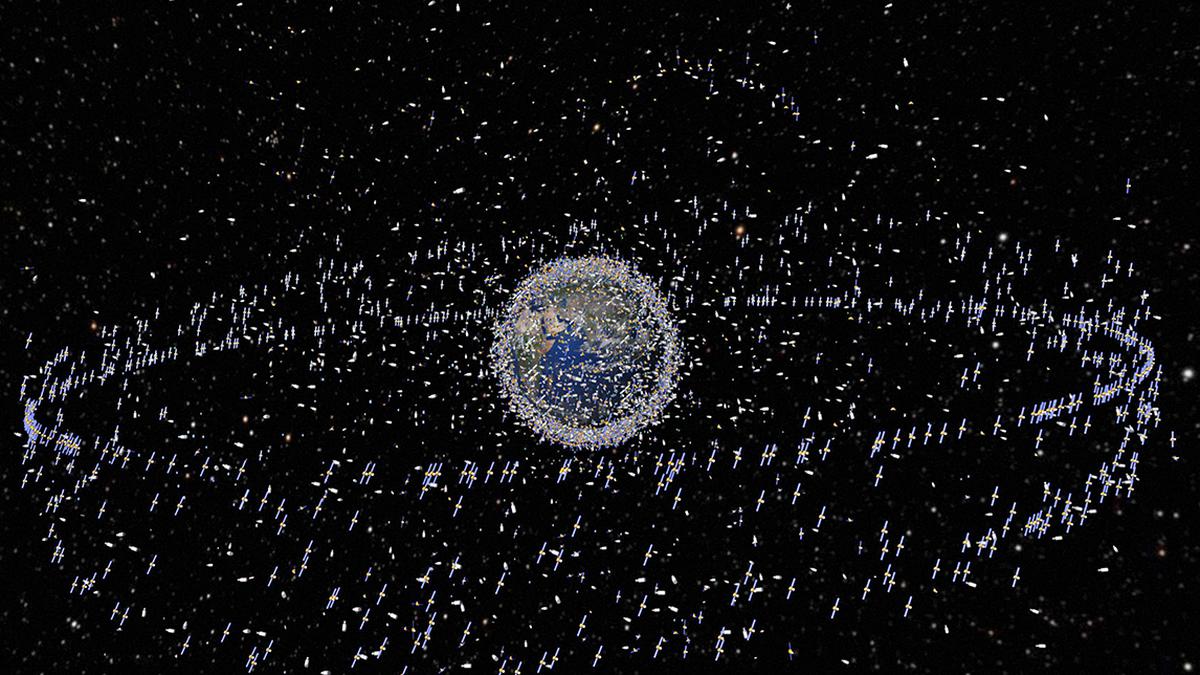
People think of space as vast and empty, but the near-Earth environment is starting to get crowded. As many as 100 lunar missions are planned over the next decade by governments and private companies like SpaceX and Blue Origin.
Near-Earth orbit is even more congested than the space between Earth and the Moon. It’s from 100 to 500 miles straight up, compared with 240,000 miles to the Moon. Currently there are nearly 7,700 satellites within a few hundred miles of the Earth. That number could grow to several hundred thousand by 2027. Many of these satellites will be used to deliver internet to developing countries or to monitor agriculture and climate on Earth. Companies like SpaceX have dramatically lowered launch costs, driving this wave of activity.


Discover efficient pressure cooking techniques to save up to 50% on fuel. OPOS B Ramakrishnan tells you how

Mercedes-Benz CLA 250+ with EQ Technology review: design, performance, range and features explained. Discover how the new electric CLA combines advanced AI, long range, fast charging and futuristic styling for the next generation of luxury EVs.

Pi Day is celebrated every year on March 14, honouring the significance of the mathematical constant π and its applications in mathematics.

Discover how sculptural interior design transforms modern spaces, blending creativity and functionality to evoke emotion and identity.

A study reveals that certain antibiotics can cause long-lasting changes in gut microbiome diversity for up to eight years.

Indian scientists and international experts are divided over a study questioning the viability of a nuclear reactor fuel called HALEU-thorium; while critics cite safety risks, proponents argue the technology is vital to achieve national energy goals.

ISRO and AIIMS partner to enhance space medicine research, focusing on human health during long-duration space missions.

A practical guide to induction setups for students, families, and home food businesses as India’s LPG supply faces its biggest disruption in years

Explore the electrifying Oscars 2026 race, featuring standout films, baffling nominations, and memorable performances amid a cinematic transition.

Zai and Rom Whitaker’s latest book for young readers, The Book of Indian Snakes, tackles common misconceptions surrounding snakes, highlighting their utility to humans

Discover PC Mahalanobis's pivotal role in India's statistical revolution and his lasting influence on modern statistics in this episode.

Explore why nothing can exceed light speed and the paradoxes that arise if it were possible.

Scientists have engineered bacteria to produce designer proteins by smuggling artificial amino acids, enabling precise drug delivery and multifunctional applications.