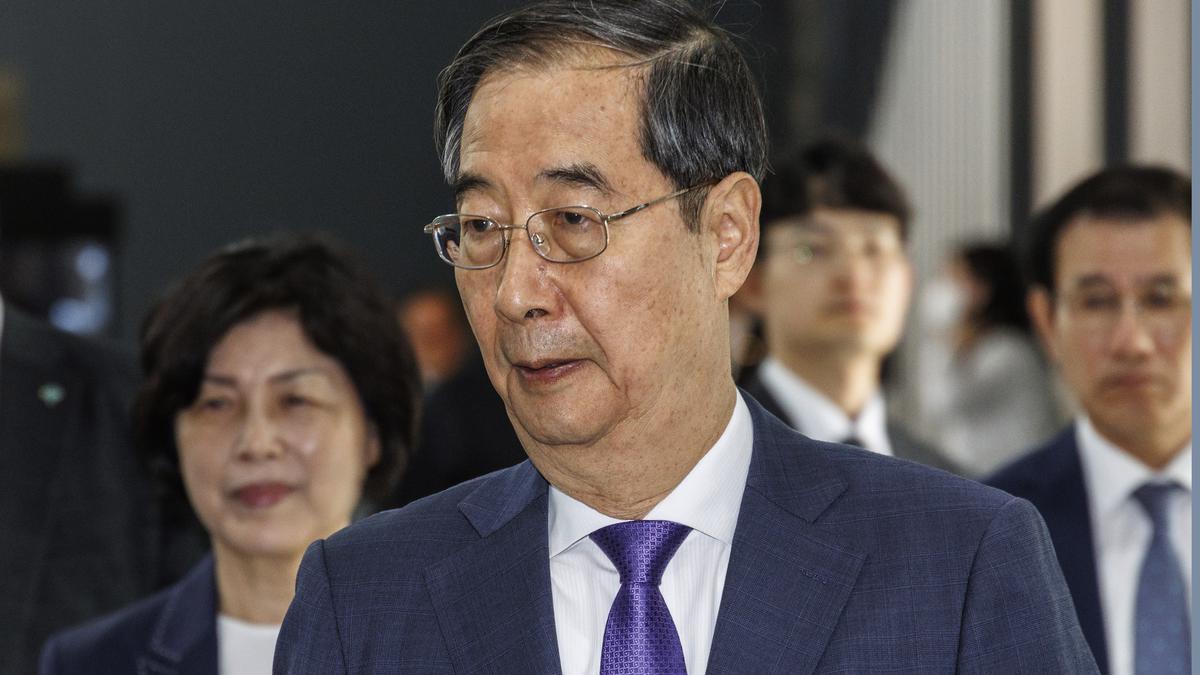
South Korea's Prime Minister and top Presidential officials offer to resign after election defeat
The Hindu
South Korea's Prime Minister and senior officials resign after ruling party's defeat in Parliamentary elections.
South Korea’s Prime Minister and senior Presidential officials offered to resign en masse on April 11 after their ruling party suffered a crushing defeat in the Parliamentary elections in a huge blow to conservative President Yoon Suk Yeol.
“The results of Wednesday’s elections (April 10) mean the liberal Opposition forces will prolong their control of Parliament until after Mr. Yoon completes his single five-year term in 2027. That will likely set back Mr. Yoon’s domestic agenda and weaken his grip on the ruling party as he faces the Opposition’s intensifying political offensive during his remaining three years in office,” experts say.
“Prime Minister Han Duck-soo and all senior Presidential advisors to Mr. Yoon, except those in charge of security issues, submitted their resignations,” according to Mr. Yoon’s office. It didn’t immediately say whether Mr. Yoon accepted their resignations.
Executive power in South Korea is heavily concentrated in the President, but the Prime Minister is the No. 2 official and leads the country if the President becomes incapacitated.
“Mr. Yoon said he will “humbly uphold” the public sentiments reflected in the election outcome and focus on improving people’s economic situations and on reforming State affairs,” Mr. Yoon’s Presidential chief of staff, Lee Kwan-seop, said in a televised briefing.
In a separate news conference, ruling People Power Party leader Han Dong-hoon said he would step down as well to take responsibility for the election defeat. “I apologise to the people on behalf of our party, which wasn't good enough to win the people's choices,” he said.
“With most of the votes counted, the main Opposition Democratic Party and its satellite party appeared to have won a combined 175 seats in the 300-member National Assembly. Another small liberal Opposition party was expected to win 12 seats under a proportional representation system, “according to South Korean media tallies.


Philippine President Marcos declares national energy emergency amid Middle East conflict, ensuring fuel and essential goods supply stability.

Mohammad Baqer Zolqadr appointed as Iran's new security chief, succeeding Ali Larijani after his assassination.

Israel plans to occupy southern Lebanon amid escalating violence, targeting Hezbollah and causing widespread destruction and civilian casualties.

Trump reveals Secretary Hegseth was pivotal in discussing military action against Iran amid escalating tensions in the Middle East.

Iran arrests 466 individuals for online activities threatening national security amid ongoing tensions with Israel and the U.S.

China protests to Japan over a break-in at its Tokyo embassy, demanding a thorough investigation and accountability.

After securing a historic mandate in Nepal’s polls, Balendra Shah and the RSP face the task of navigating the West Asia conflict and managing ties with India, China and the U.S.

A magnitude 7.6 earthquake struck near Tonga, prompting evacuations but no tsunami warnings or immediate damage reports.

Iran launches missile attacks on Israel, rejecting Trump's negotiation claims as 'fake news,' escalating regional tensions and market volatility.

A large explosion at Valero refinery in Port Arthur, Texas, prompts shelter-in-place order for nearby residents, no injuries reported.

Kim Jong Un vows to solidify North Korea's nuclear status and labels South Korea as its "most hostile" adversary.

U.S.-Israel war on Iran LIVE: Follow The Hindu for updates on the West Asia conflict on March 24, 2026

Trump claims “very good” talks with Iran, despite Tehran’s denial, as U.S. negotiators plan potential meetings in Pakistan.