Path ahead for Nepal’s new leadership
The Hindu
After securing a historic mandate in Nepal’s polls, Balendra Shah and the RSP face the task of navigating the West Asia conflict and managing ties with India, China and the U.S.
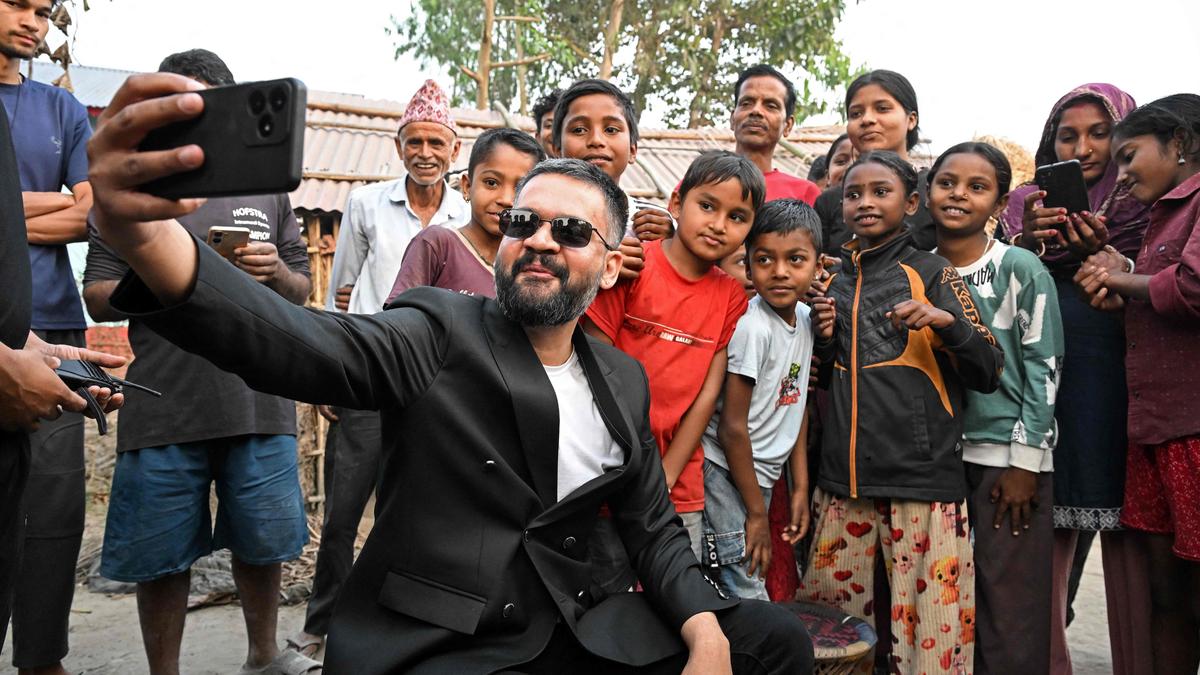
In the noisy, crowded landscape of Nepali politics, the meteoric rise of Prime Minister-designate Balendra Shah and his party, the Rastriya Swatantra Party (RSP), represents a rare political anomaly. While veterans of the 2008 republic traded barbs, the rapper-engineer-turned-mayor bypassed traditional campaigning for a “monastic” silence. His victory in Nepal’s post-Gen Z parliamentary election on March 5 secured a historic mandate for an alternative force he joined a mere six weeks before the polls. Throughout the campaign, Shah spoke for barely thirty minutes, avoided media interviews and notably never once asked for a vote.
His unapologetic critiques of the political establishment during his tenure as Kathmandu’s mayor, mirrored a generation exhausted by stale ideological party politics. In a nation with a median age of twenty-five, Shah’s reputation as a disciplined, clean reformist promising better governance became a viral mandate. His calculated silence mirrored these frustrations, positioning him as the ultimate outsider for an electorate eager for results.
While capitalising on domestic old-guard fatigue served Shah as a winning electoral strategy, Nepal’s hard geopolitical reality remains stubbornly unchanged. In Nepal, political shifts rarely remain purely domestic, often prompting debates about foreign influence given its geography wedged between the rivalries of India and China.
Yet, Shah, however has sought to counter this by projecting an image of a staunch nationalist. As mayor, his symbolism was deliberate: hanging a “Greater Nepal” map in his office as a direct retort to the “Akhand Bharat” mural in India’s new Parliament House, and briefly banning Indian films. Simultaneously, he signaled caution toward Beijing by dropping a China-backed industrial park from his election manifesto. By distancing himself from large-scale geopolitical projects, Shah reframed the narrative, asserting a sovereignty that felt local, visible, and unapologetically independent.
Historically, Nepal’s politics followed rigid ideological scripts. The Nepali Congress, the country’s oldest liberal force, leaned toward Delhi, while communist factions like CPN- UML maintained proactive affinities with Beijing. And at times, the ideological rhetoric from Kathmandu stretched far beyond the Himalayas, from debates over Venezuela’s regime change to contentious political statements on the Ukraine war, issues largely peripheral to Nepal’s own priorities. Under Shah, this era of predictable ideological signaling may finally be fading. His minimalist approach and by speaking less about the world’s ideological battles, Shah’s personality itself can be potent strategic asset to Nepal, but it is immediately replaced by a different kind of geopolitical pressure that needs sustained diplomatic communique.
India remains Nepal’s most consequential partner, linked by an open border, “Roti-Beti” social bonds, and accounting for a significant share of its trade, supplying virtually all of its petroleum, and emerging as the primary market for Nepal’s burgeoning hydropower exports. Meanwhile, China has deepened its footprint through major infrastructure financing, such as $216 million Pokhara International Airport. Intended as a regional gateway, its underutilisation is viewed in Kathmandu as a casualty of the broader India-China friction, particularly New Delhi’s hesitancy to facilitate air routes for Chinese-financed infrastructure.


Tencent launched a tool on Sunday to integrate its WeChat messaging platform with the OpenClaw agent

An Air Canada flight collided with a Port Authority vehicle at LaGuardia Airport, causing significant damage and police response.

Saudi Arabia and the UAE face missile attacks, with casualties reported and air defenses engaged amid escalating regional tensions.

Slovenia's parliamentary election results show a tight race between liberals and populists, signaling potential political instability ahead.

IEA chief warns of a potential energy crisis worse than the 1970s, with 11 million barrels lost daily amid regional conflicts.

Cuba begins restoring power after a nationwide grid collapse, affecting thousands amid an ongoing energy crisis and blackouts.

The Hindu LIVE updates on March 23 2026 on Iran-Israel war. Iran faces deadline of US President Donald Trump warning to open Strait of Hormuz

Brazil's Lula condemns renewed colonialism and U.S. interference in developing nations at a summit in Colombia.

Saudi Arabia expels Iranian military staff amid escalating tensions and ongoing missile attacks during the U.S.-Israeli war on Iran.

Russia claims control of Potapivka village in Ukraine's Sumy region amid ongoing military efforts to establish a buffer zone.

Iranian missile strikes on Israeli towns cause widespread damage and injuries, marking a significant escalation in the ongoing conflict.

As Gor makes first trip as U.S. Special envoy to South Asia, Delhi watches strategic signals closely
Sergio Gor's inaugural trip as U.S. Special Envoy to South Asia signals strategic U.S. engagement amid regional tensions.

Slovenians vote in a tight election between liberal and populist candidates, impacting the country's future domestic and foreign policies.