Simultaneous polls panel weighs bar on no-confidence motions in final year of government’s term
The Hindu
Joint Parliamentary Committee considers barring no-confidence motions in the final year of government term amid simultaneous elections proposal.
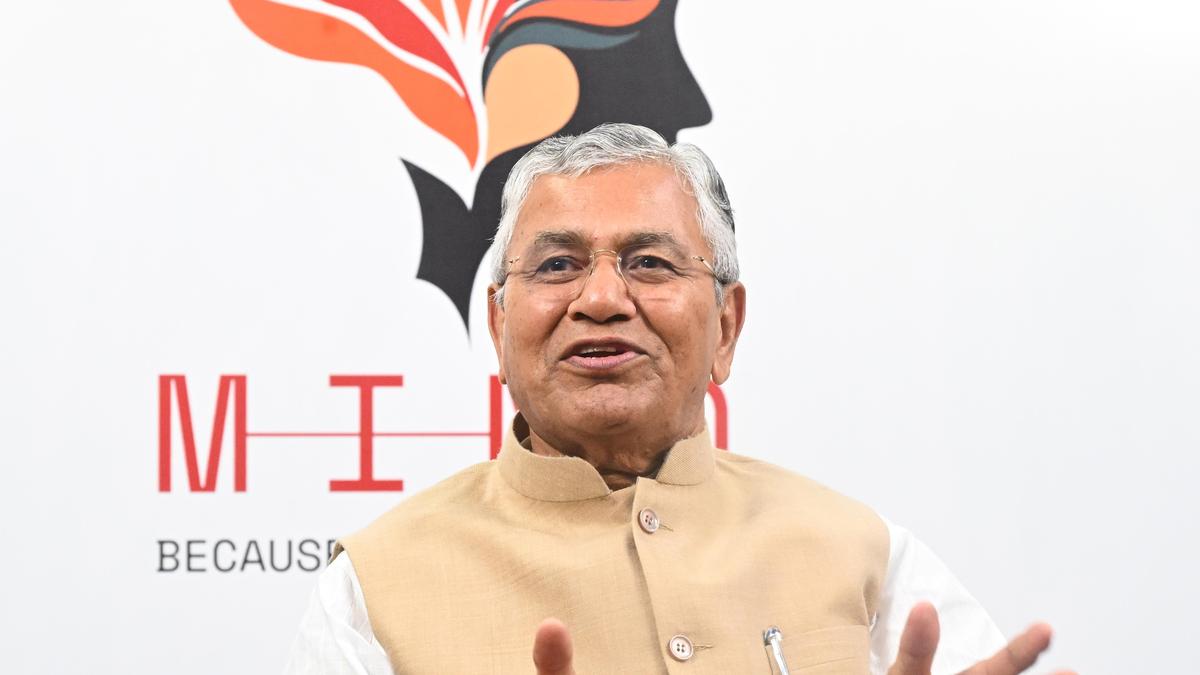
The Joint Parliamentary Committee (JPC) examining the Bill on simultaneous elections is considering a provision that would bar the introduction of a no-confidence motion against an incumbent government if only one year of its term remains, committee chairperson and BJP MP P.P. Chaudhary said on Wednesday (February 18, 2026).
He was speaking at The Hindu Mind, a conversation series featuring leading newsmakers.
The Constitution (129th Amendment) Bill, 2024 enabling simultaneous elections was introduced in the Lok Sabha on December 17, 2024, and immediately referred to the committee. The panel has held 16 meetings in Delhi so far and travelled across the country, with six former Chief Justices of India sharing their views on the legislation.
Explaining key provisions of the Bill, Mr. Chaudhary said that if enacted before the 2029 general elections, the first sitting of the new Lok Sabha would become the “appointed date.” State Assembly terms beginning thereafter would be truncated to align with the 2034 Lok Sabha polls. This one-time synchronisation, he argued, would not violate the federal structure, contrary to the concerns raised by critics.
The pros and cons of simultaneous elections | Explained
Mr. Chaudhary said the panel was deliberating whether to introduce a time bar on moving a no-confidence motion. “We are actively considering introducing a provision that would bar the moving of a no-confidence motion if the incumbent government has only one year left in its term,” he said, noting that several States had similar restrictions for Panchayati Raj institutions.


Jeevan Reddy leads a rally for maize farmers in Jagtial amid speculation of leaving Congress for BRS.

BJP and AINRC likely to maintain 2021 seat-sharing formula for Puducherry's 2026 Assembly elections, confirms party president.

BJP reveals 144 candidates for Bengal Assembly polls, featuring Suvendu Adhikari contesting against Mamata Banerjee in Bhabanipur.

Anna University partners with Ramco Systems to create an advanced ERP lab for enhanced industrial engineering education.

NDA announces candidates for 12 Kozhikode seats in Kerala Assembly polls 2026 as UDF and LDF ramp up campaigning.

As India formulates its next steps in the Israel-U.S.-Iran war, it is necessary to consider not only what it will mean for the whole region but also its own ties with each neighbour

CITU criticizes the Centre's privatization efforts for VSP, alleging employee removal over production increase and financial mismanagement.

Visakhapatnam Customs House's short film "Right Turn" wins Honourable Jury Mention at the 10th Indian World Film Festival.

Economist Arvind Subramanian advises CM Revanth Reddy on strengthening Telangana's finances during a meeting in Hyderabad.

Supreme Court emphasizes stakeholder consultation for legal education reforms, hesitant to change five-year law course duration.

Authorities in Andhra Pradesh are set to tranquillise a roaming tiger near Annavaram temple for safety and conservation.

MEA criticizes USCIRF for bias, urging focus on vandalism of Hindu temples in the U.S. over selective criticism of India.

Bengaluru's Urban Development aims to beautify underutilized flyover spaces, enhancing city aesthetics and improving green cover initiatives.