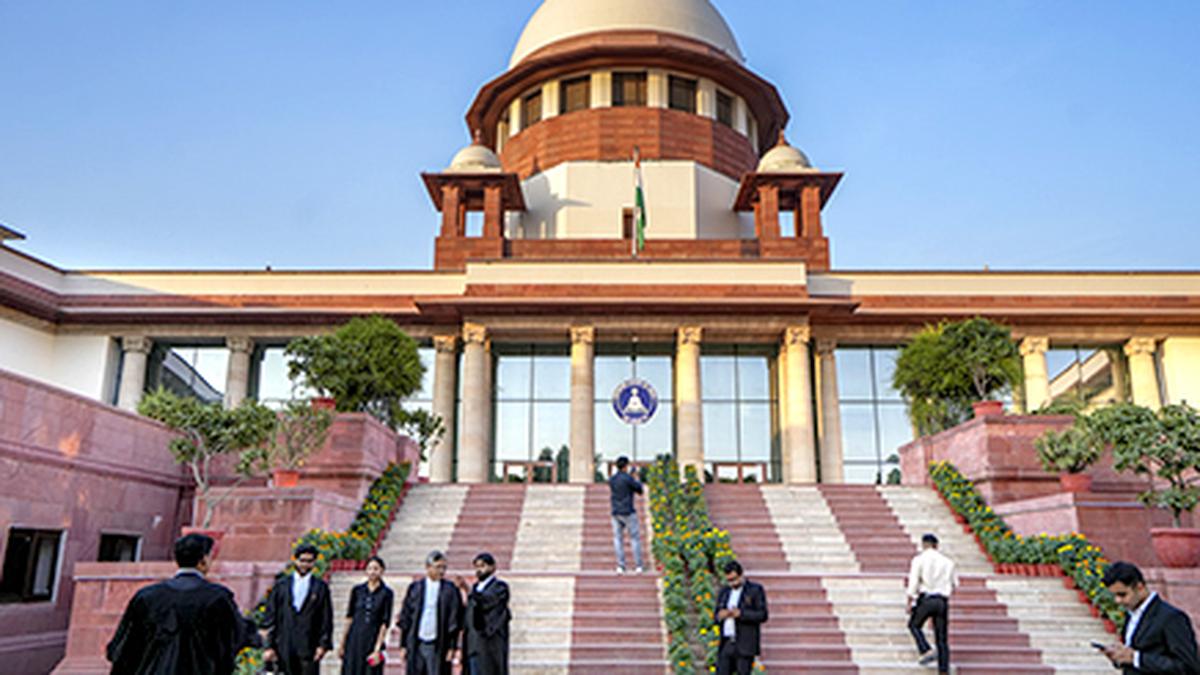
Sexual harassment case cannot be closed on basis of compromise between parties: Supreme Court
The Hindu
Supreme Court rules sexual harassment cases cannot be closed after compromise, emphasizing serious societal impact of such offenses.
The Supreme Court on Thursday (November 7, 2024) said a sexual harassment case cannot be closed after a compromise is reached between the rival parties as such offences have serious impact on the society.
The observation came while setting aside an order of the Rajasthan High Court which had quashed the FIR against a teacher who was accused of sexually molesting a 16-year-old girl at school in Rajasthan's Sawai Madhopur district.
A bench of justices C T Ravikumar and Sanjay Kumar said the high court has misread and misapplied the law laid down to quash the subject FIR and all further proceedings.
"The commission of such offences against the children should be viewed as heinous and serious. Needless to say, that commission of such offences cannot be taken lightly as offences of private nature and in fact, such offences are bound to be taken as offences against the society...
"We are at a loss to understand how the High Court arrived at the conclusion that in the case on hand a dispute to be resolved exists between the parties and further that to maintain harmony the FIR and all further proceedings thereto should be quashed even without adverting to the allegations raised against the 3rd respondent in the subject FIR," the bench said.
The apex court also rejected the submission of the teacher and the father of the victim who challenged the locus standi of the PIL petitioner in the case. "When by quashing the FIR by invoking the power under Section 482, CrPC, the accused was relieved of the liability to face the trial coupled with the aforesaid circumstances and the position of law qua locus standi of third party to maintain a petition under Article 136 of the Constitution of India, as revealed from the decisions referred above, we have no hesitation to hold that the challenge based on the appellants' locus standi got no merit at all," the bench said.
The top court said when an incident of this nature and gravity allegedly occurred in a higher secondary school, that too from a teacher, it cannot be simply described as an offence purely private and has no serious impact on society.


Diya Chitale and Manav Thakkar reach semifinals, while Yashaswini Ghorpade upsets top seed Sreeja Akula at National TT Championships.

DYFI criticizes A.P.'s job calendar for failing unemployed youth, demanding a revision to include 1 lakh posts and higher age limits.

‘Lethargic’ officials who left Chambal sanctuary to the mercy of sand miners will be held liable: SC
Supreme Court holds negligent officials accountable for enabling illegal sand mining in Chambal Sanctuary, emphasizing habitat protection laws.

Work on the Srisailam Left Bank Canal tunnel resumes after 13 months, with completion targeted by 2027-end, says Minister Reddy.

Ancient ‘Vanni’ tree at Sri Meenakshi Sundareswarar Temple tilts; steps on to restore it

Bengaluru Metro penalises 14 passengers for disrupting services with loud singing, following a viral clip of their antics.

ASR district plans a 122 km world-class trekking network, enhancing tourism and local employment across Araku, Paderu, and Lambasingi.

Development without impact: Coastal residents of Kanniyakumari and Nagercoil constituencies voice discontent

Environmentalists in Kakinada celebrate World Sparrow Day, urging conservation efforts for sparrows and migratory birds.

T.K. Govindan secures full support from K. Sudhakaran for Kerala Assembly polls 2026 as a UDF-backed Independent candidate.

Karnataka implements weekly reviews and control rooms to combat rural drinking water shortages during the summer months.

BJP leads candidate selection for upcoming bypolls, while Congress faces internal challenges and community pressure in Bagalkot and Davangere.

A man died in a Kolkata hospital lift, prompting accusations of negligence against the West Bengal government and hospital authorities.