Relativity's debut rocket launch proves durability, fails in space
The Hindu
Relativity’s debut rocket launched successfully but failed the second stage on reaching space. About 85% of the rocket is made of parts that are 3 D printed.
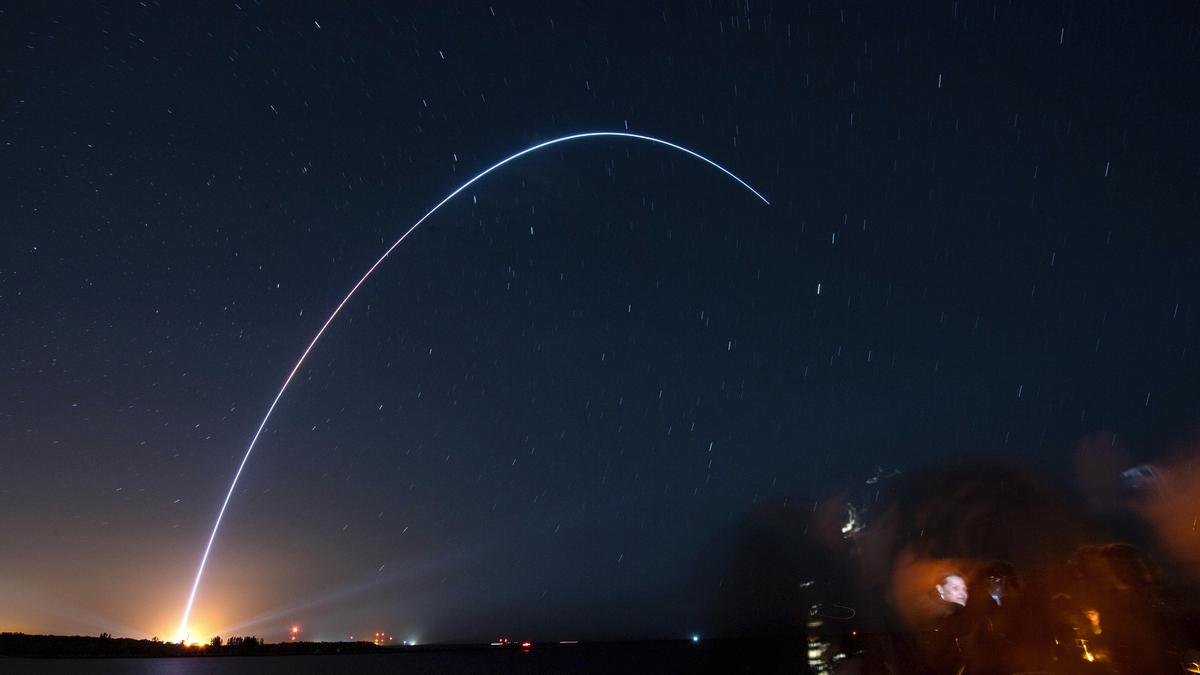
Relativity Space's 3D-printed rocket lifted off for the first time on Wednesday, passing a key milestone to demonstrate the vehicle's in-flight strength before its second stage failed upon reaching space, a company live stream showed.
The California-based company's 110-foot tall Terran 1 rocket, which is 85% made of 3D-printed parts, lifted off on its debut flight around 11:25 p.m. EDT (0325 GMT on Thursday) from a launchpad at Florida's Cape Canaveral Space Force Base.
Also Read | India’s first private rocket to be launched between November 12-16
Roughly 80 seconds into the flight at an altitude of nearly 10 miles (16 km) above the Atlantic ocean, the rocket reached peak aerodynamic stress as it ascended toward space at 1,242 miles per hour (1,999 km per hour), passing a key objective of the test mission.
Upon reaching space, the rocket's second stage engine appeared to briefly ignite but failed to achieve thrust, ultimately failing to reach orbit.
"While we didn't make it all the way today, we gathered enough data to show that flying 3D-printed rockets is possible," Relativity Test Program Manager Arwa Tizani Kelly said on the company's live video stream.


Vibha Batra’s latest book, Spotless (Hachette India) is a novel in verse for young adults

In its first edition, the Madras Art Salon spotlights the works of journalist and artist Narayan Lakshman at The Botanical Club, a social space in the British Deputy High Commission, Chennai

Cholesterol enhances melanoma cell invasion by making nuclei squishier, revealing a potential treatment target in cancer progression.

The designers reinterpret the Swedish artist’s symbolic forms and colour energy through contemporary resortwear silhouettes

Discover the inspiring legacy of Bibha Chowdhuri, a pioneering woman in physics and a trailblazer in STEM history.

Discover the inspiring legacy of Bibha Chowdhuri, a pioneering woman in physics and a trailblazer in STEM history.

Ashdeen’s Spring 2026 collection features saris inspired by the designer’s Parsi gara archive

Red ochre burials, ritual markings and myths across cultures show that red repeatedly marks liminal thresholds such as puberty, sacrifice and death; anthropologists argue that the colour functions as a technology of collective ritual and value, binding communities through shared symbolic acts

India approves 23 institutions for quantum labs under the National Quantum Mission, aiming to advance quantum technology and research.

India approves 23 institutions for quantum labs under the National Quantum Mission, aiming to advance quantum technology and research.

The Gaza conflict exacerbates environmental damage, emitting millions of tonnes of CO2 and threatening climate stability in West Asia.

Chefs and cookery experts share smart kitchen hacks, hybrid cooking methods and appliance tips to help households reduce LPG use without compromising on food

Discover groundbreaking research on Titan's lakes, bat vaccinations, and the unique aroma of ripening bananas in just one minute.