Province offers to buy P.E.I. potato wart index fields, take them out of agricultural production
CBC
Prince Edward Island is launching a new program that makes money available to buy fields where potato wart has been confirmed in the past.
The Canadian Food Inspection Agency has designated 37 sites across the Island as index fields — or areas where the soilborne fungus that causes the disfiguring disease has been identified even once.
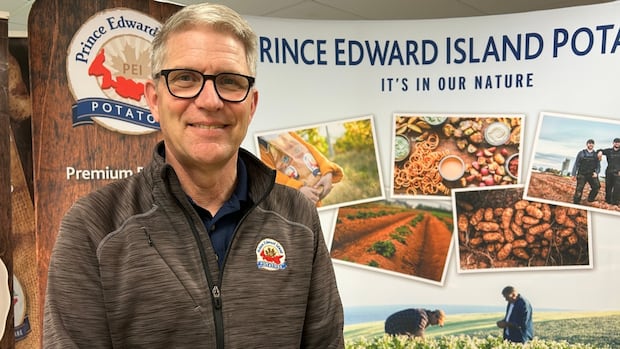
"This announcement is something that has been supported by growers on P.E.I.," said Greg Donald, the general manager of the P.E.I. Potato Board.
"It's an additional layer that gives full assurance that there will be no risk from this disease."
Land that is sold to the province through the buy-back program will not be farmed again, but could be used for "trees, energy solutions and preservation," a spokesperson for the government said in an email statement.
It will also contribute to the province's goal of protecting seven per cent of P.E.I.'s land, the email said.
The government would not say how much money is being set aside for the fund, with the spokesperson calling it "a demand-driven program... Purchasing the land will be conducted through an independent appraisal that fairly represents the market."
Land owners wanting to sell their index land are being told to apply through the province's webpage.
Even in cases where the affected land area in the index field is small, the entire field has to be put out of commission and removed from agricultural production to eliminate further spread, Donald said.
"The main risk pathway with this organism is soil," he said.
Potato wart was first discovered on P.E.I. in 2000, and then again in 2021. Although the fungus poses no health risk to humans, it leaves potatoes distorted by warts and makes them unmarketable.
The Canadian Food Inspection Agency banned fresh P.E.I. table potatoes from being sold into the United States for four months after it was found in the province in the fall of 2021. Some farmers with excess product were forced to destroy millions of pounds of their crop, and the sale of seed potatoes into the U.S. remains banned.
The provincial response to the 2021 potato wart crisis can be looked to as a model for dealing with plant health issues, Donald said.
"The message to our customers… whether here on P.E.I. or across Canada or around the world, is that if you're going to do business with P.E.I., P.E.I. potatoes, you're going to get exactly what you need, when you need it," he said.


Some century-old churches on P.E.I. are renovating to become more accessible, which includes updates to accommodate many different kinds of needs.

Toronto police headed to school zones Monday as part of a safety blitz following March Break.

WARNING: This story details experiences at residential schools.

The N.W.T. Coroner Service has identified the Nunavut man who died in RCMP custody in Yellowknife last Thursday.

The Liberal government's nominee to be the next fiscal watchdog insists she'll run an independent and non-partisan ship — even though her candidacy has created a political rift.

Two years after Calgary city council held its longest public hearing in the city's history, another marathon session began on Monday to tackle the same contentious subject: blanket rezoning.

Quebec resident Antoine Forest was one of the pilots killed in the Sunday night crash at New York's LaGuardia airport, according to Radio-Canada sources.

Ontario Premier Doug Ford's cellphone records took centre stage as the provincial legislature resumed sitting Monday for the first time since December, with the opposition accusing the premier of having something to hide.

The P.E.I. Museum and Heritage Foundation hosted its annual heritage awards, recognizing Islanders who help maintain the island's culture and traditions.

A new independent review of Yukon’s education system is receiving pushback from advocates.

The RCMP has not recruited enough new officers or effectively assigned its members to meet its operational needs, according to a new report from the auditor general — raising concerns about public safety across the country.

Oil prices fell Monday morning after President Donald Trump said the U.S. would hold off on striking Iran’s energy infrastructure amid productive talks between the two countries.

Premier Doug Ford says his government plans to give Toronto's Billy Bishop Airport special designation that would allow the province to bypass municipal and provincial laws as it pushes to expand the runway downtown.