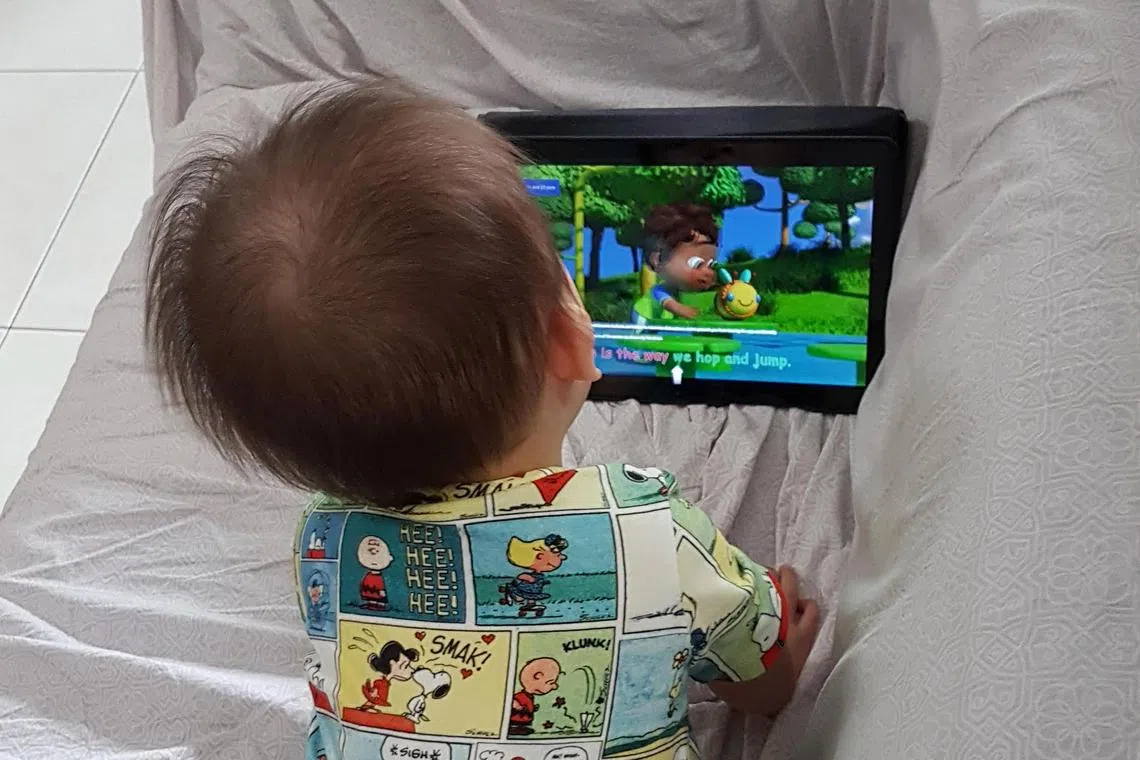
Prolonged digital screen use linked to higher chance of autism symptoms in toddlers: NUH study
The Straits Times
A new study links prolonged screen time in toddlers to increased autism symptoms, highlighting concerns about exceeding screen time guidelines. Read more at straitstimes.com.
SINGAPORE – Toddlers who spend a longer time in front of digital screens are more likely to exhibit symptoms of autism, according to new research, which also found that Singaporean families often exceed national screen time guidelines.
Researchers from the National University Hospital (NUH) have found that prolonged exposure to screens has the most pronounced effect on how toddlers communicate with others.
Parents here have observed that their children are not pointing at objects to show interest, are not showing their toys to them, or are failing to respond when their name is called.
These behaviours appear in the screening questionnaire for autism and indicate a higher probability of a child having the condition. However, a formal diagnosis can be made only by a specialist.
The local study, the first of its kind here on the relationship between screen time exposure and autism symptoms, was published on Oct 8, 2025, in the Journal of Autism and Developmental Disorders.
Conducted between August 2020 and November 2022, the study looked at 5,336 children of all ethnic groups in Singapore, aged 17 to 24 months, who had visited one of seven polyclinics in the west of Singapore for a milestone check-up.


Explore the Straits Times' bestseller lists for March 14, featuring top fiction, non-fiction, and children's books. Read more at straitstimes.com.

Sites in Seoul featured in the movie have emerged as must-visit destinations. Read more at straitstimes.com.

Project Wolbachia expands to more areas in Singapore, exceeding its target for dengue prevention by controlling mosquito populations. Read more at straitstimes.com.

The firm focuses on software and hardware for buses in Singapore. Read more at straitstimes.com.

Jessie Wee, Singaporean pioneer of children’s literature and creator of Mooty The Mouse, has died at 88 after a long illness. Read more at straitstimes.com.

There are also two unique art exhibitions: one in a Tiong Bahru walk-up and the other in Telok Kurau. Read more at straitstimes.com.

Peh Gao Coffeeshop's menu offers a mix of Asian comfort food. Read more at straitstimes.com.

The Neapolitan-style pizzas are made with a 72-hour fermented dough. Read more at straitstimes.com.

There are opportunities for firms to develop expertise in sustainable development and climate risk assessment, she said. Read more at straitstimes.com.

Ong Keng Sen directs Jacintha and Dick Lee at Sifa 2026; plus Jeremy Tiang’s Obie Award-winning play
Ong Keng Sen directs Jacintha and Dick Lee at SIFA 2026, plus Jeremy Tiang’s Obie Award-winning play. Read more at straitstimes.com.

The move came after recent reports about his abuse of employees at Noma. Read more at straitstimes.com.

The other two restaurants that made the cut are La Bottega Enoteca at No. 31 and Fortuna at No. 33. Read more at straitstimes.com.

Some residents say subsidising private estates is a bold move; others warn against relying on subsidies. Read more at straitstimes.com.