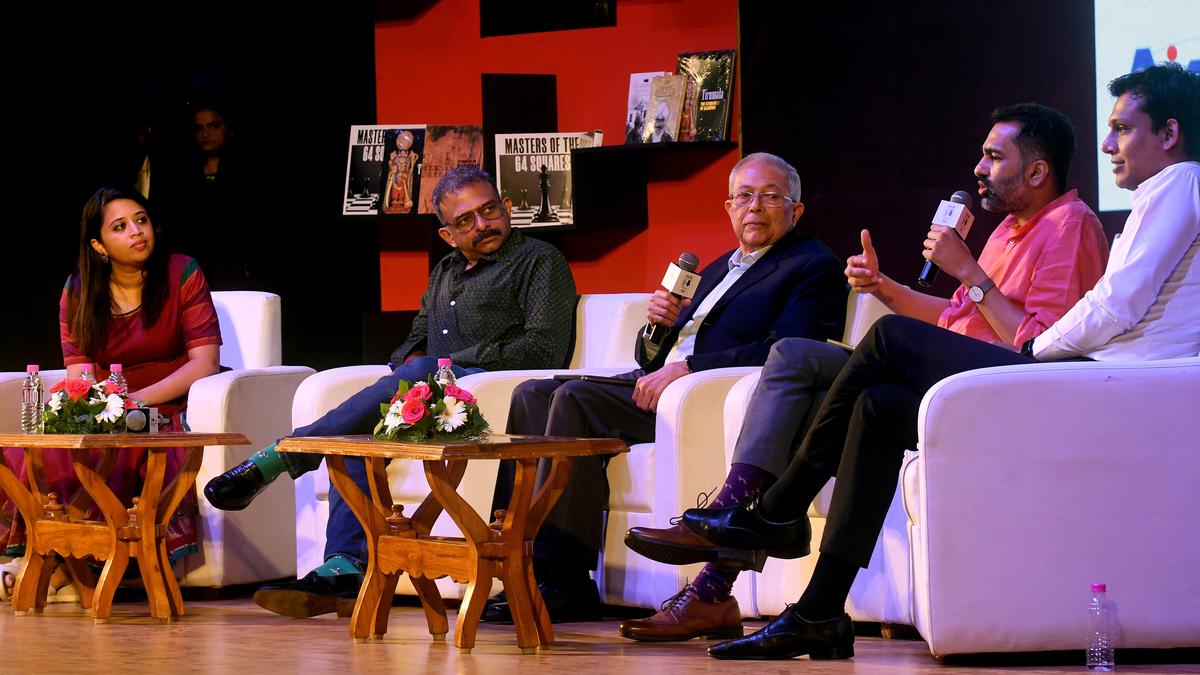
Privacy should be at the core of discussions on freedom of speech: T.M. Krishna
The Hindu
Threats to free speech and media freedom range from IT Rules amendments to a misuse of the Income Tax Act, panellists said
The need to secure privacy by creating a safe space to think and create, and for people to be the way they are should be at the core of any discussion on freedom of speech, T.M. Krishna, Carnatic vocalist, composer and author, said on Saturday.
Taking part in a panel discussion on “Free speech in the age of internet” as part of The Hindu Lit for Life, Mr. Krishna said that restrictions on freedom of speech and expression were an attempt to maintain the status quo, adding that people from marginalised sections of the society were the worst affected by such limitations, which went against principles of equality.
Discussing the Information Technology (Intermediary Guidelines and Digital Media Ethics Code) Rules, 2021, the Internet Freedom Foundation’s executive director Apar Gupta said that it was brought in with the intention of providing a safeguard to digital intermediaries, but has instead made a marked departure to become a larger regulatory framework, which was “patently unconstitutional”.
He said that discussions on fake news, especially with respect to electoral democracy, should involve the funding of political parties, electoral bonds and campaign finance. Mr. Gupta cautioned against advocating laws to tackle fake news, as one needed to remember that lies were often said by people without any intention to deceive.
The News Minute’s editor-in-chief Dhanya Rajendran stressed the need to distinguish between misinformation and disinformation while discussing fake news. She said that even the government used loose definitions of fake news to bring more limitations as and when it wanted them.
Expressing concern over the pressures exerted on freedom of speech, especially on media organisations, she highlighted how her organisation was recently served an Income Tax notice just because a person from another organisation that was raided by the IT department had reached out to a The News Minute journalist for an article.
While threats to freedom of expression existed long before the internet age, the internet has certainly exasperated the the problem, Madras High Court advocate Suhrith Parthasarathy said, pointing out that many of the laws used against free speech had been inherited from India’s colonial past.


Abhishek Banerjee challenges BJP's Suvendu Adhikari in Nandigram, pledging community health initiatives if Trinamool Congress wins.

Rising LPG shortages in Karnataka boost firewood demand, reviving an informal market as households and hotels seek alternatives.

Against the backdrop of intense poll activity, a 400-metre stretch of an arterial road in the outskirts of Chennai (technically in Madurapakkam panchayat under Tambaram assembly constituency) presents a salute to the idea of res publica, which underpins India’s system of governance, where citizens have a say, at least before a government is securely ensconced in the seat of power. A Republic Day initiative shines bright every night

Fadnavis claims zero FIR in Ajit Pawar crash is a defamation attempt by Karnataka against Maharashtra's investigation efforts.

Set to unfold as a one-day pop-up on April 5, the Easter Sadya brings together both vegetarian and non-vegetarian menus, offering a peek into the food traditions of the Syrian Christian (Nasrani) community. While the traditional Sadya is often associated with dishes such as sambar, avial, and rice, this version expands to include community-specific festive dishes.

BJP nominates mother of R.G. Kar victim Abhaya to contest from Panihati in West Bengal Assembly elections.

Veteran Malayalam actor-director E.A. Rajendran passes away at 71, leaving behind a rich legacy in the film industry.

Dakshina Kannada Zilla Panchayat has rolled out digital mode of water bill generation and collection in 23 gram panchayats on a pilot basis for the first time in Karnataka. This is set to be extended to the remaining 200 panchayats shortly, according to the Zilla Panchayat Chief Executive Officer Narwade Vinayak Karbhari.

Bengaluru police questioned a man carrying ₹6 lakh for medical expenses at Vidhana Soudha, later releasing him after verification.

BJP accuses Bengaluru's Congress government of corruption in e-Khata issuance, halting infrastructure projects due to financial mismanagement.

Misinformation in Hyderabad sparks panic buying, causing disruptions as residents react to unfounded rumors of an impending lockdown.

Bengaluru Metro extends services until 2 a.m. on March 28 for IPL match, ensuring convenient travel for spectators.

A bus truck-collision in Andhra Pradesh's Markapuram district, killing several. Catch LIVE updates here!