Principled criminalisation and the police as pivot Premium
The Hindu
Principled criminalisation is central to the legitimacy of the state’s power to criminalise
Procedural law tends to receive less attention than substantive law in criminal law discussions. A major reason for this is that procedural criminal law is seen as dealing with the prosaic question of ‘how’, while the more dramatic question of ‘what’ crimes and punishments exist are associated with substantive criminal law. But, in reality, procedure is the beating heart of action. The recent Supreme Court of India ruling, in Imran Pratapgarhi vs State of Gujarat, is a reminder of how principled criminalisation is contingent on the adherence of the police to India’s criminal procedure law, the Bharatiya Nagarik Suraksha Sanhita (BNSS).
A straightforward way of thinking about criminalisation is in terms of the exercise of state power and duty. Criminalisation is about the state’s power to name a wrong/harm as ‘crime’ and impose ‘punishment’. It is, equally, about the state’s duty to address wrongdoing by holding individuals accountable publicly and administering appropriate penalties. Criminal law in a constitutional democracy seeks to ensure that this enormous authority and responsibility is exercised properly.
Legal philosopher Victor Tadros suggests that the state’s duty/power to criminalise wrongful conduct is part of a larger complex duty/power to criminalise, prosecute, convict, publicly condemn and punish the conduct. Within the broader normative context, criminalisation exists as part of social institutions and practices that address wrongdoing, such as families and private law. The claim, therefore (and importantly), is that criminalisation has a role independent of its effects that can be realised through the operations of the criminal law.
That said, the full force of criminalisation depends on criminal law and the workings of the criminal justice system. Given the powerful symbolic and concrete effects of criminalisation, legal scholars have sought to identify one (or more) ‘master principle(s)’ on the basis of which the kinds of behaviours that should be criminalised can be satisfactorily decided. Tatjana Hörnle makes a cogent case for three principles: conduct should be criminalised only if first, it is incompatible with important collective interests, second, it constitutes a violent attack against other persons, and third, it violates another person’s right to non-intervention. These principles can be seen at the core of criminalisation under India’s substantive criminal law, the Bharatiya Nyaya Sanhita (BNS).
Even if the substantive criminal law structures criminalisation in accordance with pragmatic and restrictive principles, some social groups and behaviours can be over-criminalised and others under-criminalised.
This is because beyond the conceptual labelling lies the actual labelling of acts and individuals as ‘crime’ and ‘criminal’ through the process of detecting, recording, arresting, charging, prosecuting, convicting and sentencing. Therefore, it is essential to pay equal, or possibly more, attention to the powers and functions of criminal justice agencies under the procedural law that governs the process.
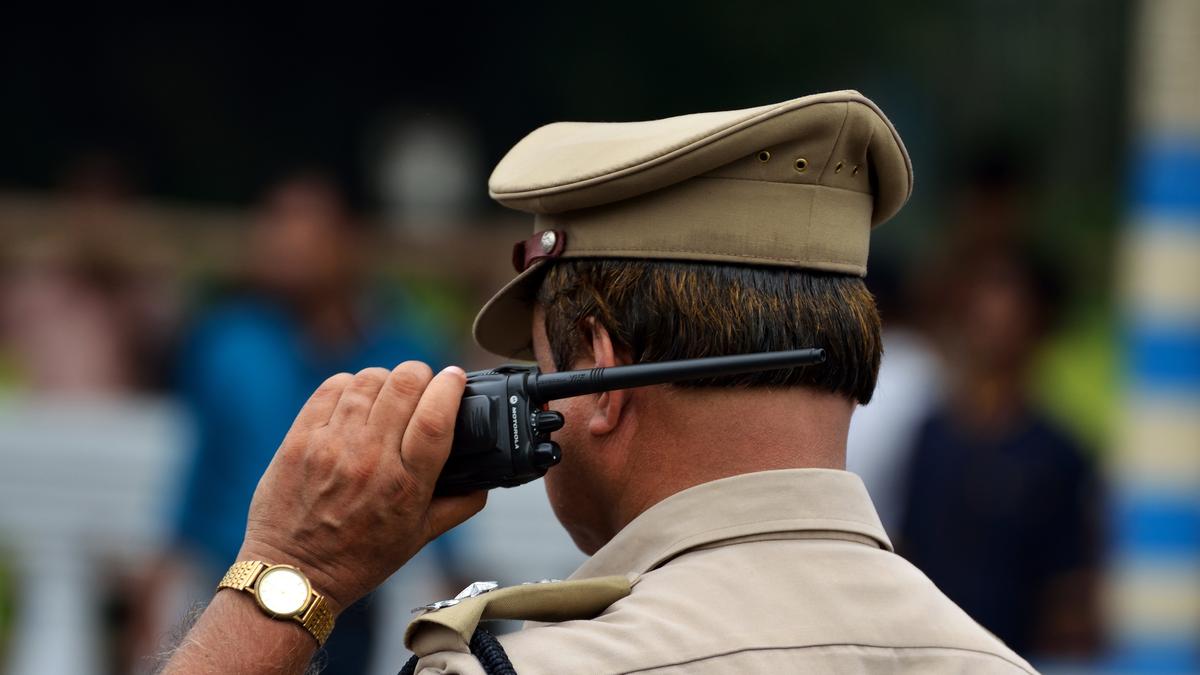
In this context, the focus inevitably shifts to the role of the police because they spearhead the process of criminalisation by detecting, registering, investigating crime, and, most conspicuously, by arresting suspects. There is general consensus that the police exercise considerable discretion in their daily work. As a result, the nature and the extent of criminalisation is largely shaped by how this discretionary authority is regulated and used. A case in point here is the possibility of overzealous policing of non-harmful wrongdoing (minor infractions) deflecting attention from harmful wrongdoing (serious offences).


Sanjay Raut criticizes discussions on NCP leadership post-Ajit Pawar's death, calling it "inhuman" and lacking compassion.

Police recover the body of a missing woman from a Chennai dump yard in a triple murder investigation involving her family.

Nivedita Bhasin shares her pioneering journey as the youngest female jet commander and advocating for gender diversity.

Kudumbashree volunteers in Choornikara deliver library books to homes, fostering reading among women and children in the community.

Om Shanti Shanti Shantihi review: Eesha Rebba and Tharun Bhascker shine in this thought-provoking critique of patriarchy.

Discover the intriguing true stories behind iconic novels in this engaging quiz that tests your literary knowledge.

BJP leader Suvendu Adhikari demands arrests and justice for fire victims during rally in Kolkata amid allegations against food chain owners.

Information on colleges, admissions, scholarships, events, MoUs, and more

India News:Tharoor dismisses reports of being unhappy with Congress leadership ahead of Kerala election

Police investigate mysterious UAV landing near a house in Doddaballapur, Bengaluru, after no one comes forward to claims the device.

Supreme Court declares menstrual health a fundamental right, mandates free sanitary pads for school girls, and enforces toilet accessibility.

A U.S. military destroyer docks in Israel's Eilat port, enhancing cooperation amid rising tensions with Iran.

COMEDK UGET on May 9 offers engineering admissions in Karnataka; over 1,40,000 candidates expected. Apply online by March 16.