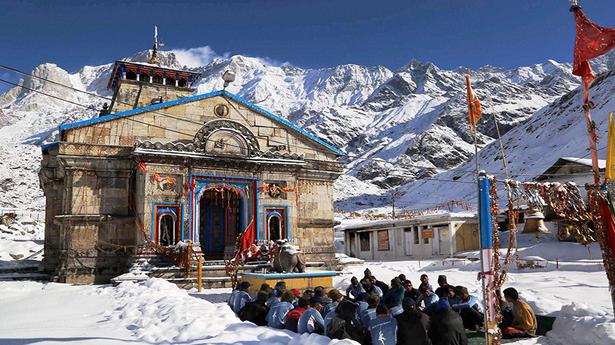
Priests oppose gold plating of Kedarnath walls
The Hindu
The gold plating of Kedarnath's walls is being done after a Shiva devotee from Maharashtra volunteered to make an offering of gold for the purpose
A section of priests in Kedarnath have opposed the gold plating of the walls inside the sanctum sanctorum of the Himalayan temple saying it amounted to tampering with its centuries-old traditions.
Pilgrimage priests (teerth purohits) opposing the gold plating are incensed that the use of big drilling machines in the process are damaging the temple's walls.
The four walls of the famed temple were covered with silver plates which have been removed to replace them with gold plates.
The gold plating of the temple's walls is being done after a Shiva devotee from Maharashtra volunteered to make an offering of gold for the purpose and his proposal was accepted by the Badrinath-Kedarnath Temple Committee (BKTC) with permission from the State Government.
“The gold plating is damaging the temple walls. Big drilling machines are being used for the purpose. We cannot tolerate this tampering with the centuries-old traditions of the temple,” a pilgrimage priest named Santosh Trivedi said in Kedarnath.
However, the priests are divided on the issue with some senior priests favouring the renovation work currently underway inside the temple's sanctum sanctorum.
Senior priest at the temple Shrinivas Posti and former president of Kedar Sabha Mahesh Bagwadi said the temple is a major centre of Sanatan faith and gold plating of its walls is in keeping with the Hindu beliefs and traditions.


Abhishek Banerjee challenges BJP's Suvendu Adhikari in Nandigram, pledging community health initiatives if Trinamool Congress wins.

Rising LPG shortages in Karnataka boost firewood demand, reviving an informal market as households and hotels seek alternatives.

Against the backdrop of intense poll activity, a 400-metre stretch of an arterial road in the outskirts of Chennai (technically in Madurapakkam panchayat under Tambaram assembly constituency) presents a salute to the idea of res publica, which underpins India’s system of governance, where citizens have a say, at least before a government is securely ensconced in the seat of power. A Republic Day initiative shines bright every night

Fadnavis claims zero FIR in Ajit Pawar crash is a defamation attempt by Karnataka against Maharashtra's investigation efforts.

Set to unfold as a one-day pop-up on April 5, the Easter Sadya brings together both vegetarian and non-vegetarian menus, offering a peek into the food traditions of the Syrian Christian (Nasrani) community. While the traditional Sadya is often associated with dishes such as sambar, avial, and rice, this version expands to include community-specific festive dishes.

BJP nominates mother of R.G. Kar victim Abhaya to contest from Panihati in West Bengal Assembly elections.

Veteran Malayalam actor-director E.A. Rajendran passes away at 71, leaving behind a rich legacy in the film industry.

Dakshina Kannada Zilla Panchayat has rolled out digital mode of water bill generation and collection in 23 gram panchayats on a pilot basis for the first time in Karnataka. This is set to be extended to the remaining 200 panchayats shortly, according to the Zilla Panchayat Chief Executive Officer Narwade Vinayak Karbhari.

Bengaluru police questioned a man carrying ₹6 lakh for medical expenses at Vidhana Soudha, later releasing him after verification.

BJP accuses Bengaluru's Congress government of corruption in e-Khata issuance, halting infrastructure projects due to financial mismanagement.

Misinformation in Hyderabad sparks panic buying, causing disruptions as residents react to unfounded rumors of an impending lockdown.

Bengaluru Metro extends services until 2 a.m. on March 28 for IPL match, ensuring convenient travel for spectators.

A bus truck-collision in Andhra Pradesh's Markapuram district, killing several. Catch LIVE updates here!