Prevalence rate of leprosy in three Karnataka districts higher than national average
The Hindu
Although Karnataka is considered a low leprosy endemic State, the prevalence rate in three districts — Koppal, Vijayanagara, and Ballari — continues to be higher than the national average of 0.6%. Overall, the State has recorded a prevalence rate of 0.33% in 2023–2024. January 30 is observed as National Leprosy Eradication Day.
Although Karnataka is considered a low leprosy endemic State, the prevalence rate in three districts — Koppal, Vijayanagara, and Ballari — continues to be higher than the national average of 0.6%. Overall, the State has recorded a prevalence rate of 0.33% in 2023–2024. January 30 is observed as National Leprosy Eradication Day.
With a marginal rise in the number of new cases detected in the last two years, the overall prevalence rate has also gone up from 0.31% in 2022-2023 to 0.33% in 2023-2024. While the district-wise data shows that the prevalence is less than 1% in Karnataka, 10 districts have crossed the State’s average prevalence rate. While Koppal has the highest prevalence rate at 0.78%, Hassan and Chikkamagaluru have the lowest at 0.04% and 0.07% respectively.
The rate of Grade II deformity has also been on the rise. While it was 2.5% in 2019–2020; the rate of deformity rose to 2.6% and 3.04% in 2020–2021 and 2021–2022, respectively. This further rose to 3.65% in 2022-2023 and has almost remained the same (3.64%) in 2023-2024.
However, the percentage of multibacillary (infectious) leprosy cases among the new cases detected since 2022-2023 has reduced. Multibacillary (MB) leprosy is a more severe form of the disease.
While 71% of the total 2,724 cases detected in 2019–2020 were MB cases; the percentage rose to 78% and 81% in 2020–2021 and 2021–2022, respectively.
However, the number of multibacillary cases reduced to 80% in 2022-2023 and 78% in 2023-2024 and 2024-2025 (till December). The national average is 60.88%, according to data from the State Health and Family Welfare Department.
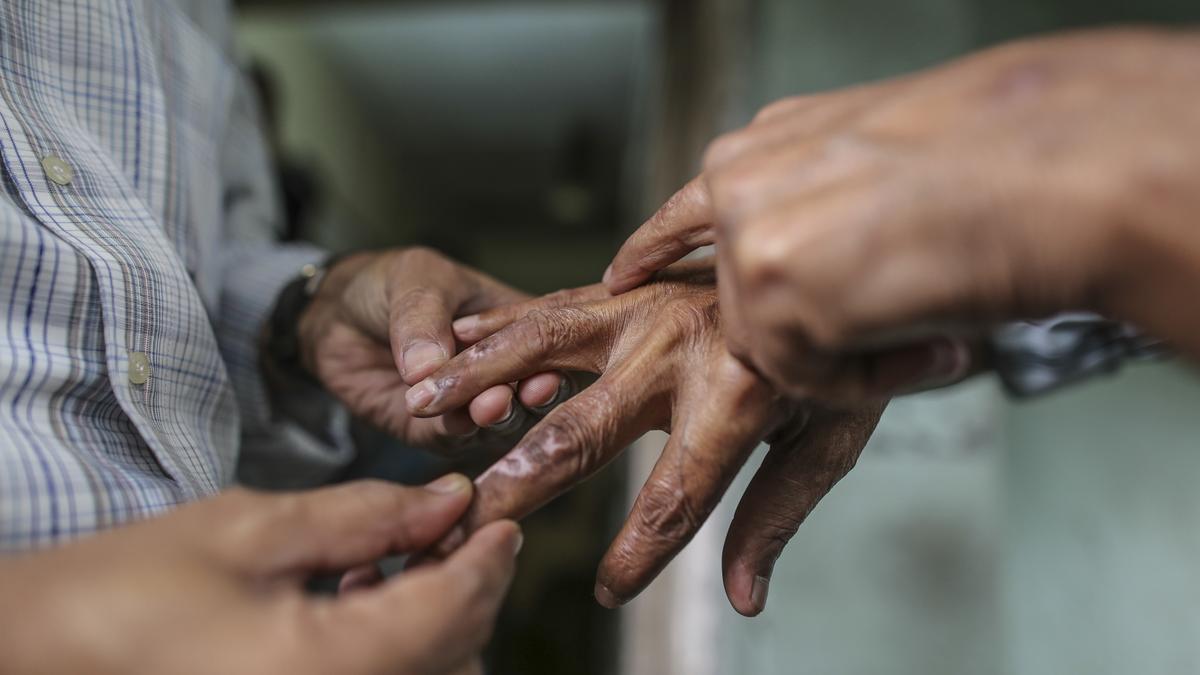
Rekha S., State in-charge Joint Director (Leprosy), told The Hindu that leprosy is a non-fatal but a deformity causing disease. It affects not only the individual but also the family and community with social implications of stigma and discrimination.


Experience Guuranda in Chennai: A captivating blend of Narungga stories, dance, music, and shadow puppetry celebrating Aboriginal culture.

Police warn against downloading APK files and clicking suspicious links to avoid falling victim to cyber fraud.

CM A. Revanth Reddy reviews Bhadrachalam temple development plans, targeting completion by March 2027 while adhering to Agama Shastra.

First-half blitz helps Punjab FC drub Kerala Blasters FC

Vellore Mayor Sujatha Anandakumar and a councillor face legal action for violating the Model Code of Conduct by distributing sports equipment.

Supreme Court judge Justice Nagarathna highlights government's role in court backlog, urging judicial reforms for effective litigation management.

Kerala LDF ministers declare assets nearing ₹2 crore each amid upcoming elections, revealing financial details and legal challenges.

Indiaspora, a San Francisco-based non-profit organisation which connects leaders of the Indian diaspora, is holding its 2026 Indiaspora Forum on March 22-24 and also a Global AI Summit on March 25, 2026, at JW Marriott Prestige Golfshire Resort in Bengaluru.

Special prayers mark Eid-ul-Fitr celebrations in Madurai

India’s gem and jewellery industry continues to demonstrate remarkable resilience and a spirit of innovation, said Kirit Bhansali, chairman of the Gem and Jewellery Export Promotion Council (GJEPC), at the inauguration of the 4th edition of IIJS Bharat-Tritiya 2026 at Bengaluru International Exhibition Centre (BIEC) here on Saturday, March 21.

HYDGEN dispatches eight modular green hydrogen systems to Surat, enhancing on-site industrial hydrogen generation and operational efficiency.

Fight is between AIADMK and DMK, says Rajan Chellappa

Two habitual offenders arrested in Miyapur for wine shop burglary; police recover stolen cash and bike.