Pragyan rover finds an unexpected surprise on the moon: sulphur | Explained Premium
The Hindu
Instruments on the Pragyan rover of the Chandrayaan-3 mission measured sulphur in the soil, suggesting higher concentrations than expected. This could enable astronauts to live off the land and build solar cells, batteries, fertiliser and concrete from lunar resources.
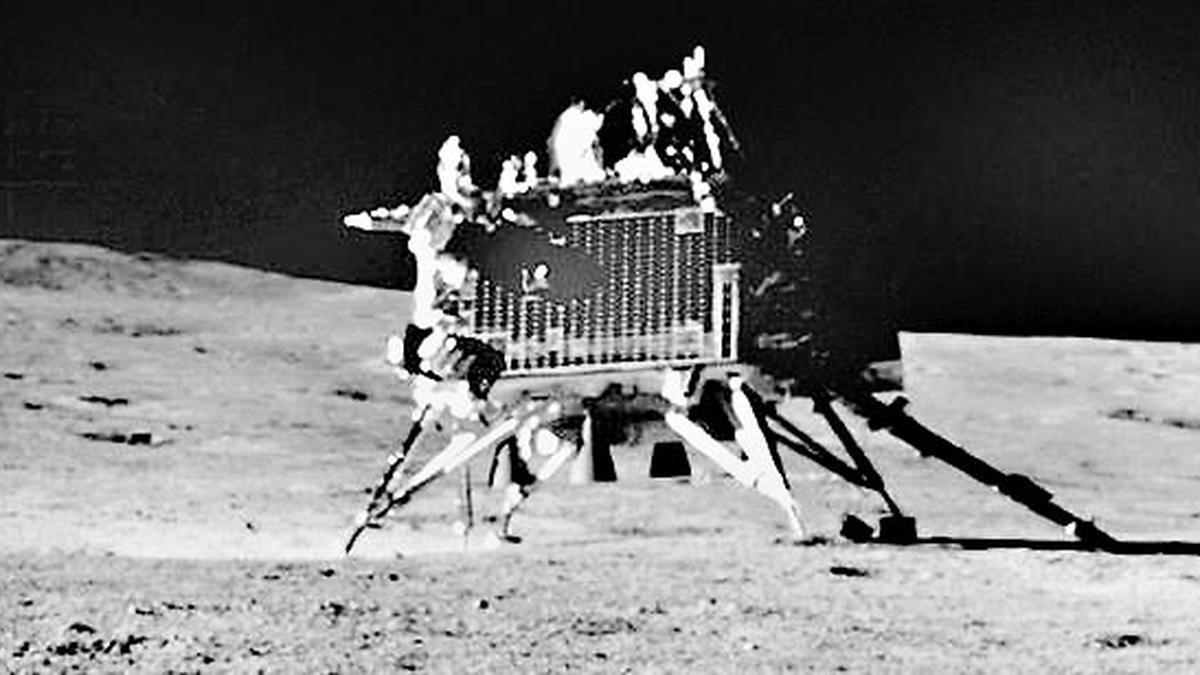
In an exciting milestone for lunar scientists around the globe, India’s Chandrayaan-3 lander touched down 600 km from the south pole of the moon on August 23, 2023.
In just under 14 Earth days, Chandrayaan-3 provided scientists with valuable new data and further inspiration to explore the moon. And the Indian Space Research Organisation has shared these initial results with the world.
While the data from Chandrayaan-3’s rover, named Pragyan, or “wisdom” in Sanskrit, showed the lunar soil contains expected elements such as iron, titanium, aluminum and calcium, it also showed an unexpected surprise – sulphur.
Planetary scientists like me have known that sulphur exists in lunar rocks and soils, but only at a very low concentration. These new measurements imply there may be a higher sulphur concentration than anticipated.
Pragyan has two instruments that analyse the elemental composition of the soil – an alpha particle X-ray spectrometer and a laser-induced breakdown spectrometer, or LIBS for short. Both of these instruments measured sulphur in the soil near the landing site.
Sulphur in soils near the moon’s poles might help astronauts live off the land one day, making these measurements an example of science that enables exploration.
There are two main rock types on the moon’s surface – dark volcanic rock and the brighter highland rock. The brightness difference between these two materials forms the familiar “man in the moon” face or “rabbit picking rice” image to the naked eye.


In its first edition, the Madras Art Salon spotlights the works of journalist and artist Narayan Lakshman at The Botanical Club, a social space in the British Deputy High Commission, Chennai

Cholesterol enhances melanoma cell invasion by making nuclei squishier, revealing a potential treatment target in cancer progression.

The designers reinterpret the Swedish artist’s symbolic forms and colour energy through contemporary resortwear silhouettes

Discover the inspiring legacy of Bibha Chowdhuri, a pioneering woman in physics and a trailblazer in STEM history.

Discover the inspiring legacy of Bibha Chowdhuri, a pioneering woman in physics and a trailblazer in STEM history.

Ashdeen’s Spring 2026 collection features saris inspired by the designer’s Parsi gara archive

Red ochre burials, ritual markings and myths across cultures show that red repeatedly marks liminal thresholds such as puberty, sacrifice and death; anthropologists argue that the colour functions as a technology of collective ritual and value, binding communities through shared symbolic acts

India approves 23 institutions for quantum labs under the National Quantum Mission, aiming to advance quantum technology and research.

India approves 23 institutions for quantum labs under the National Quantum Mission, aiming to advance quantum technology and research.

The Gaza conflict exacerbates environmental damage, emitting millions of tonnes of CO2 and threatening climate stability in West Asia.

Chefs and cookery experts share smart kitchen hacks, hybrid cooking methods and appliance tips to help households reduce LPG use without compromising on food

Discover groundbreaking research on Titan's lakes, bat vaccinations, and the unique aroma of ripening bananas in just one minute.

IRSO's NavIC system faces challenges as the last atomic clock fails, reducing operational satellites for navigation services.